


Monsoon havoc: Policy rate kept unchanged on inflation fears in Pakistan
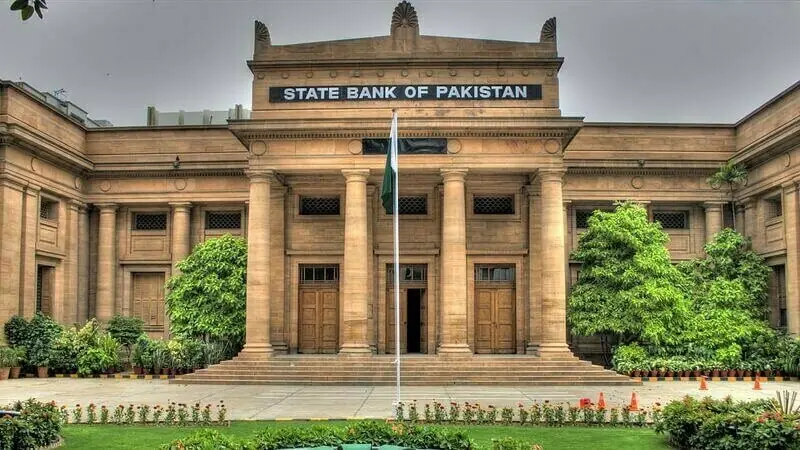

KARACHI: As widely anticipated, the Monetary Policy Committee (MPC) of the State Bank of Pakistan (SBP) has decided to keep the policy rate unchanged at 11 percent, citing the adverse impact of recent floods on the near-term macroeconomic outlook.
The meeting of the MPC was held on Monday at the State Bank head office and chaired by the Governor SBP Jameel Ahmed. With recent developments after the flooding, the committee projected GDP growth for FY26 to settle near the lower end of the earlier 3.25-4.25 percent target range, with headline inflation expected to temporarily breach the 5-7 percent target band before easing in FY27, while the current account deficit is likely to stay contained at up to 1 percent of GDP.
The committee noted that the recent floods have increased uncertainty related to the near-term inflation outlook, particularly for food inflation, which may cross the upper bound of the target range of 5-7 percent for most of the second half of FY26, before reverting to the target range in FY27.
State Bank’s MPC to meet today
The MPC noted that although the economy is now better positioned to withstand the impact of the ongoing floods, the economic growth is also projected to moderate as compared to the previous assessment.
“The near-term macroeconomic outlook has deteriorated slightly in the wake of the ongoing floods and this temporary yet significant flood-induced supply shock, particularly to the crop sector, may push up headline inflation and the current account deficit from earlier expectation in FY26,” the committee noted.
The MPC observed that the economy is on a significantly stronger footing to withstand the negative fallout of the ongoing floods as compared to previous major flood events. Given the low inflation environment, moderately growing domestic demand and relatively benign global commodity price outlook, the excessive inflationary and external account pressures witnessed after the previous floods, are projected to remain in check this time.
Furthermore, the build-up in external and fiscal buffers over the past two years, which was achieved via a coordinated and prudent monetary and fiscal policy mix, will need to continue to make the economy more resilient to shocks and ensure higher growth on a sustainable basis.
Inflation remained relatively moderate in both July 4.1 percent and August 3 percent, largely reflecting volatility in food and energy prices, whereas core inflation remained on a downward trajectory, albeit at a slower pace. Weekly SPI data has already recorded a substantial increase in prices of perishables and wheat and allied products. However, some of this impact of higher food prices on overall inflation is likely to be offset by recent favorable adjustments in electricity tariffs.
The MPC observed that inflation outlook is susceptible to multiple risks, particularly those stemming from the evolving flood situation, volatile commodity prices, and unanticipated adjustments in energy prices. In view of the evolving macroeconomic outlook and the flood-related uncertainty, the MPC deemed the status quo decision as appropriate to maintain price stability.
The Committee noted the key developments since its last meeting. First, The SBP’s FX reserves remained stable, despite net debt repayments and a current account deficit. Second, inflation expectations of both consumers and businesses inched up in September in the SBP-IBA sentiment surveys. Third, FBR tax collection fell slightly short of target during July-August 2025, though it grew significantly on y/y basis. Lastly, the announcement of revised import tariffs by the US has led to some reduction in global trade uncertainty.
The MPC also assessed that the real policy rate remains adequately positive to stabilize inflation within the medium-term target range of 5-7 percent, notwithstanding some expected short-term volatility in inflation outturns
According to monetary policy statement, initial data of high-frequency indicators and business confidence, continue to point toward strong underlying economic momentum from H2FY25 onwards. LSM registered 3 percent y/y growth in Q4FY25, after reporting contraction in the previous three quarters. However, the recent floods have moderated the overall growth outlook for FY26.
Based on the currently available information, including satellite imagery, Kharif crops have incurred losses. These losses, together with flood-related supply chain disruptions, may also dampen activity in the manufacturing and services sectors in the near term.
At the same time, the prospects for Rabi crops have somewhat improved in the wake of a likely increase in post-flood yields. Taking into account these developments, real GDP growth for FY26 is assessed to remain close to the lower end of the earlier projected range of 3.25 to 4.25 percent.
Despite a USD 254 million current account deficit in July 2025, led by an increase in imports amidst a pickup in economic activity and some moderation in remittances, and weak financial inflows, SBP’s FX reserves remained stable around USD 14.3 billion as of September 5.
Looking ahead, the external sector outlook remains susceptible to evolving domestic and global conditions. In particular, flood-related damage to crops is assessed to further widen the trade deficit, though this is likely to be partly offset by Pakistan’s improved market access to the US.
Moreover, remittances have remained resilient and may pick up further as experienced during previous episodes of natural disasters. On balance, the current account deficit is likely to remain in the earlier projected range of 0 to 1 percent of GDP in FY26. With the expected realization of planned official inflows, SBP’s FX reserves are projected to reach around USD 15.5 billion by December 2025.
In the first two months of FY26, the FBR’s tax collection recorded a 14.1 percent y/y growth. Furthermore, the transfer of sizable budgeted profit of Rs2.4 trillion from SBP to the government and higher petroleum levy are expected to lead to a significant primary surplus in Q1-FY26.
However, the MPC noted that the floods could increase current expenditures, besides leading to some potential slowdown in revenue collection. Going forward, the MPC reiterated the need to continue reforms, preferably through broadening the tax base and reforming loss-making SOEs, to create additional space for social and development spending, and to further build buffers to cushion the impact of future economic shocks.
Since the last MPC meeting, the broad money (M2) growth decelerated to 13.9 percent y/y as of August 29, with some changes in its composition. Deposits remained the main driver of M2 growth, while currency in circulation saw a seasonal decline.
Meanwhile, with the receipt of the SBP profit, the net budgetary borrowing from the banking system declined sharply, while banks’ credit to the non-government sector increased.
The PSC growth accelerated to 14.1 percent y/y, supported by easing financial conditions, improving economic activity and continued decline in budgetary borrowing. Notably, the expansion in credit was broad based, with increases recorded in working capital loans, fixed investment advances and consumer financing.
The key borrowing sectors included textiles, telecommunications, and wholesale and retail trade. Going forward, the demand for private sector credit is likely to maintain its recent momentum, despite some risks arising from the anticipated post-flood slowdown in economic activity.
Copyright Business Recorder, 2025




















Comments
Comments are closed for this article.