


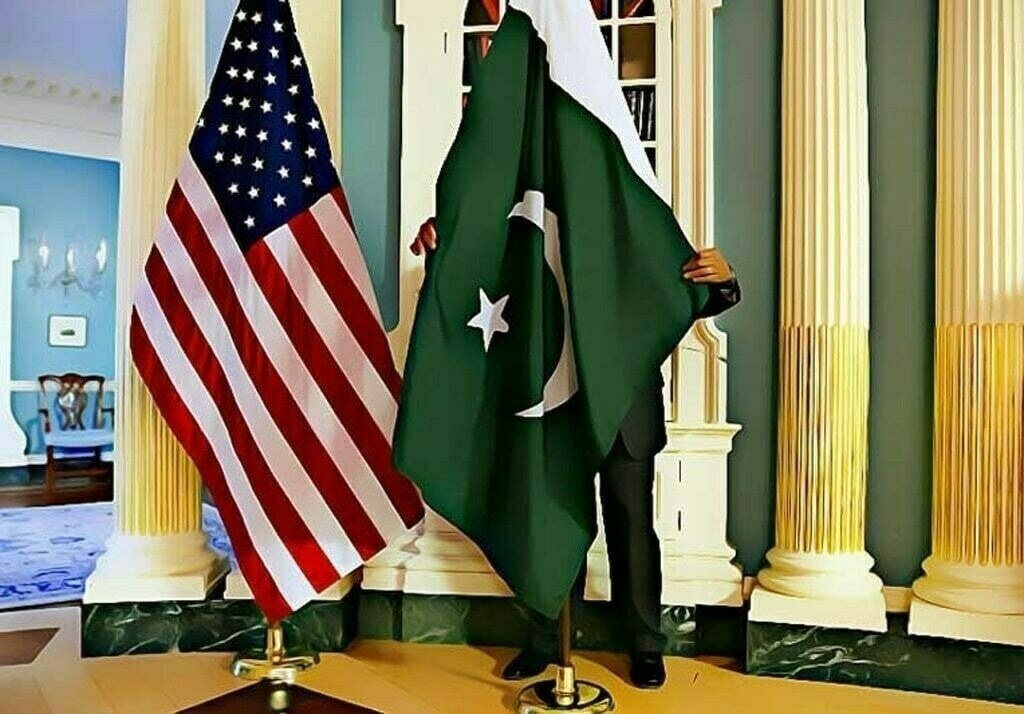

ISLAMABAD: The United States’ Acting Ambassador in Islamabad on Wednesday called on American companies to explore investment opportunities in Pakistan, praising recent economic reforms and pointing to long-term growth potential in what she described as a strategically positioned and increasingly viable emerging market.
Natalie Baker, the US Chargé d’Affairs and acting ambassador, was addressing a webinar hosted by the Business Council for International Understanding (BCIU) that brought together US and Pakistani business leaders, financial institutions, and government stakeholders.
Baker said the Pakistani economy, with a current GDP of roughly USD 412billion, remains “underutilised” but is showing signs of a turnaround.
Citing projections by Goldman Sachs, a major global investment bank known for economic forecasting, she noted the country could see its economy expand to USD 3.3 trillion by 2050 – a figure that would place it among the top 10-15 globally by size.
“Pakistan has immense economic potential that is too often overlooked,” Baker said. “That’s not just a forecast – it’s a signal to take notice.”
Pakistan, US vow to advance new trade agreement, boost trade & investment
She credited Prime Minister Shehbaz Sharif administration for what she termed “bold steps in the right direction” on structural reforms, aimed at stabilising the macroeconomic environment and restoring investor confidence following a period of political and fiscal volatility.
Baker emphasised the opportunity for deeper economic engagement between the United States and Pakistan, especially in sectors such as critical minerals, energy, agriculture, infrastructure, and information technology and communications.
“These are not just investment opportunities,” she said. “They are the foundation for long-term commercial partnerships that can generate prosperity for both economies.”
She also urged the US businesses to collaborate with the US Foreign Commercial Service team in Pakistan and to engage with local partners. “They are a bridge between ambition and implementation,” she added.
Pakistan’s large and youthful population was also highlighted as a structural advantage. With 250mn citizens – the fifth largest population in the world – and 64 per cent of them under the age of 30, Baker described the demographic profile as a potential growth engine. “That’s not just a demographic fact; it’s a driver of demand, productivity and innovation.”
Baker also pointed to Pakistan’s location at the intersection of South Asia, Central Asia and the Middle East, suggesting that the country is well placed to serve as a regional trade and logistics hub.
While the webinar focused on commercial engagement, the remarks come against the backdrop of Washington’s evolving South Asia strategy.
The US has been recalibrating its regional economic and security posture following the 2021 withdrawal from Afghanistan and amid growing Chinese influence through the Belt and Road Initiative – particularly via the China-Pakistan Economic Corridor (CPEC).
Although Baker stopped short of announcing any new policy initiatives or trade frameworks, her message was one of cautious optimism. “There’s no denying the challenges,” she said, “but there’s also no denying the horizon.”
The BCIU event forms part of wider efforts to re-engage the private sector in emerging markets amid supply chain shifts, rising geopolitical competition, and Washington’s interest in fostering alternative economic partnerships across South and Central Asia.
Copyright Business Recorder, 2025

























Comments
Comments are closed for this article.