


Pakistan’s economy now positioned on more stable footing: SBP governor
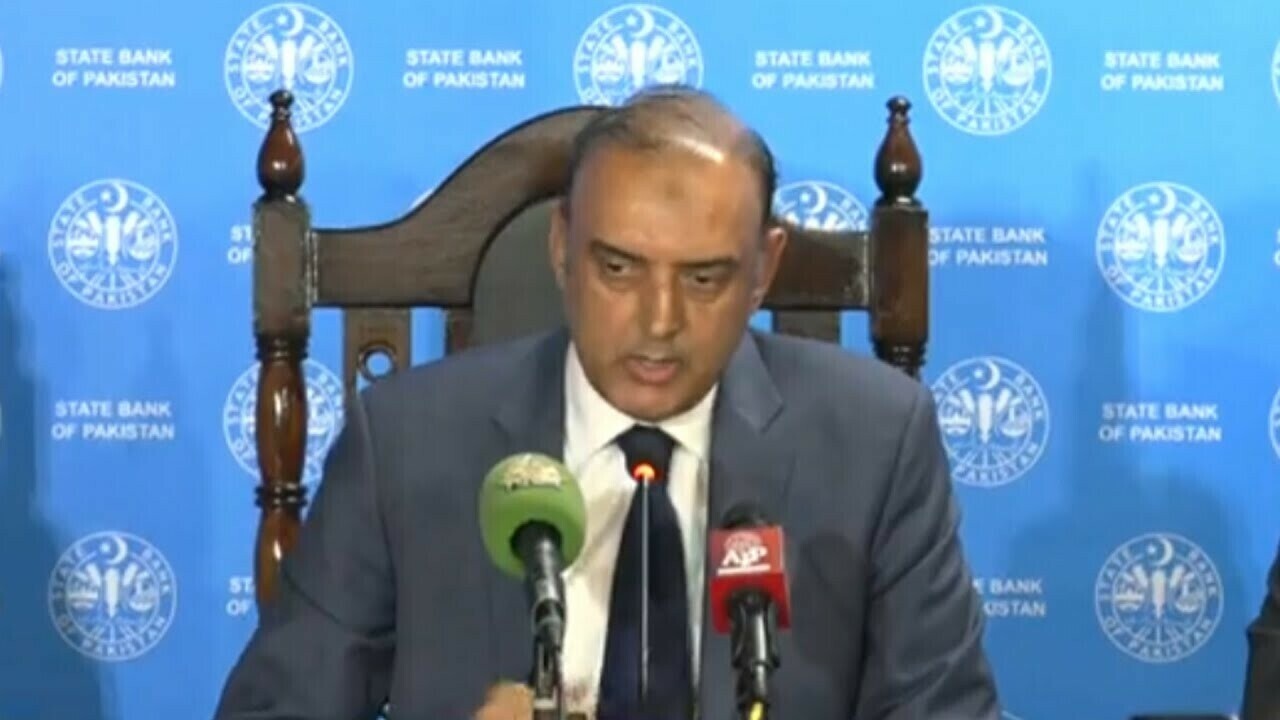

KARACHI: Governor State Bank of Pakistan (SBP) Jameel Ahmad has said that Pakistan’s economy is now positioned on a more stable footing.
He was addressing here as chief guest to the annual meeting of the Pakistan Textile Council (PTC) in Karachi.
He noted that Pakistan has successfully overcome unprecedented economic challenges since 2022, a period marked by extraordinary pressures on the external sector, high inflation, and severely depleted foreign exchange reserves.
Pakistan economy in ‘better position’ to manage domestic risks, external shocks, says SBP
He informed the participants that foreign exchange reserves, which had fallen to an alarming low of USD2.8 billion in early 2023, have now risen substantially to USD14.3 billion, a recovery that has provided renewed stability to markets.
He further pointed out that the current account deficit has narrowed significantly over the past two years, while remittances have grown to over US$38 billion in FY2025, with a notable shift from informal to formal channels that has strengthened the country’s financial system.
The Governor emphasized that inflation, which had long remained in double digits, dropped dramatically to 3.2 percent by June 2025— a historic low for Pakistan in recent decades— allowing the SBP to reduce the policy rate from 22 percent to 11 percent over the past year, a measure that has eased credit conditions for businesses and households alike.
He added that fiscal consolidation, reforms in exchange companies, and stable external debt levels have provided much-needed confidence to both domestic and international markets. “Pakistan’s economy is now positioned on a more stable footing, with growth projected between 3.25 percent and 4.25 percent in FY2026.
Our commitment is to maintain stability, build reserves, and ensure inflation remains within the 5–7 percent target range,” he stated, assuring the textile exporters of the central bank’s resolve to continue supporting sustainable economic recovery.
While acknowledging and appreciating the SBP governor’s achievements and the macroeconomic improvements presented, PTC Chairman Fawad Anwar stressed that Pakistan must urgently address deep-rooted structural barriers affecting exporters if the country is to truly capitalise on the present moment of opportunity in global trade.
He cautioned that despite stabilisation at the macroeconomic level, the cost of doing business in Pakistan remains highly uncompetitive when compared to regional peers. He expressed concern that the exclusion of essential raw materials from the Export Facilitation Scheme (EFS) has significantly burdened exporters at a time when global markets offer what he described as a once-in-a-decade opportunity for Pakistan to capture a larger market share.
Fawad Anwar reiterated the Council’s call for immediate and concrete measures to support exporters, including the withdrawal of import duties on essential raw materials excluded from the EFS, with sales tax capped at 3–5 percent and fully refundable to ensure liquidity for businesses.
He called for the introduction of a uniform 1 percent duty drawback scheme to support all exporters without discrimination and demanded subsidized financing facilities to offset rising wage and energy costs that continue to erode competitiveness.
He also highlighted the urgent need to strengthen Pakistan’s value-added exports, stressing that textiles and apparel are the backbone of Pakistan’s economy and employ millions directly and indirectly across the country. “This is the time for bold policy support so our industry can capture long-term global market share rather than lose ground to competitors,” he emphasized in his remarks, drawing attention to the risks of inaction.
The meeting concluded with a strong consensus among participants that textile exports must remain central to Pakistan’s economic recovery strategy and that coordinated action between policymakers, regulators, and industry leaders is indispensable.
It was agreed that PTC and SBP will continue structured policy dialogue, particularly on financing schemes for renewable energy and concessional export credit, in order to ensure that Pakistan’s exporters remain competitive in increasingly challenging global markets.
Copyright Business Recorder, 2025




















Comments
Comments are closed for this article.