


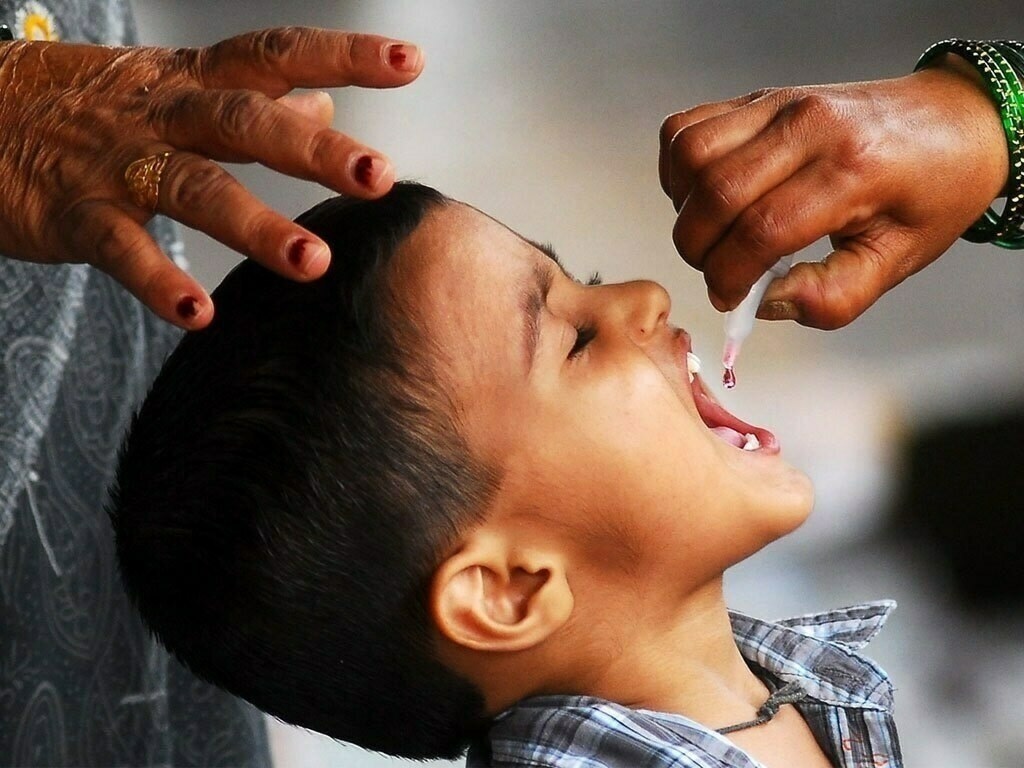
EDITORIAL: The unrelenting increase in polio cases in Pakistan, with another 23 already confirmed this year, continues to be a national embarrassment, and very rightly so. Not because the virus itself is so difficult to eradicate, but because the state continues to fail in erecting an overarching narrative strong enough to silence the lies that extremists and charlatans spread about the vaccine.
That failure is why, this far into the 21st century, thousands of parents can still be persuaded that polio drops will make their children infertile as adults, or worse, that the drops are some sinister foreign plot against Islam. What is harder, apparently, is convincing them of the truth, that the vaccine is the only reliable protection from a disease that maims children for life.
This is the real tragedy. All over the world, countries richer and poorer, larger and smaller, have managed to eliminate polio. Only Pakistan and Afghanistan remain on the wrong side of that ledger. Afghanistan’s excuse is obvious: more than four decades of war, destruction, and institutional collapse have left its health systems broken.
Pakistan has no such excuse. It has an organized immunization programme, repeated international support, and decades of experience in running campaigns. Yet here polio continues to exploit immunity gaps left by misinformation, refusal, and weak enforcement.
The figures are damning. Refusal cases in Peshawar alone numbered over 17,000 earlier this year. Bannu recorded more than 10,000, Mardan over 6,800. Each refusal represents a child left unprotected, a family persuaded by falsehood rather than fact. And each gap is one the virus can exploit, setting back years of progress. In 2023 Pakistan had reached a record low of just six cases. Today, with nearly four times as many, that achievement lies in ruins.
The state’s response has been technocratic but not persuasive. Emergency Operations Centres plan campaigns, fix dates, and deploy health workers, but they cannot fix minds poisoned by conspiracy theories. Local clerics and militant groups fill the vacuum, spreading propaganda with greater conviction than official voices ever muster. It is telling that a rumour whispered in some village seminary carries more weight than the government’s decades-long message that vaccination saves lives. That is a failure of political will, of communication, and of credibility.
What Pakistan needs is not more campaign calendars but a national narrative: a unified, unambiguous voice from political, religious, and community leaders that eradication is a collective obligation. A campaign that treats disinformation as seriously as the disease itself and that mobilises every platform – schools, mosques, media, and digital spaces – to reinforce the same message.
The shame runs deeper still. For every parent who refuses the drops, there are health workers who risk their lives going door to door. Some have been threatened, others killed, simply for trying to protect children from paralysis. Their courage is betrayed when the state cannot even sustain the narrative support needed to back their work. To allow extremists to set the terms of debate is to abandon both the workers on the front lines and the children whose futures depend on them.
Polio eradication is not a technical impossibility; it is a political and social one. Unless Pakistan confronts the propaganda that sustains refusal and crafts an authoritative counter-narrative, the cycle will repeat endlessly.
Copyright Business Recorder, 2025




















Comments
Comments are closed for this article.