


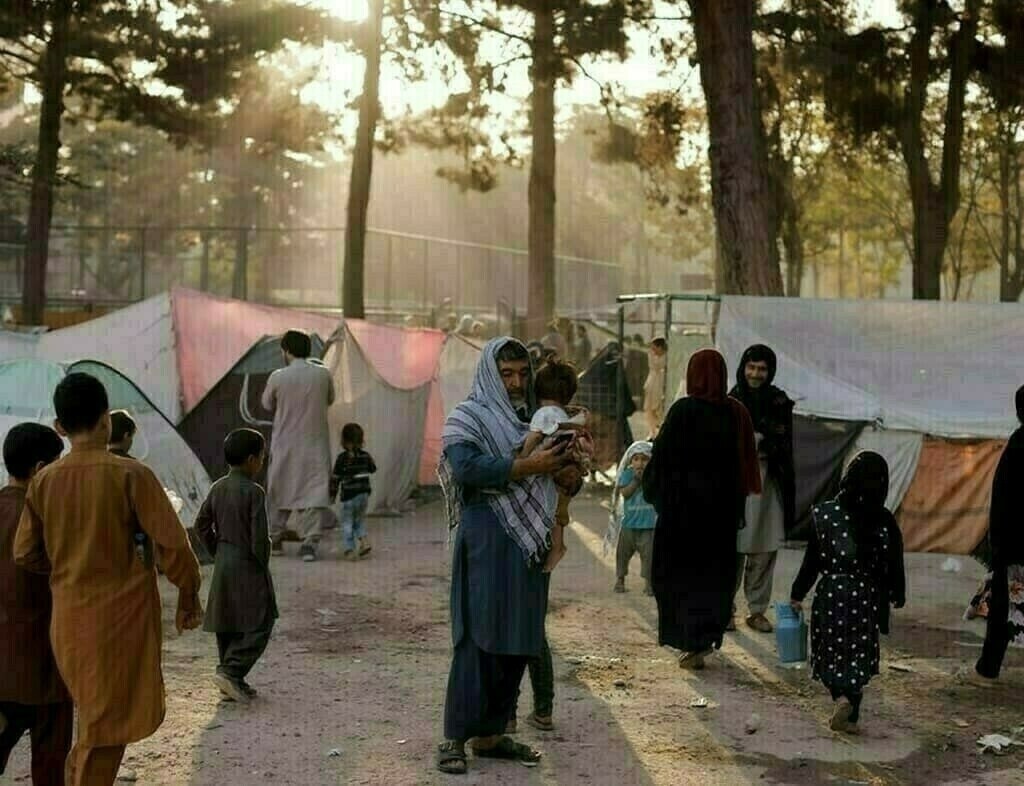

ISLAMABA: A Senate panel on Friday scrutinised the federal government’s phased repatriation of undocumented foreigners, expressing mounting concern over the treatment of Afghan refugees, the lapse of international agreements, and the opaque status of refugee settlements across the country.
The Senate Standing Committee on Kashmir Affairs, Gilgit-Baltistan, and States and Frontier Regions, chaired by Senator Asad Qasim, was briefed by officials from the Commissionerate for Afghan Refugees (CCAR).
They revealed that over 48,000 holders of Afghan Citizen Cards (ACC) had been expelled since April under the second phase of the government’s “Illegal Foreigners Repatriation Plan.”
The third phase, targeting those in possession of Proof of Registration (PoR) cards, is set to commence on 1st September.
Officials disclosed that nearly 300,000 Afghans had returned voluntarily. However, some 80,000 remained in Sindh, with notable populations persisting in Khyber Pakhtunkhwa and Balochistan.
The committee members raised alarm over the apparent underreporting of undocumented individuals and a significant decline in international support for refugee-related programmes.
The committee was informed that Pakistan’s cooperation agreement with the United Nations High Commissioner for Refugees (UNHCR), last revised in 2009, had expired, reducing engagement to emergency assistance alone.
Senator Qasim questioned the utilisation of foreign aid and called for clarity on the ownership of the country’s 54 refugee camps.
He underscored the need for a comprehensive and updated refugee strategy that reconciles humanitarian responsibility with national security priorities.
“You know the numbers, you know the funds received—now we must ensure accountability, inter-ministerial cooperation, and clarity on the way forward,” he asserted.
The committee also emphasised the urgent need for synchronisation between federal and provincial authorities and greater transparency in managing refugee affairs.
Separately, the panel voiced grave concern over inadequate disaster preparedness in Azad Jammu and Kashmir (AJK) and criticised the government’s broader handling of refugee repatriation.
Lawmakers took exception to the absence of the Chief Secretary of Gilgit-Baltistan, declaring the non-participation of senior officials detrimental to effective parliamentary oversight.
The agenda pertaining to Gilgit-Baltistan was accordingly deferred, with directives issued for senior representation in the next sitting.
Representatives of the State Disaster Management Authority (SDMA) briefed the committee on damages incurred during the ongoing monsoon. Since 26th June, the region has endured nine spells of torrential rain following a May cloudburst.
The resultant destruction has left 28 dead and over 2,100 homes damaged. Critical infrastructure – including road networks, water systems, educational institutions, and power facilities – has also suffered extensive losses.
Senator Qasim cautioned against the underreporting of damage assessments, warning that such discrepancies risk eroding public confidence.
He censured the local administration for its failure to restrict tourism in high-risk zones, despite early warnings issued by the National Disaster Management Authority (NDMA).
Calling for the establishment of early warning systems at 100-kilometre intervals across AJK, the senator also urged full transparency in disbursing the Rs3 billion in relief funds approved by the Economic Coordination Committee (ECC).
He proposed forming an independent oversight body comprising parliamentarians, judicial officials, and civil society representatives to monitor fund deployment and implementation.
Highlighting communication breakdowns during emergencies, the committee noted that private telecom providers had failed to maintain service in remote areas, leaving the state-run Special Communication Organisation (SCO) as the sole operational network.
The committee recommended utilising the Universal Service Fund to enhance digital connectivity, particularly in regions reliant on tourism.
The session concluded with directions to summon the Chief Secretary of Gilgit-Baltistan and other relevant officials for a comprehensive briefing on flood damages and mitigation measures at the next meeting.
Copyright Business Recorder, 2025




















Comments
Comments are closed for this article.