


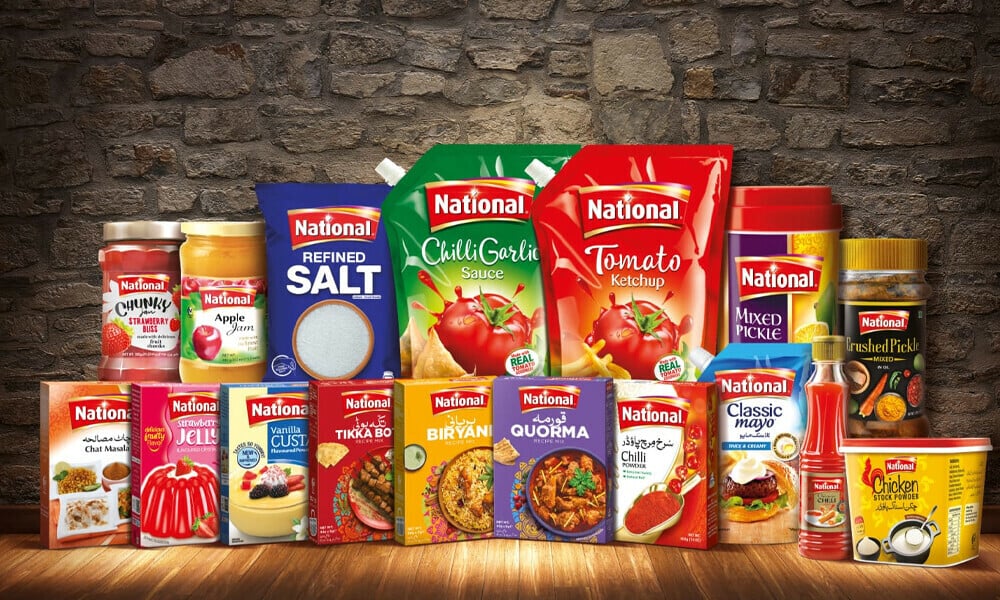

LAHORE: Amidst Pakistan’s food export sector experiencing challenges in expanding globally, National Foods has maintained steady export growth over the past five years, rising from PKR 1.5 billion in FY2019–20 to nearly three times that value today.
Pakistan’s food sector faces multiple regulatory, quality, logistics, and cost-related challenges. Logistics issues due to geopolitical disruptions, higher costs, and competitive pressures, such as shelf space availability, customization demands, and higher distributor margins affect the competitiveness of Pakistani products.
Regardless of these obstacles, this export growth trajectory reflects both growing international demand and the company’s continued focus on strengthening its global presence.
North America and the GCC remain the National Foods Limited’s largest export markets, supported by expanding ethnic populations, globalization, and rising consumer interest in world cuisines. Growth has also been driven by entry into mainstream retail channels and a greater emphasis on world foods.
National Foods’ officials speaking to journalists during a recent visit to the company’s Faisalabad plant explained that overcoming these challenges requires systemic reforms and stronger government support. They advised that without targeted action, Pakistan may face slower progress in global food trade.
However, with the right measures, the sector could enhance its competitiveness, diversify exports, and significantly expand its footprint; strengthening Pakistan’s economic position, attracting investment, and contributing to broader growth and poverty reduction. They called for regulatory simplification, financial incentives, infrastructure improvements, and greater trade facilitation to reduce inefficiencies and help exporters succeed in international markets.
They said National Foods also posted strong financial results, reporting a 17 per cent increase in net sales to over Rs. 74 billion and a net profit of approximately Rs. 3.6 billion after tax in the first nine months of the last fiscal year.
Marking one year of successful operation, the company’s Faisalabad facility has emerged as a global hub for sauces tailored to diverse international tastes. With exports now reaching more than 40 countries, the plant has played a key role in meeting demand from younger consumers blending Asian and Pakistani flavours in their cooking. Seasonal promotions, trial campaigns, and the launch of a new sauces range in markets such as North America, the UK, the UAE, and Saudi Arabia have fuelled growth.
Built with an investment of over Rs. 7 billion, the Faisalabad plant now accounts for nearly 70 percent of National Foods’ culinary and condiments business. Equipped with SCADA-based automation and a monthly production capacity of 6,000 tons, it complies with rigorous international certification standards, ensuring seamless access to export markets.
The facility also has a significant local impact, employing over 600 people and providing training in technical, quality, and safety skills. In 2024, the company launched the Ibtida Program, a two-year apprenticeship initiative for women in technical roles, with its first batch of 20 trainees already in place, officials concluded.
Copyright Business Recorder, 2025























Comments
Comments are closed for this article.