


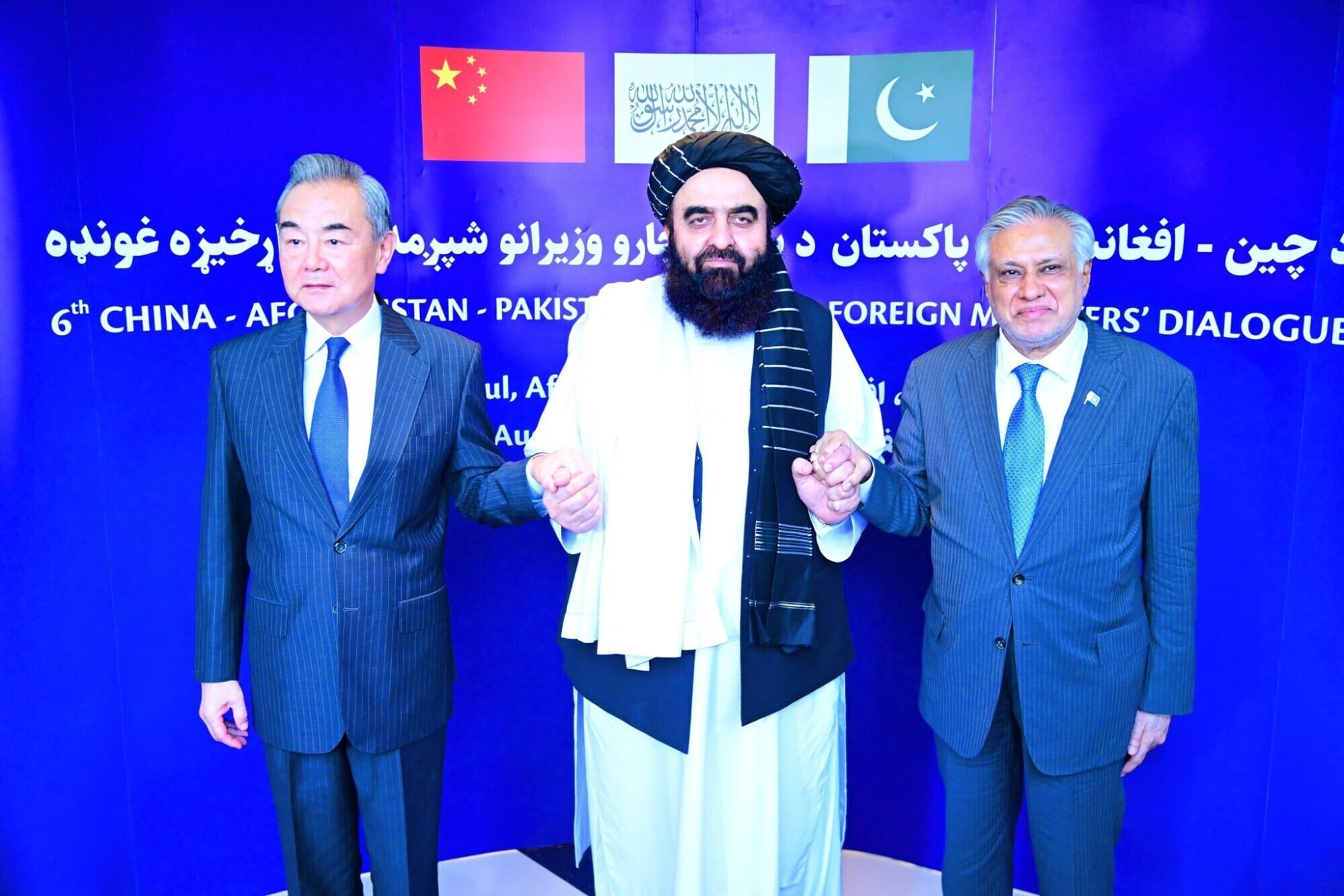
EDITORIAL: During a trilateral dialogue in Kabul on Wednesday, the foreign ministers of Pakistan and China voiced serious concerns over the worsening security situation in the region, even as they reiterated offers of economic cooperation and the extension of the China-Pakistan Economic Corridor (CPEC) into Afghanistan.
While the meeting officially focused on regional connectivity and development, security issues clearly dominated both the trilateral agenda and the bilateral discussions that the visiting Pakistani and Chinese delegations held with Taliban officials.
Pakistan’s Deputy Prime Minister and Foreign Minister Ishaq Dar, in talks with Afghanistan’s acting Foreign Minister Amir Khan Muttaqi, noted that while “encouraging progress” had been made in political and commercial ties, advances in the security domain, particularly counterterrorism, continue to lag. Behind this polite diplomatic phrasing lies growing frustration with Kabul’s persistent failure, or reluctance, to rein in militant groups threatening Pakistan’s security.
At an earlier round of trilateral talks in May, Pakistan had secured promises of enhanced security coordination. However, those promises have yet to translate into action. Despite repeated diplomatic engagement, the Kabul regime has failed to take any meaningful or verifiable action against the Tehreek-i-Taliban Pakistan (TTP) and the Baloch Liberation Army (BLA)—groups that not only undermine Pakistan’s internal security but also endanger wider regional stability.
The gravity of the threat was underscored in a UN Security Council report released last month, which highlighted the group’s access to advanced weaponry and its strengthening links with the IS-K, al-Qaeda, and Baloch insurgents. This convergence of militant networks has created a dangerously volatile environment, particularly for Pakistan; and also for countries farther afield. According to the UNSC report,
This has gone on in blatant violation of the Taliban’s own commitments under the 2020 Doha Agreement, in which they pledged not to allow Afghan soil to be used for attacks against other countries. The Taliban government, nevertheless, faces its own peculiar challenges.
It remains diplomatically isolated and under pressure from hard-line factions aligned with the reclusive supreme leader Hibatullah Akhundzada based in Kandahar, to act the way it does. Yet, the regime aspires to broader diplomatic recognition and deeper economic ties with regional partners. For that to happen it must show that it can fulfil one of the most basic responsibilities of a sovereign state: preventing its territory from being used to threaten the security of its neighbours.
Copyright Business Recorder, 2025




















Comments
Comments are closed for this article.