


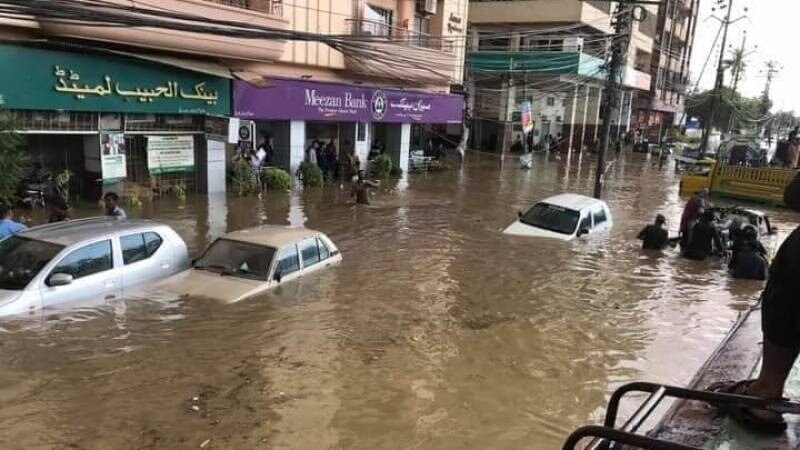

The Sindh government has found a convenient scapegoat for Karachi’s drowning streets: climate change. As the city went underwater beginning August 19th, ministers and bureaucrats were quick to blame extreme weather events, as if torrential rain were some sort of exotic surprise sprung upon them by the heavens. It is an old trick.
Invoke climate change, and suddenly decades of failure to govern, plan, and build fade conveniently into the background.
The argument goes something like this: infrastructure is not built to withstand extreme events, and now the new climate normal has pushed urban systems beyond their design limits.
Cute, but false. Even the latest infrastructure built after previous extreme monsoon seasons does not account for heavier rainfall, let alone the city’s exploding demographics.
Flyovers and underpasses inaugurated with ribbon-cutting ceremonies collapse into reservoirs at the first sign of rain. Drains that were supposedly widened and cleaned clog within hours.
Power lines short, pumping stations stall, and neighborhoods turn into fetid lakes. Karachi does not flood because of climate change. It floods because it is neglected.
Let us be clear. Cities with far greater rainfall manage to stay functional because they plan for density, drainage, and future shocks. Tokyo, Mumbai, and even Dhaka have invested in underground reservoirs, pumping systems, and adaptive urban design. Karachi, by contrast, has not even managed to preserve its natural drainage.
The nullahs are choked with encroachments that authorities selectively bulldoze when television cameras show up, only to allow the same encroachments back again. This is not poor luck. It is the structural choice to keep Karachi in a permanent state of infrastructural decay.
And the costs are not borne equally. The elites may retreat to gated enclaves with private generators and pump water out of their homes onto main roads while two-wheelers drown under water. The working class trudges through sewage to reach informal jobs, losing hours of income in transit.
The city bleeds productivity, dignity, and health every monsoon. Yet the ruling party in Sindh continues to talk of global warming as if the issue were out of their hands, when the truth is that the crisis is of their own making.
If anything, climate change is about to make the political cost steeper. As rural livelihoods collapse under erratic rainfall and rising temperatures, rural to urban migration will accelerate. Karachi will remain the magnet for those fleeing climate-induced agricultural decline.
More mouths to feed, more bodies to house, more pressure on roads, drains, and water lines already gasping under today’s load. The government can continue pretending this is a problem imported from abroad. In reality, it is a governance failure incubated right here in Sindh over the last 17 years.
The irony is that by refusing to prepare Karachi for the demographic surge, the party that has ruled Sindh for decades is writing its political obituary.
Urban voters may have tolerated neglect when migration was slow and Karachi’s middle class still had escape valves. That patience is gone. A younger, angrier electorate will not forgive the sight of their city drowning year after year while their rulers shrug and point at the skies.
It is fashionable in officialdom to throw climate jargon into press releases and donor meetings. But the residents of Karachi are not drowning in PowerPoint presentations about resilience. They are drowning in water that refuses to drain because the pipes were never laid, the nullahs were never cleared, and the planning was never done.
To pretend otherwise is not just denial. It is a lie. And sooner rather than later, it is a lie that will extract a political price.

























Comments
Comments are closed for this article.