


Flood warning systems: PTI accuses govt of wasting $188m in World Bank funding
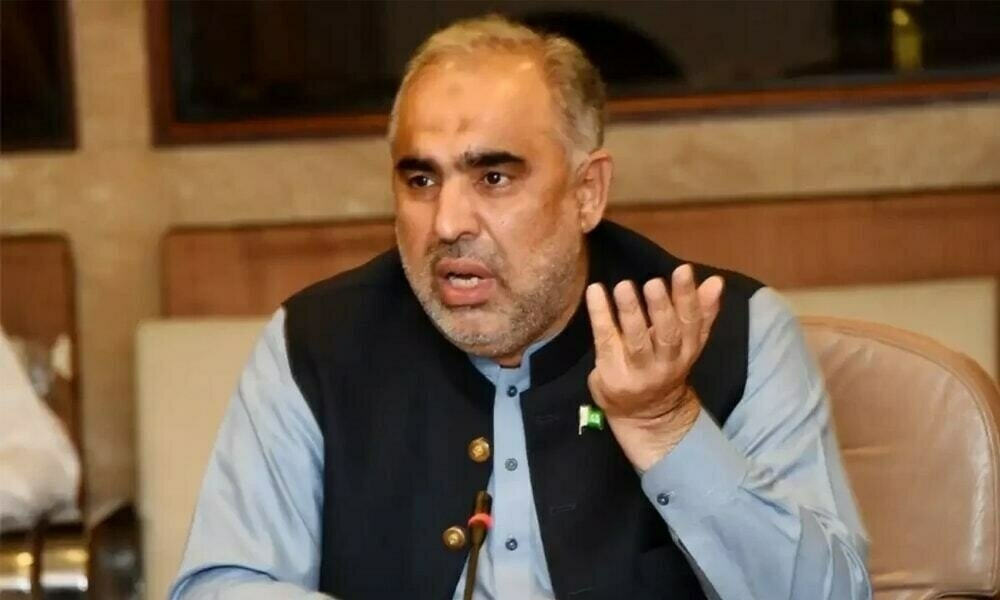

ISLAMABAD: Senior Pakistan Tehreek-e-Insaf (PTI) leader and former National Assembly speaker Asad Qaiser on Monday accused the federal government of wasting $188 million in World Bank funding intended to upgrade Pakistan’s flood warning systems in the aftermath of the devastating 2022 floods.
The funds were allocated under the Integrated Flood Resilience and Adaptation Project (IFRAP), a World Bank-backed initiative aimed at modernising the country’s flood forecasting capabilities, including the installation of advanced radar systems to provide early warnings to at-risk communities.
Nearly three years later, however, little progress has been made.
“These radar systems were supposed to revolutionise our meteorological infrastructure and save lives,” Qaiser said. “But the government hasn’t even completed the tendering process. This delay has directly affected our ability to warn communities during the recent monsoon floods.”
The 2022 floods – among the worst in history of the country – killed over 1,700 people, displaced millions, and caused an estimated $30 billion in damage.
In the aftermath, international lenders pledged significant support, but critics say poor coordination and bureaucratic gridlock have stalled critical recovery efforts.
Officials familiar with the project cite a lack of coordination between the Pakistan Meteorological Department (PMD) and the Ministry of Planning and Development, headed by Ahsan Iqbal, as a major cause of the delays.
Qaiser said he plans to raise the issue in parliament and directly with the World Bank, criticising what he called a “troubling silence” from both the lender and the government.
“Implementation has stalled, and the World Bank has yet to publicly respond to the government’s failure to deliver on its loan commitments,” he said.
Prime Minister Shehbaz Sharif has yet to comment publicly on the issue, despite ongoing flooding across rural areas – including last week’s flash floods in Khyber Pakhtunkhwa, Gilgit-Baltistan, and Azad Kashmir, which claimed more than 650 lives.
“This is not just a natural disaster – it’s a governance failure,” said a senior Planning Ministry official familiar with the project.
While the National Disaster Management Authority (NDMA) has launched Pakistan’s first weather satellite and partnered with private weather firms, experts warn that without a functioning radar network, such efforts are insufficient.
As the current monsoon season causes further destruction, pressure is mounting on the government – and its international partners – to act on the pledges made after the 2022 crisis.
Copyright Business Recorder, 2025


























Comments
Comments are closed for this article.