


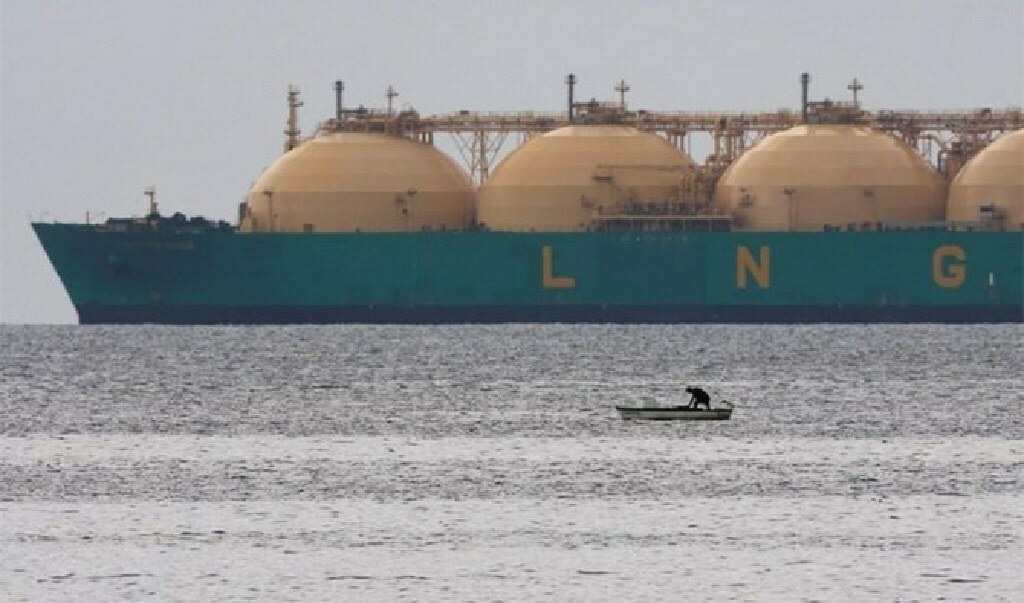

The current financial stress in the gas sector is partially obscured by elevated LNG spot prices, which are currently above Pakistan’s LNG contract price.
However, with over 174 MTPA of new liquefaction capacity coming online starting 2026 and global supply projected to outpace demand, global spot LNG prices are expected to decline substantially.
In such a scenario, the viability of diverting surplus cargoes under the Net Proceeds mechanism will diminish significantly. In addition, the allocation of 25 surplus cargoes to SNGPL for FY26 has increased its prescribed price from Rs 1,330 to Rs 1,890.25 per MMBtu.
RLNG: Supply glut or policy failure?—I
RLNG diversion to residential consumers yields an average recovery of ~ USD 4 per MMBtu, significantly below the delivered cost of ~ USD 12 per MMBtu. This results in a subsidy of ~ USD 8 per MMBtu, a major contributor to the gas sector circular debt, now exceeding Rs 3 trillion.
The RLNG surplus has also triggered curtailment of ~270 MMCFD of indigenous gas production, resulting in losses of ~ USD 378 million to upstream E&P companies, according to OGDCL. This is particularly concerning given the country’s rapidly depleting indigenous gas reserves and the urgent need to incentivize new E&P investments. Addressing the RLNG surplus and reviving local industrial demand for gas/RLNG are essential to restart the oil and gas exploration and development cycle.
Meanwhile, despite the transition of CPPs to the grid—as reflected by the ~90 percent decline in captive gas consumption—the situation in the power sector has shown no improvement.
Following a 21 percent YoY increase in generation in April, generation for May and June was only 1-1.5 percent higher in FY25 compared to FY24, and 3 percent below the reference generation level in June 2025. Overall, generation in the fourth quarter of FY25 showed no improvement. Effectively, the gains from the CPP transition to the grid have been wiped out by consumers shifting to on- and off-the-grid solar solutions, meaning that the industry’s competitiveness has been scapegoated to extend a short lifeline to an otherwise unsustainable grid stuck in a utility death spiral.
In response to the severe financial crisis created by the deliberate destruction of captive power demand and the resulting RLNG surplus, the government is now resorting to issuing massive RLNG price adjustment bills, spanning a decade from 2015 to 2022, and demanding payment within an unreasonably short timeframe of 2 working days. Bills amounting to hundreds of millions of rupees were delivered without any warning, transparent calculations, or proper reconciliation, especially given that RLNG rates were capped at significantly lower levels during much of this period.
Reopening settled accounts from years past is tantamount to unleashing a Pandora’s box, creating an untenable situation for manufacturers who have already fulfilled their contractual obligations and sold their output, largely for export markets. The industry finds itself bewildered as to how it could possibly mobilize such large sums with no warning. It is utterly baffling, and frankly reckless, that the government expects fresh investment to flow into Pakistan when it is busy slapping existing investors with unexpected, decade-old RLNG price adjustment bills, turning their financially stable businesses into a nightmare from the past.
The ongoing crisis in Pakistan’s gas sector is fundamentally rooted in mismanagement and deliberate suppression of RLNG demand from industrial captive users. Contrary to narratives of a supply glut, there is ample demand within the industrial sector for RLNG at full market prices — without any government subsidy. Yet, distortionary policies continue to obstruct the natural supply-demand equilibrium.
To move forward, it is imperative to first confront the truth: the core issue lies in excessive government regulation. The same regulatory chokehold historically pushed industries into captive power generation, led to bloated surplus generation capacity on the grid, and now forces industries to consume this surplus grid power, simultaneously fostering an RLNG surplus in the gas market.
Undoubtedly, the high share of stranded capacity on the grid must be addressed, but it is untenable and entirely short-sighted to impose those costs on the industrial sector, the backbone of any economy. This sector provides jobs, generates tax revenue, earns foreign exchange, and drives a high economic multiplier effect. As the government continues down the path of destroying industry through punitive energy policies, it jeopardises the very economic foundation on which the country’s economic future depends.
The real solution requires dismantling these regulatory constraints and empowering competitive, market-based energy systems. The government must relinquish its heavy-handed control and allow industries the freedom to select their energy sources—free from both subsidies and policy distortions. Pakistan’s latent energy demand is vast but remains constrained by restrictive policies. By restoring market dynamics and abandoning one-size-fits-all mandates, Pakistan’s energy sector can regain stability and efficiency, paving the way for broader economic recovery and sustainable growth.
(Concluded)
====================================================================================
CPPA-G Power Generation (as per FPA petitions)
====================================================================================
         FY25 Actual   FY24 Actual   FY25 Change     FY25 Reference      FY25 Change
         ('000 GWh)    ('000 GWh)    over FY24       ('000 GWh)       over Reference
------------------------------------------------------------------------------------
April    10.4          8.6           20.93 percent   10.2               1.96 percent
May      12.8          12.6          1.23 percent    12.6               1.23 percent
June     13.7          13.5          1.48 percent    14.1              -2.84 percent
Q4       36.9          34.7          6.21 percent    36.9              -0.12 percent
====================================================================================
Copyright Business Recorder, 2025

PUBLIC SECTOR EXPERIENCE: He has served as Member Energy of the Planning Commission of Pakistan & has also been an advisor at: Ministry of Finance Ministry of Petroleum Ministry of Water & Power
PRIVATE SECTOR EXPERIENCE: He has held senior management positions with various energy sector entities and has worked with the World Bank, USAID and DFID since 1988. Mr. Shahid Sattar joined All Pakistan Textile Mills Association in 2017 and holds the office of Executive Director and Secretary General of APTMA.
He has many international publications and has been regularly writing articles in Pakistani newspapers on the industry and economic issues which can be viewed in Articles & Blogs Section of this website.
The author is Energy Advisor at APTMA, Islamabad, and holds an MPhil in Strategic Studies from the National Defence University. With more than two decades of professional experience, he specializes in energy security, geopolitics and non-traditional security threats. His academic background also includes Energy Management and Mechanical Engineering.




















Comments
Comments are closed for this article.