


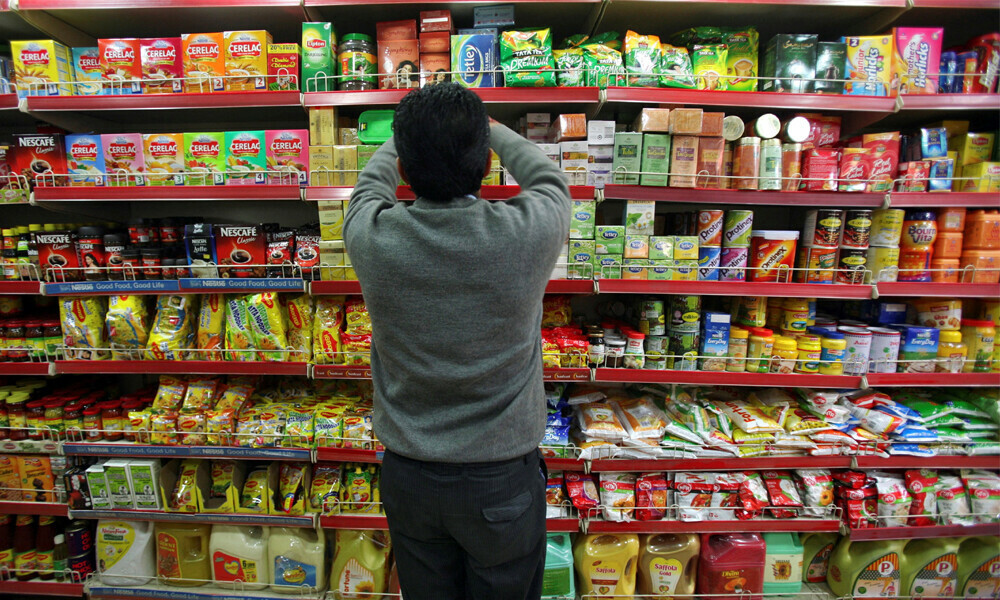

NEW DELHI: India’s retail inflation in July eased below 2% for the first time in eight years, on the back of falling prices of food items including vegetables and pulses, hurting some farmers, but will have limited impact on the central bank’s policy decision.
Annual retail inflation slowed to 1.55% in July as compared to 2.10% in June, and below a Reuters poll of 1.76%.
The figure was the lowest since June 2017, according to a government statement, and below the Reserve Bank of India’s tolerance band of 2%-6%. The RBI is mandated to not let inflation fall below or above the range for more than three quarters.
“These inflation numbers are on expected lines,” said Madan Sabnavis, an economist at Bank of Baroda, adding that the impact on the RBI’s policy decision will be muted.
The central bank lowered its inflation forecast for the current financial year to 3.1% from 3.7% earlier at its meeting earlier this month.
The Reserve Bank of India held key interest rates steady earlier this month, saying the growth prospects of the domestic economy remained bright.
That was before U.S. President Donald Trump imposed an additional tariff of 25% on India - raising duties on Indian goods to 50%, among the highest levied on U.S. trading partners.
The Indian government has estimated about 55% of the country’s merchandise exports to the United States will be subject to the tariffs.
Some economists expect the low inflation and growth impact from tariffs to leave room for another rate cut.
“The RBI’s already-lowered 12-month forecast may be undershot, raising the likelihood of further rate cuts, particularly as U.S. tariffs could shave 30–40 bps off GDP growth,” said Sujan Hajra, chief economist at Anand Rathi Group in Mumbai.
Food prices have been the main driver for the drastic fall in inflation for the last eight months. Prices in July fell 1.76% compared to a revised fall of 1.01% in June.
Vegetable prices fell 20.69% compared with a 19% year-on-year fall in June, while prices of pulses dropped 13.76% compared to a 12% decline in the previous month.
Declining food prices are beginning to hurt farmers, Citibank’s chief India economist Samiran Chakraborty said in a note earlier this month.
Farm cost inflation has risen while food prices are entering deflationary territory, Chakraborty said, citing this as a key reason that Citi’s rural consumption index has peaked.
On a month-on-month basis, vegetable prices rose although the cost of pulses continued to decline.
Core inflation, which excludes volatile items such as food and energy and is an indicator of domestic demand, was at 4%-4.12% in July versus 4.4%-4.5% in the previous month, according to two economists.
India’s official statistics agency does not publish core inflation data.


























Comments
Comments are closed for this article.