


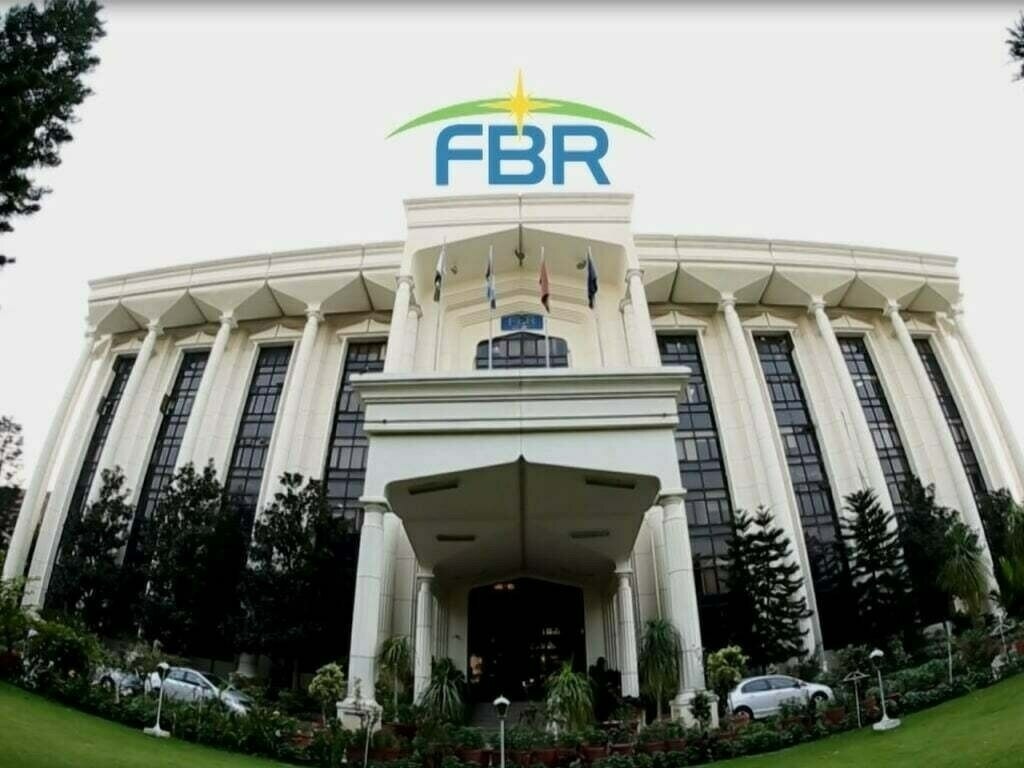
EDITORIAL: There’s no question that the state must raise more revenue. Nor is there any debate that Pakistan’s woefully low tax-to-GDP ratio is a structural flaw that perpetuates fiscal weakness and external vulnerability. But how the Federal Board of Revenue (FBR) intends to go about fixing this deficit problem is a conversation that’s long overdue; and deeply troubling.
At the heart of the Karachi Chamber of Commerce and Industry’s (KCCI’s) protest before the Senate finance committee is a simple democratic principle: tax collection agencies must not be empowered to play judge, jury, and executioner. No modern economy can function if the business community is subjected to arbitrary arrests, vague definitions of tax fraud, and unchecked authority in the name of ‘reform’. That’s not reform; it’s a regression.
Section 37A of the Sales Tax Act, as it now stands, allows Inland Revenue officers to arrest directors, CEOs, CFOs, and other individuals on mere suspicion of tax fraud. That’s not only a procedural red flag, it’s an open invitation to harassment, corruption, and vendettas. Combine this with the vague language of Section 14AE and the e-bilty provision under Section 40C, and you have a legal minefield designed less to broaden the tax base and more to create fear.
KCCI is right to warn that such tactics will backfire. The business community, already battered by high inflation, interest rates, and inconsistent policymaking, is unlikely to respond to coercion with compliance. Capital will flee. Entrepreneurs will hesitate. Informality will deepen. And whatever incremental revenue gains FBR hopes to extract will be dwarfed by the long-term damage to business sentiment and the investment climate.
That’s the paradox of the FBR’s approach – the more aggressively it pushes, the more resistance it invites. Instead of incentivising entry into the documented economy, it’s making registration seem like a legal risk. If the very act of becoming a sales tax filer puts a target on your back, why would any SME volunteer for the privilege?
This is precisely why genuine FBR reform, not just legal overhauls or digitisation pilots, is urgently needed. Reform must start with a shift in institutional culture, away from treating taxpayers as adversaries and toward serving them as stakeholders in the national interest. The Board’s focus should be on transparency, automation, narrowing discretion, and eliminating avenues for rent-seeking; not expanding the power to arrest without trial.
Digital invoicing, for example, is a good idea in principle, but rolling it out without cost controls or adequate infrastructure will only create new choke points. A phased approach, starting with large firms and public companies, makes far more sense than blanket mandates enforced by integrators that charge fees. Similarly, cracking down on fake and flying invoices is essential, but that can be achieved through targeted enforcement and data analytics, not blanket arrest powers under loosely defined fraud statutes.
The Senate committee must listen to what the KCCI and other chambers are saying. There’s no appetite in the real economy for heavy-handed tactics disguised as reform. If this government genuinely wants to build a tax culture in Pakistan, it must build trust first. That means drawing a firm line between enforcement and abuse, and ensuring the FBR is part of the solution, not part of the problem.
There’s still time to course-correct. But if the finance ministry insists on giving FBR more sticks without carrots, it won’t just be businesses that suffer; it’ll be the entire economy.
Copyright Business Recorder, 2025

























Comments
Comments are closed for this article.