


Majority of Pakistanis prefer shopping from offline local markets, Gallup survey finds
- Survey, conducted between March 7 and 22, is based on sample of 779 adults

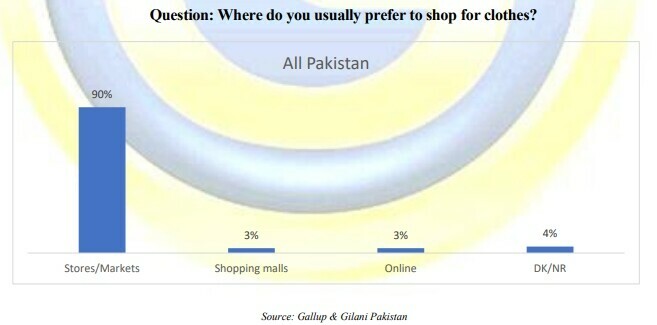
A recent Gallup & Gilani Pakistan survey has revealed that an overwhelming 90% of Pakistanis prefer shopping for clothes at local stores or markets, making them the most favoured retail destinations across the country.
In sharp contrast, only 3% of respondents reported a preference for shopping malls and 3% other for online platforms, highlighting a significant gap between traditional and modern retail modes in the country.
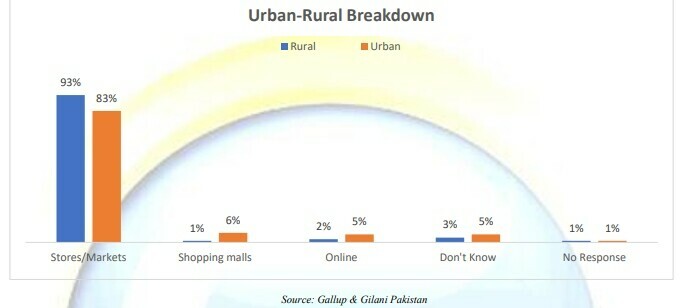
The preference for in-person shopping is even more noticeable in rural communities, where 93% of respondents rely on local markets, compared to 83% in urban areas. Urban shoppers exhibited slightly more changed preferences, with 6% choosing shopping malls and 5% opting for online platforms.
Is the budget changing how government views e-commerce?
The survey, conducted between March 7 and 22 was based on a sample of 779 adult men and women across urban and rural areas in all four provinces. Data was collected through Computer-Assisted Telephone Interviews (CATI), with a margin of error of approximately ±2-3% at a 95% confidence level.
Key findings:
- 90% prefer local stores/markets
- 3% shop at malls
- 3% use online platforms
- 4% gave no response or said “don’t know”
According to Gallup & Gilani Pakistan, the strong preference for traditional retail reflects both cultural shopping habits and limited accessibility to digital platforms, especially in less urbanised regions.
The study underlines the importance of local markets in Pakistan’s retail landscape, particularly for clothing purchases, and suggests that businesses targeting rural markets must continue to prioritise brick-and-mortar strategies.
Budget 2025-2026: Pakistan govt has no vision beyond fiscal survival
For e-commerce and mall-based retailers, the challenge remains: how to win trust and access in a population deeply rooted in traditional shopping behaviours.
























Comments
Comments are closed for this article.