



In today’s interconnected world and the new global order, trade corridors are essential highways of the global economy and strategic tools for geopolitical and geo-strategic influence. Global trade is being conducted in a turbo-charged manner. The threats of blockades of shipping routes such as the Suez Canal, Strait of Hormuz, or the Malacca Strait, keep buyers and sellers on edge.
In such a situation, countries want to have alternatives. Shipping is the better mode of cost-effective transportation of goods, but the volatile and unpredictable ramifications of conflicts between nations disrupt trade. China took the pioneering initiative by establishing the Belt and Road Initiative in which China Pakistan Economic Corridor is the bedrock component.
Cargo through corridors is increasingly being done through multimodal transportation network connecting rail, road, and maritime routes. However, conflicts and tensions among neighboring countries within the route of such corridors impede the success and critical mass of such corridors.
Global trade has often been hostage to the arbitrary, pernicious, and harmful imposition of economic sanctions on countries or regions that do not comply with the diktat of economic and military behemoths. More often than not, the economic sanctions are routed through the United Nations, which is subservient to countries that provide substantial financial resources to the world body.
Russia analyzed the situation and initiated its own corridor in association with selected countries. The International North-South Transport Corridor was established in 2000 by Russia, India and Iran with the objective of establishing a corridor as an alternative to transporting and facilitating goods via the Suez Canal as well as to reduce the time and cost of delivery of goods. Belarus, Kazakhstan, Tajikistan, Oman, Armenia, Azerbaijan, Ukraine, Kyrgyzstan, Syria, Turkiye, and now Pakistan have joined the project.
The INSTC should be active in tandem with BRI, and enable the South Asian, Central Asian, and West Asian nations to link with other Eurasian countries. Pakistan is now part of this new initiative because, for obvious political reasons,
Pakistan has been excluded from BRICS, and was not one of the original members of INSTC. It is also crucial to promote formation of CAPRI as a sub-regional economic, political, and defense bloc as this would provide a geostrategic base for Pakistan in resolving issues with neighbors. CAPRI stands for China, Afghanistan, Pakistan, Russia, and Iran. CAPRI can be linked to INSTC and BRI.
It is taken for granted that countries keep changing their alliances and policies as per the prevailing world scenario. The USA is dead set on a mission to curb Chinese influence on countries that are within the BRI outreach. Israeli guidance to Washington has enabled the USA and India to be strategic partners. This has led Russia to revisit its economic and defence ties with New Delhi.
The INSTC would work superbly for Pakistan and Russia, and the first train to leave Karachi will be the harbinger of a grand alliance of the future. Pakistan will gain hugely if the policymakers and politicians do not play politics with INSTC as they purportedly did with CPEC. According to Indian defence analyst Pravin Sawhney, “Pakistan joining the INSTC makes perfect sense since it is located on the route.”
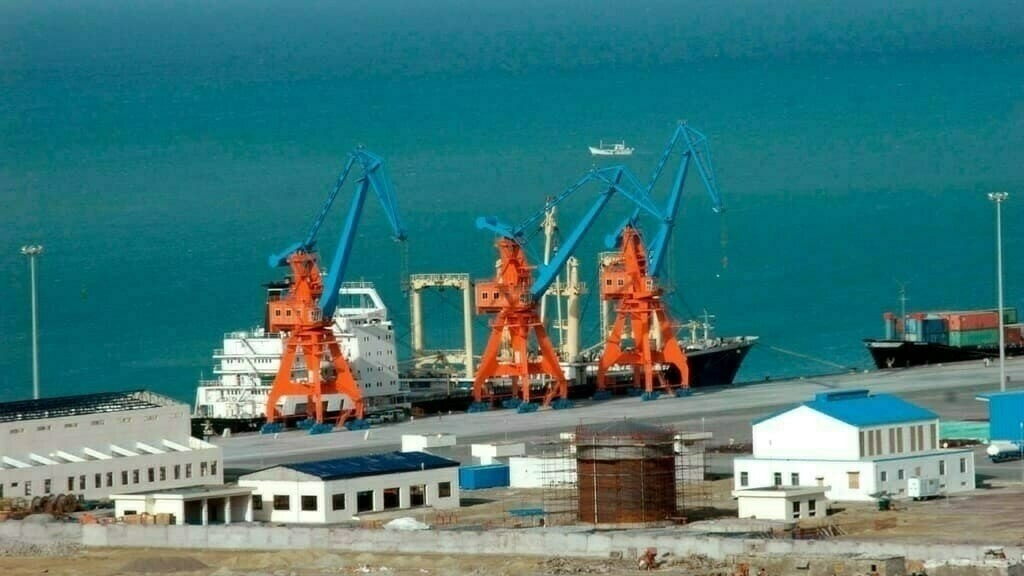
Despite the hype about Gwadar Port, it will take many years to achieve optimal operations and activities. INSTC and BRI can enable Gwadar to become a fully functional transit Port. Pakistan is well poised as a point of regional connectivity and as a facilitator of trade for many countries.
However, there are big boulders on the highway, such as the reluctance of cooperation with Pakistan by India in this initiative, the Damocles Sword of US sanctions, the law and order situation in Balochistan, and the menace of terrorism.
A few years ago, the then Prime Minister had gone to Moscow primarily to develop a favorable linkage that would have given leverage to Pakistan to protect export markets, raw material suppliers, avenues of development finance, and security shields in times of need. Russia-Ukraine War seriously impeded the expected momentum of a strong trade and investment relationship between Pakistan and Russia but President Putin is making a paradigm shift unlike his predecessors who were primarily fixated only on India.
Putin has sensed the new geostrategic metrics, and it is a win-win situation for Russia and Pakistan to bond with China and other countries. Pakistan has been delicately playing all sides in the past by claiming that it adheres to an independent foreign policy. In fact, this has seldom been to the benefit of Islamabad because it never took advantage of this independent stance by promoting economic diplomacy. The victory over India and the Israeli-Iran conflict have shifted the pendulum for Pakistan. Other countries have maintained political diplomacy in conjunction with economic diplomacy and resultantly succeeded in many aspects.
The difficulty in smooth success of INSTC depends formidably on the ecosystem in Iran. The Eurasian Development Bank forecasts that the INSTC will handle 30 million tons of goods annually by 2030, generating a couple of billion dollars in transit revenue for Iran. This could enable Iran in modernizing logistics infrastructure and expanding the economic potential. On the other hand, US economic sanctions on Iran pose a significant barrier to the participation of international companies in INSTC-related projects.
This is Achilles’ heel in the long-term success of INSTC. The BRICS countries have accelerated their plans of moving away from dollar-based international trade through monetary mechanisms, but the strongly-worded warning from President Donald Trump to those countries who are keen to join the emerging multilateral monetary agreements may, in the short term, discourage them from it.
Stephen P. Groff of the Asian Development Bank, once stated about nations, such as Pakistan, that “If countries succeed in building effective national road, energy and urban infrastructure systems which then feed into broader subregional infrastructure networks, the fruits of Asia’s growth can be shared much more broadly across borders”.
Copyright Business Recorder, 2025
The writer is an industrialist




















Comments
Comments are closed for this article.