


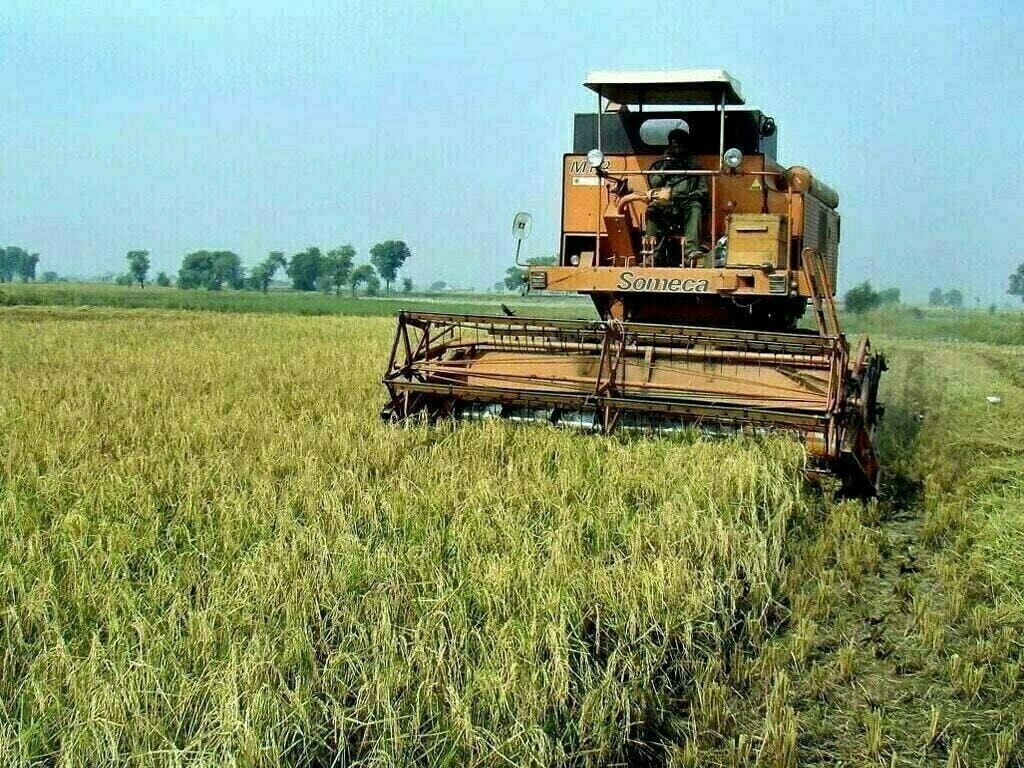

LAHORE: The Pakistan Kissan Rabita Committee (PKRC) termed the ‘2025 Economic Survey’ a wake-up call and called upon the government to abandon corporate farming and military control over agricultural resources and redistribute public agricultural lands among landless farmers, especially women and youth in plots of up to 12.5 acres.
PKRC General Secretary Farooq Tariq, while commenting on Economic Survey of Pakistan 2024-25, said according to the survey, the agriculture sector recorded a meagre growth rate of just 0.56–0.6 percent in the past year - the lowest in the last nine years. Without the moderate growth in livestock (4.72%), fisheries (1.42%), and forestry (3.3%), the dismal performance of major crops would have dragged the overall sector into even deeper decline.
The most staggering drop occurred in major crops, whose collective production fell by 13.49 percent. Cotton suffered a massive 30.7 percent decline with its cultivated area shrinking by 15.7 percent. Cotton ginning was also declined by 19 percent, compounding the crisis. Wheat production declined by 8.9 percent, primarily because the government, despite earlier promises, refused to purchase wheat from farmers at PKR 3,900 per 40 kg, leaving growers in despair. Other critical crops like sugarcane, rice, and maize also registered declines ranging from one percent to 15 percent.
In December 2024, Punjab Chief Minister Maryam Nawaz claimed that wheat had been cultivated on 16.5 million acres—achieving 82 percent of the province’s target. However, ground realities have proven otherwise. All major farmer organizations had already criticized the government’s failure to procure wheat at the promised support price and warned that growers were abandoning wheat cultivation.
Instead of acknowledging its policy failures, the government blames climate change: erratic monsoons, delayed sowing, and extreme heat. But the reality is that the government’s neoliberal agricultural policies have failed miserably. By exposing farmers to the whims of the free market and refusing to implement meaningful protections, these policies have caused a steep drop in production, Farooq Tariq added.
He said for the first time, the survey admits that cultivated area has decreased - especially for cotton and wheat. This has had a direct impact on national food security. Agriculture contributes 23–24% to Pakistan’s GDP and provides employment to 37 percent of the workforce. A crisis in this sector affects the entire economy.
Suggesting ways to strengthen the agricultural sector, PKRC General Secretary also proposed a ban on new canals, particularly those impacting the Indus River system, legal implementation of Minimum Support Prices (MSP), starting with wheat at PKR 4,000 per 40kg and a ban on private wheat imports and strengthening PASSCO for public procurement.
He also called for accountability for the wheat crisis, including arrest and investigation of hoarders and speculators, regulation of agricultural markets to prevent price volatility, rejecting IMF and WTO policies that undermine farmers; rebuilding public procurement systems and ensuring real access to interest-free loans for small farmers, while excluding agri-businesses and banks from subsidies.
Copyright Business Recorder, 2025

























Comments
Comments are closed for this article.