


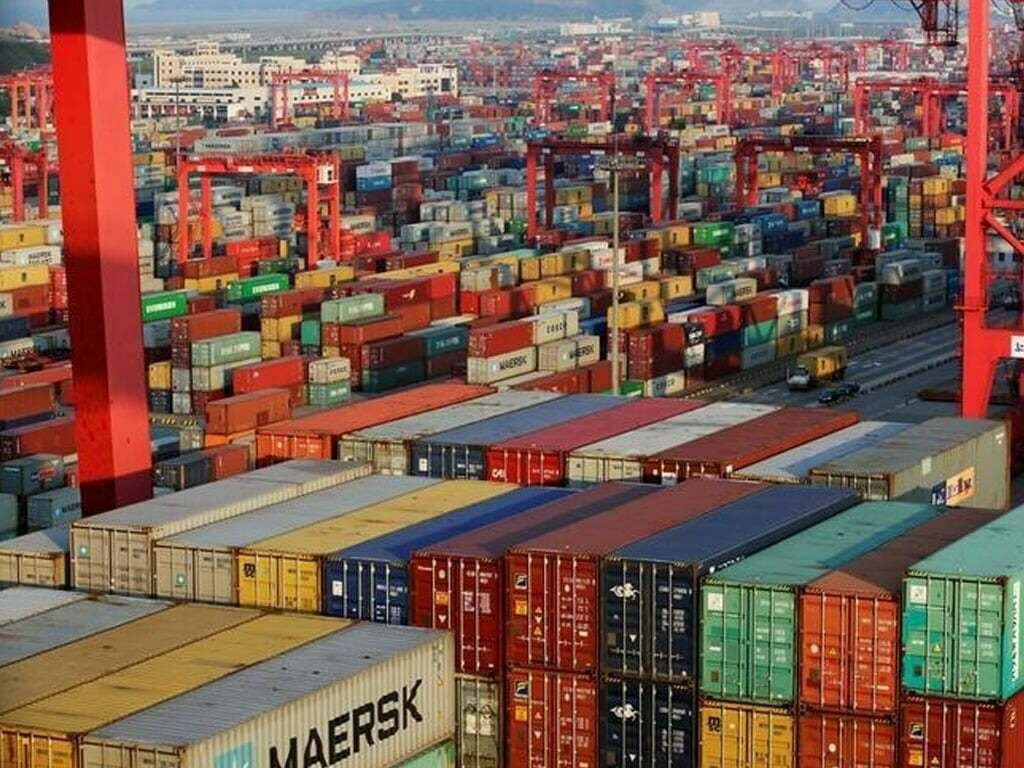
EDITORIAL: Reports suggest that the policy of providing protection against imports to industry has failed as it has neither improved industrial efficiency nor has it increased revenue collection appreciably.
And while international donor agencies impose a standard normal condition notably to eliminate/reduce taxes on imports as an integral component of globalisation, erstwhile fully supported by their major donors, yet this policy has done considerable damage to the economies of debtor nations.
With globalisation under serious threat as the Trump administration rhetorically supports fair instead of free trade, a cry that was previously only echoed by third world developing countries, there is a slow but inexorable shift in the international world order.
What is significant however is that while the world is grappling with the US tariffs, though they remain suspended subject to renegotiations, yet donor agencies have yet to consider a policy revision based on the emerging new world order. Pakistan as a case in point, currently under a very harsh upfront International Monetary Fund (IMF) programme, has agreed to slash import tariffs that would make industrial output uncompetitive — be it for exports or for local consumption.
To add insult to injury the government’s other tariff regime including abolishing protective duty on imports as well as paying a 1 percent minimum turnover tax irrespective of whether the unit experienced profits or loss are further choking domestic output.
This of course precludes the fact that other input costs are much higher in Pakistan relative to regional competitors (electricity, transport, gas as well as the discount rate which even at 11 percent is higher than what is prevalent in all regional countries), which makes our products uncompetitive in the international market as well as in the local market given the thousands of miles of porous borders with India and Afghanistan difficult to police and therefore smuggling remains an issue though it has been dealt with at a few check-posts.
It is relevant to note that the large scale manufacturing sector has been registering negative growth for the past three years and while credit to the private sector increased substantially this fiscal year yet this was in all likelihood earmarked for the stock market as opposed to the industrial sector.
This view is strengthened by the fact that unemployment has risen to an all-time high and there is evidence that more and more Pakistanis are being pushed under the poverty level with the World Bank maintaining that in the year past 1.9 million were pushed below the poverty line.
The Staff-Level Agreement report on the first review released on 17 May 2025 stipulated that: “The new National Tariff Policy (FY25–30) should substantially streamline and reduce tariffs (customs and regulatory duties) and reduce nontariff barriers and move away from the regime of special duties applied to imports for particular industries.
Trade barriers are particularly extensive in the automotive sector, and the next iteration of the automobile policy (covering FY26–31), on which consultations are still ongoing, should reduce tariffs and preferential support for local production.
Ahead of this, the authorities will remove the existing ban on commercial imports of used vehicles (new end-July 2025 Structural Benchmark for submission of legislation). Where contractual provisions allow, ineffective incentives for Special Economic Zones (SEZs), Export Processing Zones (EPZs), Special Technology Zones (STZs) and any other industrial zone or park should be phased out (end-June 2025 SB and new end-December 2025 SB for comprehensive implementation plans for SEZ/EPZ and STZ/other zones, respectively) and no new special zones should be created.”
The economic reason behind these conditions were highlighted in the documents uploaded on the Fund website on 11 September 2024: “The tax system has been extensively used to provide non-transparent support through exemptions for privileged sectors like real estate, agriculture, manufacturing, and energy, as well as, through the proliferation of Special Economic Zones (SEZs).
The government’s intervention in price setting, including for agricultural commodities, fuel products, power, and gas (biannual), combined with high tariff and non-tariff protection tilted the playing field in favor of selected groups or sectors. Despite all this support, the business sector has failed to become an engine of growth, and the incentives eventually weakened competition and trapped resources in chronically inefficient (including perpetually “infant”) industries.”
One can of course support the government’s decision to end the non-filer category as that was legally and, from the perspective of fairness to the tax payers, simply not tenable. However, one can only hope that the revenue generated from this source will not be by raising taxes from existing tax payers, as they are already over-burdened, but from ensuring implementation of pledged taxes on the sectors notorious for non-filing example the real estate sector, the traders, etc.
There is, therefore, the need for the government to encourage an industrial base focused on exports (rather than merely exporting the surplus) and at the same time one cannot indefinitely support incentives at the taxpayers’ expense, who are increasingly being pushed below the poverty line.
Copyright Business Recorder, 2025





















Comments
Comments are closed for this article.