


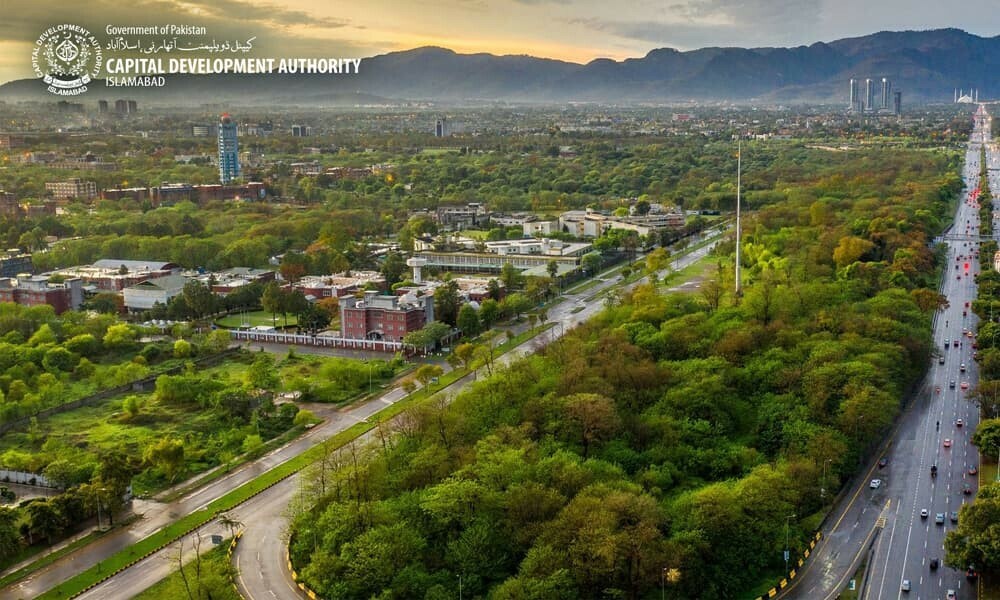
EDITORIAL: The recent revelations of financial mismanagement and lack of transparency within the Capital Development Authority (CDA) lay bare the systemic dysfunction at the heart of Islamabad’s civic administration.
The Public Accounts Committee’s (PAC’s) scrutiny of the CDA’s financial affairs has unearthed irregularities worth Rs37 billion in the auction for commercial plots—an indictment of the institution’s longstanding culture of opacity and impunity.
The most alarming aspect of this debacle is not just the non-transparent nature of the auctions but the fact that the CDA has never prepared financial statements in its history, despite being legally bound to do so under the CDA Act. That a government institution handling billions in public assets has functioned for decades without basic financial reporting is shocking. It points to a deliberate avoidance of accountability, one that has been enabled by successive administrations turning a blind eye to regulatory compliance.
The PAC’s concerns are well-founded. The audit report disclosed that while the CDA board had approved the auction for 29 commercial plots, only 22 were actually auctioned, with five postponed and one facing legal hurdles.
Why these issues were not anticipated before board approval remains unanswered, further strengthening suspicions of behind-the-scenes manipulation. This pattern of irregularities suggests either gross incompetence or outright corruption—most likely both.
Equally telling is the dismissive attitude displayed by CDA Chairman Muhammad Ali Randhawa toward audit officials. His response, instructing them to “just read the report” rather than engaging with their concerns, underscores the bureaucratic arrogance that has allowed mismanagement to thrive. His subsequent apology does little to change the reality that officials of his stature often operate with little regard for transparency. The PAC members’ criticism of his conduct is justified, but the larger question remains: will there be tangible consequences?
The broader implications of such unchecked mismanagement are severe. The real estate sector is already plagued by opacity, speculation, and political interference, and when the country’s premier civic authority fails to follow basic financial protocols, it sets a dangerous precedent.
The credibility of public land auctions is at stake, and so is investor confidence. If buyers cannot trust the transparency of CDA-administered transactions, it will inevitably erode confidence in an already fragile economy.
The PAC’s decision to impose a six-month deadline for the submission of CDA’s financial statements is necessary, albeit long-overdue, measure. However, deadlines alone are not enough.
Without strict enforcement, legal consequences, and sustained oversight, this directive risks becoming another bureaucratic exercise with no real outcome.
The CDA must not only meet this deadline but also ensure that future financial reports are published regularly and audited independently.
Pakistan’s governance failures are often a product of weak institutional accountability, and the CDA saga is a textbook case of how bureaucratic inertia enables financial mismanagement. If this investigation does not result in meaningful reforms—such as legal consequences for non-compliance and systemic restructuring of financial oversight within the CDA—then it will only reinforce the perception that accountability in Pakistan is reserved for the powerless, while the powerful continue with business as usual.
The PAC’s findings should not be allowed to fade into bureaucratic obscurity. Parliament, the judiciary, and civil society must demand consistent enforcement of transparency measures.
CDA’s impunity must end, not just through deadlines and apologies, but through concrete legal action against those responsible for decades of financial negligence.
Anything less will only ensure that the next audit uncovers an even bigger scandal.
Copyright Business Recorder, 2025


























Comments
Comments are closed for this article.