


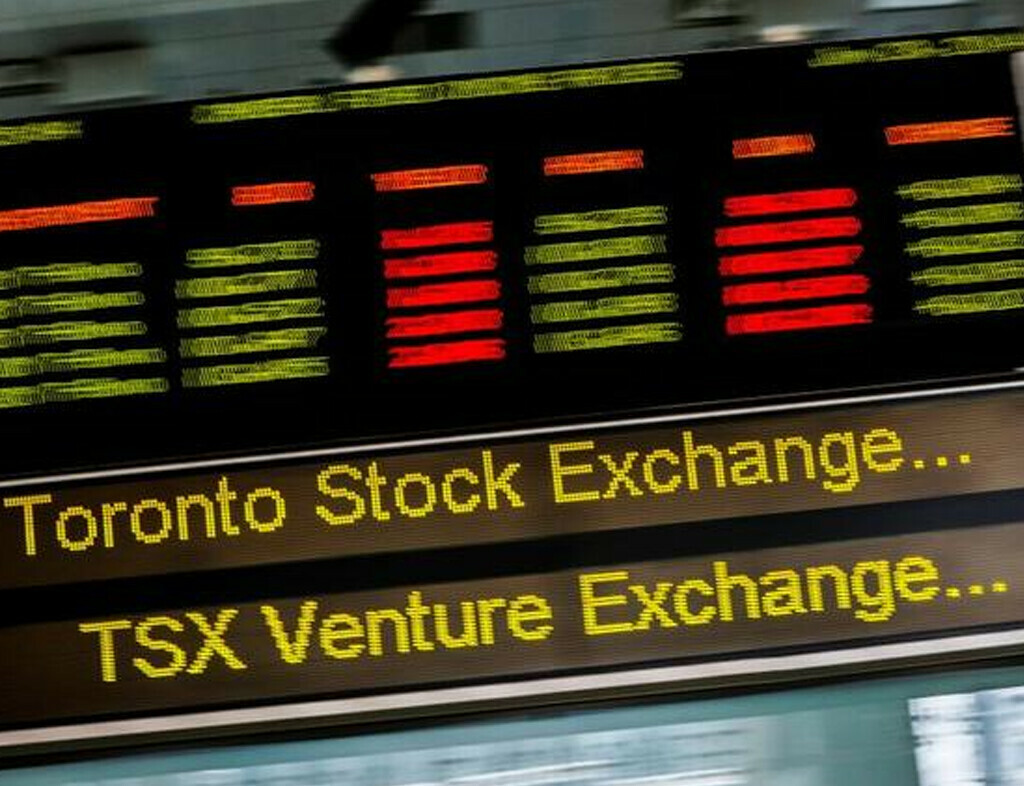

Canada’s main stock index fell on Friday, tracking global risk-off sentiment as the war in Ukraine rages on, but the benchmark index is likely to record its fourth consecutive weekly gain.
At 9:44 a.m. ET, the Toronto Stock Exchange’s S&P/TSX composite index was down 35.64 points, or 0.16%, at 21,735.58. It is up 1.16% for the week.
Investors kept a wary eye on developments around the Ukraine crisis as hopes for a deal dwindled on lack of progress in peace talks between the Russian and Ukrainian negotiators.
“We are getting mixed signals from the peace talks, and that is just bearing down on risk sentiment at the moment,” said Stuart Cole, head macro economist at Equiti Capital.
Toronto-listed technology shares fell 0.3%, snapping their three-day winning streak, while consumer staples fell 0.8%.
The energy sector, however, climbed 0.3%, as US crude prices were up 1.2% a barrel, while Brent crude added 0.5%.
“If you factor in the importance of Russia as a supplier of commodities, the suggestion is that the current disruption to supply will not end with the ending of the conflict, but rather will go on for potentially considerably longer,” Cole added.
The materials sector, which includes precious and base metals miners and fertilizer companies, lost 0.4% as gold futures fell 0.3% to $1,935.6 an ounce.
The TSX index was on track to record its fourth consecutive weekly gain, boosted by tech stocks that had gained on hopes for progress in Russia-Ukraine peace talks.
Soaring commodities will push Canadian inflation higher for longer, with the headline rate now seen peaking at or above 6%, forcing the central bank to raise interest rates more aggressively, economists told Reuters.
On the economic front, domestic retail sales rose 3.2% in January from December to C$58.94 billion ($46.71 billion), led by higher sales at motor vehicle and parts dealers, Statistics Canada said.




















Comments
Comments are closed for this article.