


Geopolitical tensions pushing China, India towards inward economy
- The report said that an inward turn in economic policy was already underway in Asia before the arrival of the coronavirus (COVID-19), but the global disruption caused by the pandemic has accelerated this shift.


Apart from creating a global economic slowdown, the coronavirus pandemic has lead to major shifts in policies as Asia’s leading emerging economies are turning inwards.
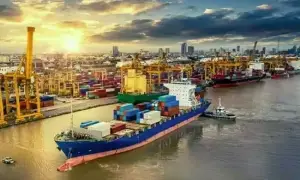
As per the report by The Economist Intelligence Unit, the export-led growth model traditionally adopted in Asia is running out of favour, and governments are looking to cultivate more self-sustaining economies.
The report said that an inward turn in economic policy was already underway in Asia before the arrival of the coronavirus (COVID-19), but the global disruption caused by the pandemic has accelerated this shift.
The report pointed out that in China, policymakers are discussing a “dual circulation” strategy that aims to foster resilience by emphasizing the “internal” circulation of the domestic economy over the “external” circulation of the global economy.
Whereas, the Indian government has launched “self-reliance” movement designed to reduce perceived supplychain vulnerabilities. Meanwhile, amid the pandemic, Indonesia has unveiled import substitution policies aimed at supporting domestic industry.
Among its key findings, the report said that the inward turn in economic policy across emerging Asian markets is driven by Asia’s leading emerging economies are turning inwards and security concerns. “China’s focus on self-sufficiency is shaped by the worsening trajectory of its relations with the US, while India’s shift in the same direction stems from concerns about economic dependence on China,” said the report.
The report projected that under these policy drives, more support will be forthcoming household incomes and spending, which will support Asia’s domestic consumption sectors. “We also see opportunities in industrial sectors tied to government efforts to reduce import dependency,” it said.
The report was of the view that Asia’s inward turn represents a step back from closer global integration, but is not a move to autarky: countries in the region will still present significant commercial opportunities for foreign businesses and investors.
“However, we expect a trend towards operational localisation to intensify and, for global investors, grasping the opportunity in Asia while managing political pressures in their home markets will be increasingly challenging,” it added.


















Comments
Comments are closed for this article.