


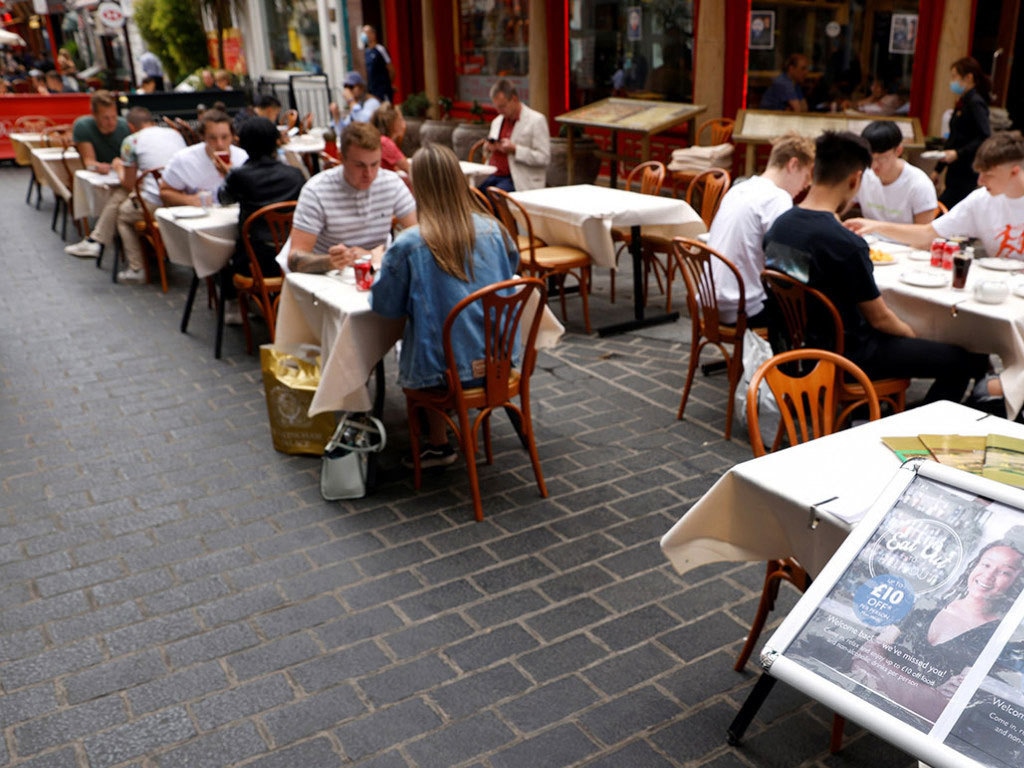

LONDON: A British government scheme to encourage people to visit restaurants, by paying a slice of the bill, has boosted a sector devastated by the coronavirus, according to a study published on Monday. The incentive - "Eat Out to Help Out" - valid Monday to Wednesday through August sees the government contribute 50 percent of the cost of a cafe, restaurant or pub meal, up to £10 ($13, 11 euros) per person.
Analysis from the Centre for Economics and Business Research (CEBR) shows that despite the pandemic it has helped to increase diner numbers by more than a quarter year-on-year.
In the first two weeks of August, the number of people who ate out on the scheme's active days leapt 26.9 percent, said the CEBR. It noted the month-long scheme, crafted by finance minister Rishi Sunak, would give Britain "a much-needed boost towards normality". Nina Skero, economist at CEBR, said it was "impossible to deny" that the initiative had been a success.
She noted it encouraged people to use restaurants while also helping people "get back into the habit of socialising", which could provide a broader economic benefit. However, despite the scheme providing a rare piece of good news for Britain's reeling economy, analysts have noted it could be impacting customer levels on days when it is not in operation.














Comments
Comments are closed for this article.