


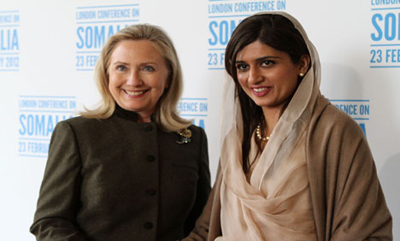
 Since early last year when a CIA contractor murdered three Pakistanis in Lahore the Pak-US relationship has been deteriorating losing warmth which was never in clear evidence at the public level throughout their Taliban-centred anti-terrorism co-operation. The CIA raid on Osama bin Laden's residence in May further added to its speedy decline - not because the people in general were in love with the al Qaeda founder but for their rejection of the manner the Americans carried out the unilateral clandestine operation. However, the tipping point to the downhill slide was the murderous attack on Salala checkpost in November which, quite expectedly, threw the so-called anti-terrorism co-operative understanding out of its gear, precipitating serious response from Islamabad in the shape of eviction of CIA-operated Shamsi airbase and suspension of Nato supplies through Pakistan. What would be the future course for the Pak-US co-operative alliance that is being studied by the parliament and until it makes up its mind on that matter the government is in no position to officially make public its stand on terms of engagement in the future. So if we don't clearly know what Foreign Minister Khar told her American counterpart Hillary Clinton when they met on the sidelines of Somalia conference in London on Thursday, that's quite understandable. But the Obama administration's 'patience' with Islamabad's 'slow-motion' approach is wearing thin - a state of mind indeed? On the face of it, the London meeting, also joined by Ambassador Sherry Rehman, was the first public contact made by the US government to push its agenda to revive mutual trust seriously undermined by the Salala episode - though reports of such interaction conducted through backdoor channels, including the one that recently took place between the CIA and ISI chiefs, have been viral for some weeks now. The United States appears to be keen on putting the bilateral relationship back on the track given its anxiety to make a safe decent exit from Afghanistan. But that wouldn't be as easy as its invasion of Afghanistan ten years ago following the 9/11 saga, which was judged by the world as an act of extreme brutality. The Obama administration's position in relation to troop drawdown timeline is not clear. It is also not clear how it justifies its not-so-invisible move to leave a permanent security-oriented base in Afghanistan behind. Add to this the confusion generated by the Republicans' hard-line on presidential candidate Barack Obama's policy they insist is compromising and his Nato partners' threats of quitting the coalition, coupled with the stiff position Pakistan Defence Council and its sympathisers have taken on the Nato supply route - the United States has to lend greater clarity to its untended future course of action. Excepting the Clinton's veiled 'threat' of persevering in its present stand on Pak-US nothing substantive seems to be the result of the meeting in London, her foretelling "ups and downs" being a kind of window on bilateralism. Of course, Secretary Clinton juxtaposed her warning against the standard position that the two countries share the wide-spectrum relationship that works on almost daily basis at various public and private levels. If she believes that Pakistan is "too vital to be shunned" and must survive through the prevalent turbulence in the turmoil-ridden region, she is absolutely on the mark. It's good the United States would like to revert to "structured conversations" after the Pakistan parliament has spoken its mind. But for that to happen, Washington has to accept the logic and diktat of emerging ground-realities, which may not necessarily appear to be identical and harmonious. In an inter-state relationship there is no such thing as absolute unanimity, even the best of friends differ over the question of their national interest. Pakistan's commitment to anti-terrorism policies should be in no doubt. The sacrifices rendered by Pakistan are profound. But being a close neighbour of Afghanistan it has strategic interests in what turn the devolving Afghanistan narrative is going to take. A crude attempt is under way to keep Islamabad out of the Qatar talks loop. This is not acceptable. Before Washington moves further into this area we earnestly hope that these parleys don't take the role of a Trojan horse. Copyright Business Recorder, 2012


















Comments
Comments are closed for this article.