


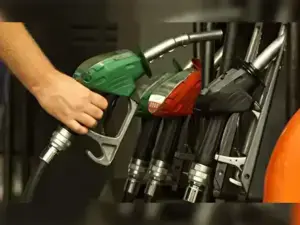
The government intends to raise the gas price by 13 to 15 percent on quarterly basis, with the objective of bringing gas price at par with alternative fuels, like petrol, diesel and furnace oil, officials said. Officials in the Ministry of Petroleum and Natural Resources told Business Recorder that the recent increase in gas prices for all sectors, excluding fertiliser sector, was the first step in this direction.
To deal with the growing gas deficit, it is necessary to bring the gas prices closer to the prices of alternative fuels, which would ensure the most efficient use of all fuels, the official added. "Some three months ago, this proposal was floated by the Petroleum Ministry, and now the government has started implementing it, as recently it imposed 13.5 percent fuel equalisation surcharge on gas on a quarterly basis. This would help in narrowing the gap between the price of gas and other fuels, such as petrol, diesel and furnace oil," sources said.
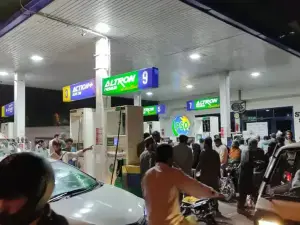
Dr Ishfaq Hassan Khan said that the government must discourage expansion of the CNG sector in the country as valuable energy is being wasted on providing fuel for vehicles. "We must prioritise, and the industrial sector, the backbone of the economy, must be given the first dig at gas and not the CNG sector. The government has to bring CNG prices at par with the prices of petroleum products." He added that the government should fix CNG price on the basis of British thermal unit (BTU), which would help lower the demand and thereby save gas. He said that there should be energy audit for all sectors so as to find which sectors are using natural gas efficiently and which are not.
An economist said that the government has no option other than increasing the gas price and at least bring its price up to 80 percent of the price of alternative fuels like petrol, diesel and furnace oil.
"We should not ignore that over 40 percent of the Pakistani people are living below the poverty line and food security is also a serious issue, so before taking such steps we have to consider the problems of the poor, which mostly are residing in urban areas in slums," he added. He said that at present circular debt is a serious issue, adding that there are differences among ministries on their contribution to circular debt. The government needs to resolve the circular debt issue on an emergency basis, which, according to rough estimates, has crossed Rs 500 billion mark.
According to sources in the Ministry of Petroleum on the directives of Dr Asim Hussain the Minister for Petroleum and Natural Resources, the Ministry has worked out a plan for rationalisation of gas prices for various sectors of the economy. Recently the government announced that it would increase gas prices for all the sectors, excluding fertiliser sector. Sources in the ministry said that provision of gas to industrial, domestic, fertiliser and power sector is the top priority of the government, and the government is in no mood to further promote CNG sector due to depleting gas resources.
"A rational increase in gas price will not only stall the misuse of gas but would also reduce tensions between the federating units, which have emerged because of unequal gas load shedding," said an expert. "Right now, in Balochistan, Sindh and Khyber Pakhtunkhwa (KP), there is no gas load shedding; gas shortage is occurring only in the Punjab, where it swelled to an unprecedented level of 1.5 billion cubic feet per day (BCFD) in January 2011.
"If the 15 percent fuel equalisation surcharge is imposed quarterly, in one year's time, the gas price for the domestic sector, which is at Rs 451.78 per MMBTU ie currently 20 percent of alternative fuel, will increase to Rs 790.17 per MMBTU, which is 36 percent of alternative fuels," explains one 'expert'. Similarly, the gas price for commercial consumers, which stands at Rs 542.60 per MMBTU, currently 25 percent of alternative fuels, will increase in one year to Rs 949 per MMBTU, which is 53 percent of alternative fuels.
The gas price for the industrial sector stands at Rs 379.43 per MMBTU, currently at 30 percent of alternative fuel, and will be jacked up to Rs 663.62, 47 percent of the alternative fuel. Likewise, the gas price of CNG stands at Rs 542.60 per MMBTU, currently 44 percent of the price of alternate fuel, but will increase up to Rs 949 per MMBTU, 77 percent of alternative fuel, under the PC proposal. "If the said surcharge is applied on gas, the government will have extra revenue of Rs 80 billion in one financial year," said an 'expert'.
As for gas shortages, under Article 158 of the Constitution, gas producing provinces, after meeting their own gas requirements, sell the remaining gas to other gas deficient provinces. The Punjab is experiencing a five-day gas holiday per week (3 days for industrial and 2 days for the CNG sectors) even during the summer months because of which the unemployment rate in the province has risen to 40 percent. Because of this, the business community has begun to look elsewhere to set up their businesses.
An energy 'expert' said that Pakistan cannot afford to further delay improvement in the gas supply side when we are already in the middle of an energy emergency. The government should implement the project to import LNG, and the Chief Executive of the country needs to set aside the Public Procurement Rules Authority (PPRA) rules and immediately begin importing LNG on a fast track basis," he maintained.
Sources say the Petroleum Ministry also needs to initiate a plan to reduce unaccounted for gas (UFG), whose volume has increased to over 10 percent ($2 billion) because of theft and leakage. The government also needs to place a ban on the expansion of gas connectivity net and make gas available for Punjab's industry and power sector.












Comments
Comments are closed for this article.