


Yuan eases, weaker fixing raises doubt over firming trend

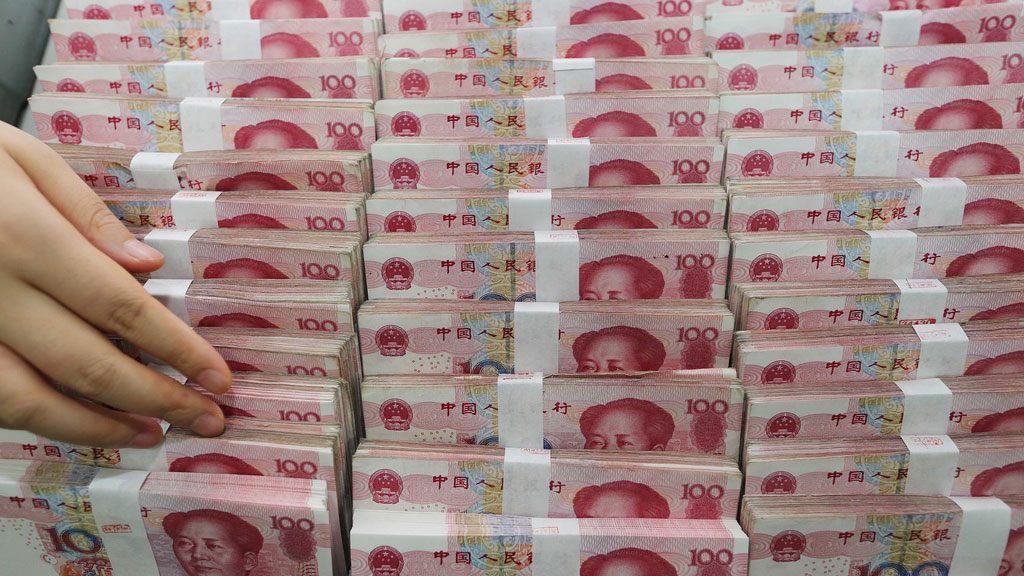
SHANGHAI: China's yuan eased against the dollar for the third straight session by midday on Tuesday after official guidance weakened for the first time in 12 days, raising questions over whether the renminbi would continue its firming trend.
The Chinese currency, which has strengthened as much as 2,940 pips since early August, gave up some gains and retreated to trade weaker than 6.5 per dollar in the wake of a relaxation of controls on capital outflows.
Market participants said the yuan might have already reached its peak and was likely to hover weaker than the psychologically important 6.5 per dollar level in the near term.
"The 6.5 per dollar level remains a strong resistance for the market. The spot yuan rate briefly breached that level yesterday and quickly fell below, so the (USD/CNY) will largely stay above the 6.5," said a Shanghai-based trader at a foreign bank.
Prior to market opening on Tuesday, the People's Bank of China (PBOC) lowered its official yuan midpoint to 6.5277 per dollar, snapping 11 days of stronger fixings.
Tuesday's midpoint, 280 pips or 0.43 percent weaker than Monday's fix of 6.4997, was the biggest one-day weakening in percentage terms since Jan. 9. But traders said the weak fixing came in weaker than their models had suggested.
The lowered fixing guided spot yuan weaker. The spot market opened at 6.5495 per dollar and was changing hands at 6.5425 at midday, 165 pips weaker than the previous late session close and 0.23 percent softer than the midpoint.
Traders said the yuan's weakness was reflecting a rebound in the dollar and strong corporate demand for the greenback in the domestic market early Tuesday. Some companies, bracing for possibly more weakness in the yuan, stocked up on dollars.
The dollar held to large gains on Tuesday following a sharp rebound against the yen and euro, lifted by improving investor risk sentiment as worries over North Korea and Hurricane Irma receded.
Some traders noted oil firms usually build up their dollar reserves around the middle of the month for their business needs.
But market participants expect the yuan to stabilise after the latest round of volatility. The once-every-five-years congress of the Communist Party will start in around a month, while any disruption to the exchange rate and the economy would be unwelcome ahead of and during the major political event.
Sources have told Reuters that Chinese policymakers are beginning to worry about the strength of the yuan as exporters come under strain, risking a hit to the economy ahead of the congress.
Others, however, say the authorities would prefer uncertainty to a weaker currency.
"Now that depreciation pressure has abated, policymakers will want to introduce more uncertainty about the outlook to prevent the re-emergence of a view that the currency will only move one way," Mark Williams, chief Asia economist at Capital Economics, said in a note.
The offshore yuan was trading 0.07 percent weaker than its onshore counterpart at 6.547 per dollar as of midday.
The Thomson Reuters/HKEX Global CNH index, which tracks the offshore yuan against a basket of currencies on a daily basis, stood at 95.78, weaker than the previous day's 95.91.
The global dollar index rose to 91.924 from the previous close of 91.875.
Offshore one-year non-deliverable forwards contracts (NDFs), considered the best available proxy for forward-looking market expectations of the yuan's value, traded at 6.668, 2.10 percent weaker than the midpoint.
One-year NDFs are settled against the midpoint, not the spot rate.




















Comments
Comments are closed for this article.