



 KABUL: The UN Security Council has lifted sanctions on the notorious Afghan warlord Gulbuddin Hekmatyar, previously branded "a global terrorist" and accused of war crimes.
The move follows a peace deal between Hekmatyar's insurgent group Hezb-i-Islami and the Afghan government in September that granted him legal immunity from past offences, sparking outrage from rights groups.
A statement on the UNSC's website Friday said an assets freeze, travel ban and arms embargo targeting Hekmatyar -- a former prime minister and one of the most controversial figures in Afghanistan's modern history -- no longer applied.
Diplomatic sources said only Russia had opposed the move, which theoretically opens the way for Hekmatyar's return to Kabul after two decades of asylum.
France was initially reluctant because of Hezb-i-Islami's involvement in an ambush northeast of Kabul that cost the lives of 10 French soldiers in August 2008, but later changed its mind.
"It is an important point of the peace agreement between Hezb-i-Islami and the Afghan government," chief negotiator for Hekmatyar, Mohammad Karim Amin, told AFP.
"And it shows the commitment from the government and from the Hezb-i-Islami to pursue on this peace track," Karim said.
It would also "open the door" and stimulate the peace process and would send a "strong signal to other fighters" in the country, he said in reference to the Taliban.
He further said that it showed "the only key to achieve a peaceful solution to the conflict is through an inter-Afghan negotiation without any foreign interference".
"We always said his return (Hekmatyar) won't be linked to the lift of the sanction but obviously it will widely ease it," Karim said.
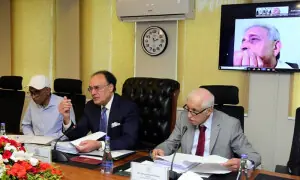
The whereabouts of Hekmatyar, who was not present in Kabul for the signing of the agreement that was completed via video conference -- remains unknown.
Hekmatyar was a prominent anti-Soviet commander in the 1980s and a major figure during the bloody civil war of the 1990s when he was accused of indiscriminately firing rockets into Kabul, as well as other human rights abuses.














Comments
Comments are closed for this article.