



 SHANGHAI: Chinese stocks started the week on a firm note Monday, backed by better-than-expected growth in fixed-asset investment but gains remain capped on expectations the yuan will continue to weaken.
The Hong Kong market, which is more vulnerable to global market volatility, was hurt by a stronger U.S. dollar, which has gained after Donald Trump's victory in the U.S. presidential election last week amid rising Treasury yields.
Stocks on mainland markets reversed early losses and were set to rise for a third straight day. The CSI300 index rose 0.5 percent to 3,434.01 points at the end of the morning session, while the Shanghai Composite Index gained 0.3 percent to 3,207.12 points.
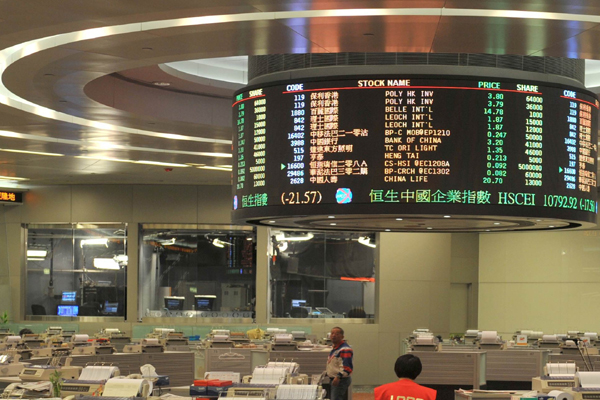
The Hang Seng index dropped 1.2 percent to 22,267.20 points, while the Hong Kong China Enterprises Index lost 1 percent, to 9,339.81.
China reported slightly better-than-expected fixed-asset investment, which rose 8.3 percent in January-October from the same period a year earlier, but industrial output and retail sales growth were weaker than forecast.
The yuan sank to nearly a 6 1/2-year low after China's central bank set the midpoint at 6.8291 yuan per dollar, and analysts expect the currency to weaken further before Washington gets new leadership. President Donald Trump, who branded China a currency manipulator, is scheduled to take office in late January.
"If protectionism does escalate globally, China might retaliate by allowing for bigger RMB depreciation. It would be a trade war and hurt everyone," Larry Hu, an analyst at Macquarie, wrote in a note on Monday. He expects Chinese exports to grow in the low-single digits in 2017.
"This kind of mild depreciation could not help much on exports, but would certainly force capital controls to escalate and the RMB internationalization to reverse," he wrote.
In Hong Kong, all main sectors fell, with energy shares leading the decline.
"Hong Kong stocks are unlikely to have a strong rebound soon," said Alex Wong, Hong Kong-based director at Ample Finance Group, adding that the rising U.S. dollar and falling long-term government bond prices sent shares in Hong Kong and other emerging markets lower.



















Comments
Comments are closed for this article.