



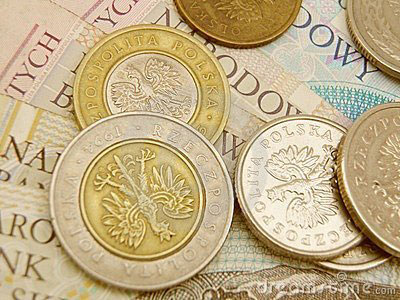
 BUDAPEST: The Polish zloty gained half a percent in thin holiday trading on Friday, while shares in Hungarian drug maker Richter gained as much as 4 percent after crossing a key price level.
At 1312 GMT, the zloty was up half a percent, followed by the Serbian dinar and the Hungarian forint, which added 0.2 and 0.1 percent, respectively. Other central European currencies were little changed.
One analyst in Warsaw said weak US economic growth data bolstered the zloty as it dampened prospects for a rate increase by the Federal Reserve in the near term, which can reduce the appeal of emerging market assets.
"Worse than expected GDP data from the US supports the zloty. It's a positive because it reduces a chance for an imminent rate hike there," said Piotr Poplawski, senior economist at ING BSK.
Volumes were reduced in a session sandwiched between a public holiday in Poland on Thursday and the weekend.
US gross domestic product rose at a 0.8 percent annual rate as opposed to the 0.5 percent pace reported last month. Economists polled by Reuters had expected first-quarter GDP growth would be revised up to a 0.9 percent rate.
"Someone must have taken advantage of subsiding pressure on emerging market assets. The market is calm at the moment but I do not expect this tendency to carry on, let us wait until the evening when (Fed Chair Janet) Yellen speaks," Poplawski added.
Shares in Hungary's Richter gained as much as 4 percent, lifting the Budapest blue chip index to a one-month-high above 27,000 points after the pharmaceuticals stock crossed a key price level at 5,600 forints per share.
"The shares will have to affirm the rally on Monday but based on both short and longer-term technical indicators, this seems likely (the shares will not sink back below 5,600 forints)," analysts at Erste Bank said in a note.
At 1349 GMT, Richter shares were up 3.3 percent at 5,789 forints.
They said rising oil prices boosted the rouble of Russia, Richter's single biggest market, a boon for the shares of the company, which has long struggled with adverse currency effects in its core eastern markets in the former Soviet bloc.
Analysts at UniCredit said after a move by Fitch last week to return Hungary's debt into investment-grade status, the prospect of a potential further upgrade by another agency this year could also boost appetite for Hungarian bonds.
"Following the positive surprise from Fitch, which upgraded the country back to investment grade, market enthusiasm was dampened by the NBH signalling the end of the rate-cutting cycle," UniCredit said in a note.
"However, we believe the easing cycle will continue as inflation and growth will remain below the NBH's forecast. We think the appetite for HGBs may be fuelled by market expectations for an additional upgrade this year."

























Comments
Comments are closed for this article.