



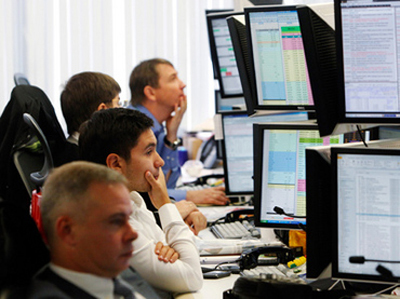
 LONDON: Emerging stocks retreated on Thursday to the lowest in more than two months and currencies fell against the dollar as a June U.S. rate rise re-appeared on the agenda, bruising commodities and equity markets worldwide.
The dollar surged to six-week highs against developed currencies after Fed minutes showed most U.S. central bank policymakers were leaning toward a rate increase next month if economic data continued to improve.
The greenback made bigger gains versus emerging currencies, with many such as the yuan, Malaysian ringgit and South Korean won hitting multi-month lows . In emerging Europe, the rouble fell almost half a percent.
MSCI's emerging equity index lost more than 1 percent, having fallen more than 8 percent in the past 20 days.
Stocks in Moscow, Johannesburg and Warsaw fell around 1 percent after earlier losses in Asia.
"Two months back we were pricing out 2016 Fed hikes altogether and pricing only one in 2017. Now we are back to a situation where we may be pricing two rate rises this year and two next year so it's not surprising that markets are under pressure," said Peter Kinsella, Commerzbank head of EM research.
"It's taken the shine off things."
One of the worst hit is the Mexican peso which with close links to the U.S. economy is at three-month lows, approaching levels which forced the central bank into an extraordinary intervention and rate rise earlier this year.
The highly liquid currency is also frequently used as a proxy for other emerging markets.
The lira, also undermined by wide current account deficits, has also lost ground, with the lira approaching three-month lows .
Confidence in Turkey is also being undermined by politics.
The ruling AK Party is expected to announce its new leader later in the day, replacing Prime Minister Ahmet Davutoglu who stepped aside after tensions with President Tayyip Erdogan. There are fears Erdogan will tighten his grip on economic management.
The South African rand, also vulnerable to capital outflows, bucked the weaker trend, however, to rise 0.6 percent after touching two-month lows late on Wednesday. The central bank is expected to hold interest rates later in the day, a day after data showed inflation slowing.
But some still reckon on a 25 bps rise, given the likelihood of a Fed hike next month and rand weakness caused by fears the investor-friendly Finance Minister Pravin Gordhan will be sidelined by President Jacob Zuma.
BNP Paribas noted that while a hike was possible, the bank would more likely "keep rates on hold, looking beyond the recent FX volatility, and also maintaining ammunition ahead of potential financial stability concerns."
The bank predicted a hawkish post-meeting statement however.
Benchmark bond yields have eased off two-month highs, though they have risen some 70 bps in the past month.
On dollar bonds, prices for Ukraine's restructured debt rose slightly after the International Monetary Fund said it had agreed with Kiev over the policies that must be implemented before a next loan tranche is disbursed.
"In a way there is a window for reform at present in Ukraine, which I guess the IMF is eager to push along while it still has leverage," Nomura analyst Tim Ash said.




















Comments
Comments are closed for this article.