



 The World Health Organization (WHO) in its latest report warned that 80 percent of the world’s urban population is exposed to dangerous levels of air pollution.
The rise in pollution has resulted in more than three million people suffering premature deaths every year, turning the air we breathe to a bane than a boon, a major WHO study found.
The global air pollution rose by 8 percent across the world, for the period between 2008 and 2013. As per the report, the city with the highest levels of small particulates was Onitsha in Nigeria. The city level of small particulate i.e. PM10 pollution was 594 micrograms per cubic meter (mpcm), which was nearly 30 times the recommended level.
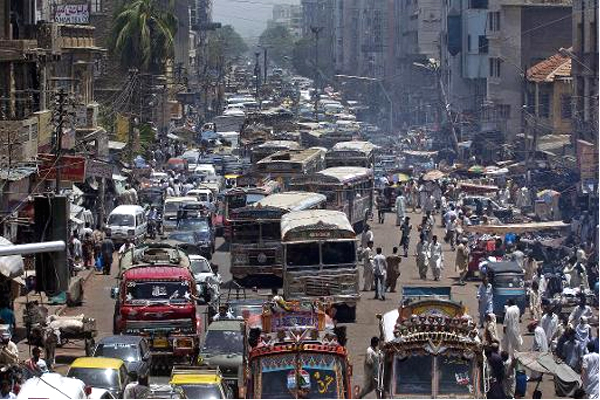
Two Pakistani cities i.e. Peshawar and Rawalpindi made to the top 5 most polluted cities, taking the 2nd and 4th spot, respectively. The PM10 levels for both the cities were recorded at 540mpcm and 448mpcm, respectively. While, Pakistan largest city Karachi was placed at 14th with 290mpcm, all above the WHO recommended level.
Coming to the cities with the world’s highest levels of fine particulates i.e. PM2.5 was Zabol in Iran, followed by Gwalior and Allahabad in India, Riyadh and al-Jubail in Saudi Arabia.
According to The Independent, “It is crucial for city and national governments to make urban air quality a health and development priority”, said Dr Carlos Dora, the WHO’s coordinator of interventions for healthy environment.
“When air quality improves, health costs from air pollution-related diseases shrink, worker productivity expands and life expectancy grows. Reducing air pollution also brings an added climate bonus, which can become a part of countries’ commitments to the climate treaty,” added the WHO coordinator.























Comments
Comments are closed for this article.