


Argentine 2011/12 corn crop could reach record 30mn T

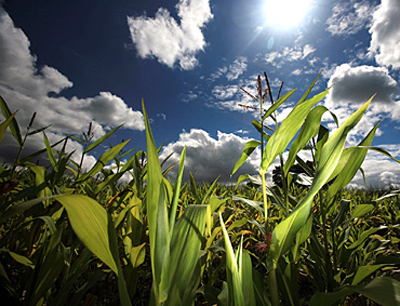 BUENOS AIRES: Argentina's 2011/12 corn harvest could hit a record 30 million tonnes if weather conditions improve after harsh dryness hit yields last season, industry analysts say.
Higher global prices and strong demand are expected to motivate farmers to plant more this year after dry conditions linked to the La Nina weather phenomenon hurt yields in the 2010/11 season. If the weather remains normal, the 2011/12 corn harvest could reach record highs.
"Corn output will reach a historic 30 million tonnes," said Pablo Adreani, head of Agripac consultancy in Buenos Aires, adding the area earmarked for corn could rise to 4.65 million hectares from 4 million hectares last season.
Argentina is the world's No. 2 corn exporter after the United States. Corn futures on the Chicago Board of Trade have jumped more than 60 percent over the past year.
The Buenos Aires Grains Exchange forecasts 2010/11 corn output at 21 million tonnes while the USDA foresees a crop of 22 million tonnes.
Some industry experts say La Nina could once again hit crops this season but its effect would be moderate.
"If good weather permits it, we'll have a corn crop of between 26 to 27 million hectares," said Juan Gear, vice president of industry group Maizar.
Argentine farmers complain about wheat and corn export quotas, saying the system stifles competition and allows exporters and millers to pay below-market prices.
But analysts say solid global demand and high prices will move farmers to plant more corn despite the controversial export curbs imposed by the government as part of its effort to ensure ample domestic food supplies.
"Corn has a larger market than wheat because its consumption is more diversified," Gear said. "It has strong local consumption but it differs from wheat because it is not focused on the crushing industry."
Government export quotas have discouraged farmers from seeding wheat and could lead to a freeze in the planted area.
Corn is expected to take away 200,000 hectares from soy in the country's top-growing areas and in more marginal areas where it had good yields, Adreani said.
However, soy area is not expected to fall significantly because the oilseed is resistant to adverse weather conditions and can grow in regions where the soil is not as fertile.
"Just a tiny bit less soy will be planted," said Bernard Courreges, a soy and corn farmer in General Villegas, in central Buenos Aires province. He said 20 percent more corn will be planted on his farm this season versus the previous.
Soy output has been boosted in recent years by its relatively high profitability, but high corn prices are also luring growers into corn.
"In relative terms, corn prices are way higher than wheat or soy ... so that's triggering enthusiasm for the crop," said analyst Ricardo Baccarin of the Panagricola consultancy.
Copyright Reuters, 2011






















Comments
Comments are closed for this article.