


US AAA rating still under threat

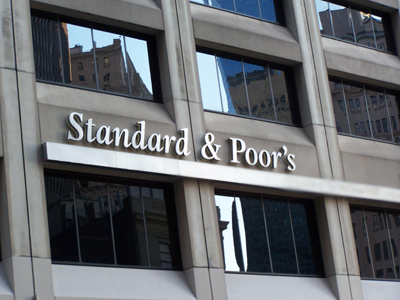 WASHINGTON: The United States could still faces an unprecedented downgrade of its triple-A credit rating, despite the government's last minute moves to avoid defaulting on its debt Tuesday.
But even if powerful raters Standard & Poor's, Moody's and Fitch decide that Washington's growing deficit and debt are too big to merit their top grade, markets might not pay much attention.
As expected, Moody's and Fitch both reaffirmed their AAA rating of US debt shortly after President Barack Obama signed Tuesday the bill that raised the country's borrowing ceiling -- without which the Treasury would have had to begin sharp spending cuts, and possibly default on debt payments.
But both warned they were still studying the legislation's deficit-cutting measures to see if they were adequate.
Moody's attached a "negative outlook" to its rating, warning that it still needs to see whether the country will actually pursue the $2.4 trillion in deficit cuts over 10 years as stipulated, and whether the economy remains strong enough to merit a AAA rating.
S&P remained mum. On July 14, it warned of the 50-50 possibility of a downgrade within three months, even if the debt default threat was eliminated, because of the country's dark long-term fiscal profile.
S&P officials said that a $4 trillion deficit reduction package would likely suffice to prevent a downgrade. By that measure, the legislation does not come close.
The United States has held its AAA rating since 1917, and because the dollar and US Treasury bonds are so central to world trade and finance, a downgrade theoretically could rock the global economy.
"We are still vulnerable to a downgrade," said Carmen Reinhart, an economist with the Peterson Institute in Washington, calling the deficit plan "still tenuous on all areas."
Nick Gartside, chief investment officer for global fixed income at JP Morgan, expects a downgrade because Washington's debt and deficit profile is "a huge anomaly" in the club of AAA countries.
"To our mind that means in time the US is likely to lose its triple-A rating," he said.
Asked whether he thought the United States could protect its rating, even Treasury Secretary Timothy Geithner was not sure.
"I don't know. It's hard to tell," he told ABC television in an interview broadcast Tuesday.
But others in the market either do not expect a downgrade or do not fear it.
A Tuesday meeting of a private-sector committee that advises the Treasury on debt market conditions took both views, according to the Treasury.
"None of the members thought that a downgrade was imminent," it said.
Committee members also said a rating cut would have little impact on demand for US debt, and some dismissed the raters as having low credibility, according to a Treasury official.
Markets seemed to agree. US bond yields hit their lowest point of the year on Wednesday.
"Perversely, I think the impact (of a downgrade) on the Treasury market could be quite limited," said Gartside.
Still, the ultra-low yields on Treasuries were a sign of another problem that could cause a downgrade.
They fell as investors dumped equities on worries that US economic growth had stalled and would not recover in the coming months.
And indeed that was one of the variables cited by Moody's in its warning that a downgrade could still come.
Aside from insisting the US government actively pursue deficit slashing as promised, it said more stagnant growth could undermine everything.
Meanwhile some estimates say that, because of the dollar's dominant role in the global economy, a downgrade would not necessarily raise the government's cost of borrowing.
But it would almost certainly also lead to a downgrade of other issuers of US government-backed debt, like that of financially shaky giant mortgage financiers Fannie Mae and Freddie Mac.
And many argue that those bonds would be hit, ultimately costing the government itself more.
The main issue is that no one knows for sure what will happen in a downgrade.
"Uncertainty about market effects is high," said Goldman Sachs.
Copyright AFP (Agence France-Presse), 2011























Comments
Comments are closed for this article.