



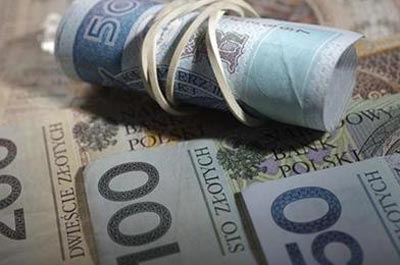
 BUDAPEST: The forint and the zloty hit 5-week highs against the euro and Central European government bonds surged on Friday on optimism that the European Central Bank's bond buying will fuel capital flows into the region's financial markets.
The ECB said on Thursday that it would release 60 billion euros a month into the euro zone economy to revive growth.
That boosted expectations for interest rate cuts in Central Europe, but the region's most liquid currencies firmed.
The forint strengthened 0.9 percent to 310.11 to the euro by 1241 GMT. The zloty gained 0.8 percent to 4.222, further off last week's multi-week lows hit due to fears that the Swiss franc's rise could hit Polish banks and borrowers.
"The ECB impact is so positive that it sweeps off everything else," one Budapest-based fixed income trader said.
Traders said the region's most liquid high-yielding markets would benefit most from the ECB's bond buying drive. Government bond yield curves got flatter, with higher long-term yields falling more than shorter papers.
"The long end is the part of the curve where more yield had been left," another Budapest-based dealer said.
Hungary's 10-year bond yield shed 22 basis points to 2.83 percent. The corresponding yield fell 27 basis points to 1.4 percent in euro zone member Slovenia, and by 11 basis points to 2.06 percent in Poland.
The ECB's move, the ultimate weapon to fight deflationary pressure, gave new fuel to expectations for central bank interest rate cuts in the EU's emerging markets, dealers said.
Deflation concerns could lead to a central bank rate cut in Poland where swing voters in the bank's Council "have a lot to think about after yesterday's (ECB) decision", Pekao SA analyst Arkadiusz Urbanski said.
"Let us wait for fresh inflation data and til March, when the central bank's new forecast on inflation and GDP growth is published. I think that it will be the right time to decide on the policy, and they will cut rates by 25 bps," Urbanski added.
Forward rate agreements (FRA) priced in a 15 basis point cut in the National Bank of Hungary's 2.1 percent base rate at its next two monthly meeting, and 35 basis points for 6 months.
The region's less liquid currencies eased.
Lawmakers in recession-hit Croatia approved a government proposal to fix the exchange rate of the Swiss franc at 6.39 kuna for the next 12 months. The kuna eased 0.1 percent against the euro to 7.704.
Serbia's dinar was bid at 122.75, down 0.1 percent, after dipping to a record lows of 122.95.
Prime Minister Aleksandar Vucic has said that Serbia would employ the "least state intervention" possible to address a jump in instalments on franc loans.
But concerns persist that the government and banks could agree to fix its exchange rate against the Swiss franc to help people with franc loans, mainly at the cost of banks.




















Comments
Comments are closed for this article.