


US deficit cuts of $4 trillion a good start

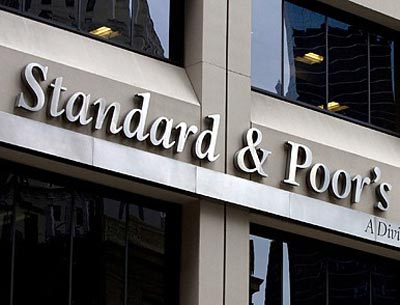 NEW YORK: Cutting the US deficit by some $4 trillion over 10 years would be a good start, but more savings would be needed over time to bring the country's finances under control, ratings agency Standard & Poor's said on Thursday.
John Chambers, the chairman of S&P's sovereign ratings committee, said deficit cuts of that magnitude "would signal the seriousness of policymakers to address the fiscal position of the United States."
His comments, made during a conference call with clients, suggest S&P would probably be convinced to keep US ratings at AAA if lawmakers were to show commitment to solving the debt problem with bold deficit-cutting measures.
Chambers added, however, that $4 trillion in savings, "depending on whether it was frontloaded or backloaded, is not going to do the trick in terms of stabilizing the US government debt-to-GDP ratio.
That ratio, which measures the country's debt load against the size of its economy, is one of the main factors considered by ratings agencies on deciding on a rating. It depends on cutting the deficit as much as it depends on economic growth.
Chambers noted that, according to the International Monetary Fund, the US government would have to come up with savings of about 7.5 percent of its gross domestic product to actually stabilize its debt-to-GDP ratio.
"I think we have it a little more than that, but $4 trillion would be a good down payment," he said, referring to the figure originally proposed by the Simpson-Bowles deficit commission and embraced by President Barack Obama in April.
Savings equal to 7.5 percent of US GDP would represent around $1 trillion a year.
None of the plans currently being discussed in Washington achieve deficit cuts of that magnitude.
Republicans have refused to raise the country's $14.3 trillion borrowing limit without a deal and Treasury says it will run out of money to pay its obligations by Aug. 2.
The issue has become so contentious this year because the US budget deficit has blown out to $1.4 trillion. At about 9 percent of gross domestic product, that's one of the highest since World War II.
Chambers said the drawn-out debate about the debt ceiling, which markets fear may not be raised until the last possible minute, has been detrimental for the country and has caused "needless uncertainty in the market."
"The United States benefits from strong checks and balances, and strong institutions for 200 years, but the debate around the debt ceiling I think has been detrimental because this has been self-inflicted," he said. "This hasn't been an external shock imposed upon the people."
But he said the US dollar, which has struggled this week for fear a failure to raise the borrowing limit could force the Treasury to default on some of its obligations, would weather the storm and remain the world's reserve currency.
"The dollar is the key international reserve currency and under almost any scenario, it will remain so for a long period to come," he said.
Copyright Reuters, 2011























Comments
Comments are closed for this article.