


US debt talks weigh on TOCOM;sugar premiums may slip

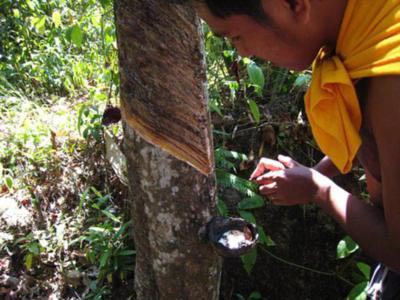 SINGAPORE: Tokyo rubber futures, which set the tone for physical prices, could be under pressure this week from worries about a breakdown in budget talks in Washington and a firm yen, while sugar premiums could drop due to rising futures, dealers said on Tuesday.
Coffee premiums are expected to stay firm because of supply constraints in Indonesia, while farmers in Vietnam could hold on to remaining stocks from the current crop if London futures resume their downtrend.
Just like Tokyo rubber futures, sugar, cocoa and coffee futures in London and New York would closely follow the progress of the talks in the United States as President Barack Obama warned failure to act on deficits and debt could seriously damage the world's largest economy.
Movements in New York and London futures normally affect premiums for cash sugar, coffee and cocoa in Asia. Physical rubber changed hands at above $4 a kg, but a lack of interest from main buyer China could also weigh on sentiment.
The most active Tokyo Commodity Exchange rubber contract for January delivery, which debuted on Tuesday, traded at 385.3 yen ($4.93) a kg as of 0446 GMT, after opening at 383.8 yen. It hit an almost seven-week high above 390 yen on July 20.
"I am looking for a trading range of 370 to 385 yen. It's quite a tight range," said Ker Chung Yang, analyst at Phillip Futures in Singapore.
"I think sentiment-wise, traders are likely to book profits," said Ker, adding that TOCOM would be influenced by external factors such as the progress of the US debt talks.
Obama warned that failure to act could cost jobs and do serious damage to the world's biggest economy. The US would not be able to pay bills that include monthly Social Security checks if the debt ceiling is not raised, and that may lead to a drop in energy consumption.
Thai sugar premiums delivery could slip further this week because of a lack of interest for nearby shipment and after New York sugar futures rallied to a five-week top. But hopes of demand from China could prevent premiums from falling to around 150 points from 200 points offered last week.
China could soon become the No. 1 market for Brazilian sugar exports, possibly in 2011/12, the head of Brazil's biggest private sugar consultancy said.
Coffee premiums in Vietnam, the world's largest robusta producer, could be steady at around $180 a tonne against London's September contract , but exporters could push up the levels if futures failed to sustain gains.
"Speculators have largely exited the coffee markets and for the time being, only a frost or other weather related news will bring them back on the buying side," said Herve Touraine of SW Commodities in Hong Kong.
"Supply and demand are no longer sufficient parameters to indicate a direction for the coffee futures markets."
Premiums in second-largest robusta producer Indonesia could stay at around $200, their highest since late 2009, after bad weather hurt output and exporters struggled to secure beans.
A Reuters poll showed the 2010/11 coffee rally that forced roasters like Starbucks to raise retail prices and hurt many in the cash market, may be over.
In cocoa, a deadly fungal disease in third-largest producer Indonesia curbed arrivals during the main harvest and cut exports in the first half of this year by more than 40 percent.
The main harvest is underway in Sulawesi, which accounts for about 70 percent of Indonesia's cocoa output, but the prospect is gloomy after Vascular-streak Dieback (VSD) returned to plantations recently.
Weaker cocoa futures in London could push up butter ratios in Asia, although weak demand for nearby shipment could limit any gains. Ratios and futures move in opposite direction.
When processing beans, grinders get butter and cake, which are later pressed into powder. Butter is the key ingredient for making chocolate and is also used to make spreads and soaps, while powder is used for coatings in chocolate-making, beverages and ice cream.
Copyright Reuters, 2011






















Comments
Comments are closed for this article.