



Five of the eight administrative units of Pakistan – KP, Balochistan, FATA, GB, and AJK – are mainly mountainous regions. This is something that is often taken for granted; mountainous regions have far higher levels of poverty and food insecurity than the plains. This was one of the highlights of a three-day conference held in Islamabad on climate change, the participants of which included PARC, SDPI, and International Centre for Integrated Mountain Development (ICIMOD), among others.
According to a report by ICIMOD, more than half the population living in mountain administrative units (except AJK) is food insecure. Moreover, 19 of the 20 most food insecure districts in Pakistan are in the mountains. All this vis-à-vis the surpluses the country is currently looking at in wheat, sugar, and rice production.
Agriculture in mountainous areas is unfavourable largely due to limited availability of arable land (which continues to fall) and a harsh climate. As a result, these regions are heavily reliant on food imports from Sindh and Punjab. But owing to inaccessibility and the rough terrain, the transportation is difficult and expensive, since there is little to no institutional support and/or infrastructure. As a result, food inflation in these areas is high.
Moreover, climate change is having a huge impact on mountain agriculture, most of which is subsistence to begin with. There are visible changes in precipitation patterns, and the average temperature is also rising comparatively higher in the north than compared to other regions in Pakistan. In addition, mud slides and rock falls often block irrigation channels, further adding to the problems of agriculture.
Deforestation, desertification, soil erosion, falling water tables, and degradation of pastures – all these problems plague the mountainous regions of Pakistan. But in spite of all this, there is a lot of potential in these areas.
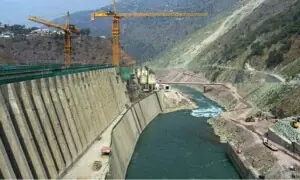
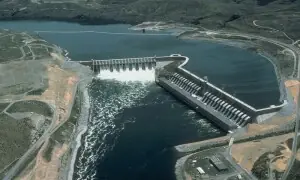
Firstly, according to ICIMOD, the potential for 60,000MW worth of hydropower lies in mountainous areas. Of this, only 11 percent is currently exploited. One need only imagine how much better things would be if this potential was exploited, and to this end the Diamer-Basha and Dasu dams are underway (though they have been so for quite some time now).
Secondly, there is potential for the production of a wide variety of fruits, nuts, seeds, off-season vegetables, and medicinal plants. For FY15, Pakistan’s fruit exports grew by around 35 percent year-on-year to $418 million, which is quite impressive. But a lot more needs to be done in terms of strengthening technical support and providing financial assistance to improve processing, packaging, and marketing. Moreover, support should be given to the transport of high-value products that can be exported.
Returning to the topic at hand, the ICIMOD paper concluded that mountain food security cannot be achieved without secured livelihood options, and this can only be done if the access and optimal utilization of the productive resources is ensured.















Comments
Comments are closed for this article.