


For the farmers benefit

Lo and behold! There is such a thing as a free lunch. That is if you are a fertiliser producer.
It all started with the government curtailing the supply of gas to Engros new plant to levels below the 100mmcfd promised to the company under a sovereign guarantee. Since the plant which has a capacity of 1.3 million tons of fertiliser is not able to operate at the desired levels, Engro has raised its urea prices to keep their margins intact.
Following suit, fertiliser producers receiving gas from the Mari network, that have been subjected to a much less gas curtailment also raised prices to match rates of this homogenous product. Since domestic prices of fertiliser are approximately half of international rates, these producers are able to increase rates and earn windfall gains in the process.
No wonder the share price of Fauji Fertilizer Company (FFC) which receives gas from the Mari network; has more than doubled in a years time. The earnings of FFC and Fatima Fertilizer have rocketed as prices shot up by 60 percent or Rs552 per bag in the past seven months compared to an average annual increase of 12 percent over the past five years. But the countrys farmers are bearing the additional costs of dearer fertiliser.
One can argue that farmers are still getting nitrogen fertilizer at 40-45 percent discount compared to international prices while they are themselves enjoying the boons of selling commodities at par or, as in the case of wheat; higher than international rates.
Over the past three years, farmers were beneficiaries of relatively high support prices for wheat. This time around, high prices are filling the coffers of a couple of fertiliser companies on the back of gas curtailment on the Sui network.
But globally developed and emerging economies have been subsidising their agriculture sectors for many years and Pakistan is no exception. So the flip side is to safe guard the hurting people involved in agri production.
There is a parallel debate on phasing out the cross subsidy on feedstock supply of gas which is being passed on to farmers at the expense of industrial consumers of gas. There are many proponents of removing this subsidy because it has kept the price of feedstock gas at about a quarter of the rate charged to others.
Even if this subsidy is removed and there is no curtailment of gas supplies, urea prices would increase by Rs350-400 per bag including GST. However, the gas shortage has raised prices by Rs552 per bag in the past seven months. So the farmer is losing more while the subsidy is intact. The issue is merely not prices but who is getting what.
In case the feedstock subsidy is removed, the benefit would have been accrued by other industrial consumers like the textile sector which could help in boosting exports as well as generating employment. On the other hand, this shortage is bringing wind fall gains to a couple of fertiliser companies shareholders while the countrys agriculturists are losing out.
So what, you ask? After all it is a free market and in the short term one may benefit more than the other. Indeed the fertiliser industry is not regulated however it does receive some support in the form of subsidies.
So even if feedstock is provided to the sector at the same rates as other consumers, fertiliser prices will still remain much lower than international levels.
But, one must not forget that locally produced gas is priced much lower (on average four times lower) than the international crude oil equivalent - so this is not a free market by any standard.
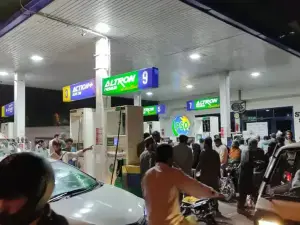
By the same argument, domestic gas prices should be brought to the level of international prices whether it is used by fertiliser plants, CNG stations or for domestic and other uses. This will pave the way for importing gas to fill the current shortage and discourage the inefficient usage of gas in transportation and for domestic use.
Here, the argument is build up to deliberate on bringing parity to profits in fertiliser companies and minimise the impact of rising fertiliser prices on farmers. One suggestion is to introduce a fertiliser development levy and making it zero for companies suffering from gas shortage (like Engro) and charging it on incremental margins to others (like FFC and Fatima) while letting them pass the impact of gas shortage on urea prices.
The money collected under the fertiliser development levy would then be collected in a pool of funds that can in turn be used to subsidise imported DAP whose higher prices are worsening the mix of fertiliser usage.
This will incentivise farmers to substitute urea in favour of DAP as urea prices rise and DAP becomes relatively affordable. The government will also not be irked by such an arrangement as the money used to provide the DAP subsidy will not be a strain on its budget.
It may be noted that the mix of DAP and urea usage has been worsening over the past three years, which negatively impacts the yield of local crops.
This is not an ideal solution. It is instead a stop gap measure until the gas shortage issue is resolved, once and for all.










Comments
Comments are closed for this article.