



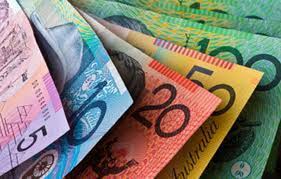
 LONDON: The Australian dollar rose on Tuesday, the main mover on developed world currency markets, after the country's central bank chief said he was happy with current interest rate levels and made no attempt to talk down the currency.
The yen was a touch lower after a couple of days of raised nerves over the situation in Ukraine and Gaza that had driven the traditional safe haven close to its highest in two months against the dollar and a six-month peak against the euro.
Analysts said the day's main event would be U.S. inflation data due later, and they were also focusing on a meeting of foreign ministers in Brussels due to discuss the bloc's attitude to Russia's involvement in Ukraine.
The Aussie has gained steadily since hitting an almost four-year low at the start of this year, driven by signs of improvement in its domestic economy and an easing off, at least for now, of nerves over Chinese growth.
Governor Glenn Stevens, who has in the past engaged in verbal intervention to support growth, said he was content with the current level of interest rates, prompting markets to pare back slightly bets on another cut in rates this year. Data on Wednesday is also expected to show inflation topping its 2-3 percent target.
"Governor Stevens chose not to talk down the currency, as has been the central bank's want in past months, and that boosted the Australian dollar," said Jane Foley, a strategist at Rabobank in London.
"That said, I doubt the bank feels particularly confident in the Australian economy's recovery as yet. Until we see greater signs of capital investment coming through, the Aussie will be vulnerable at these levels."
The Aussie traded 0.2 percent higher on the day at $0.9390.
RUSSIA FOCUS
The yen dipped, with the dollar and the euro both up 0.1 percent but traders said the market was keeping a nervous eye on events in Ukraine and the Middle East and was unlikely to push it sharply lower in the near future.
The threat of a new and deeper round of sanctions against Russia over its involvement in Ukraine has been hanging over the euro in particular. EU foreign ministers meet on Tuesday to decide how precisely to deploy sanctions agreed 10 days ago.
The number of Russian individuals and companies to be penalized is unclear so there is scope to adopt a tougher posture but that is expected to stop short of the sweeping sectoral moves being called for by Washington.
"The best case scenario for markets is if soft diplomacy is the preferred course of action amid hopes that the threat of harsher actions could encourage cooperation," analysts from French bank Credit Agricole said in a morning note.
"In the near-term, any flare-up in tensions is likely to spur support for the dollar and the yen."
The euro, which broke below $1.35 for the first time since February last week, was down 0.1 percent at $1.3505 early on in Europe.




















Comments
Comments are closed for this article.