



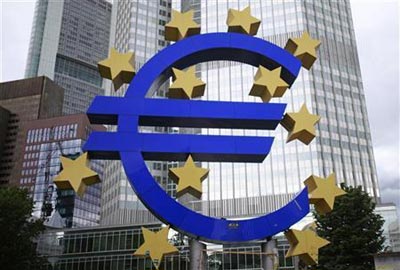
 LONDON: Emerging local currency bond yields fell to multi-month lows on Monday after the euro zone's extraordinary monetary easing pushed cash into high-yield assets and boosted expectations of rate cuts in the developing world.
Bulls also received impetus from signs of global economic recovery after robust U.S. jobs data and a pick-up in Chinese exports. They have, for the time being, shrugged off U.S. 10-year yields at one-month highs above 2.61 percent and are betting a U.S. rate rise is quite some way off.
"We've seen a three-pronged attack on short emerging market positions," UBS strategist Manik Narain said. "We are seeing a really aggressive bounceback in (local currency) rates."
"The market is looking favourably on what the ECB has done and its impact on other central banks and local debt markets."
While yields on JPMorgan's GBI-EM index of local debt closed on Friday at 6.4 percent, the lowest since November 2013. Indian and Turkish yields hit fresh seven-month lows on Monday.
South African yields fell to two-week lows, after foreigners pumped in 4 billion rand ($377.93 million) on Friday.
Expectations other emerging markets could also ease policy have grown after Mexico shocked with a rate cut on Friday. That had pushed 10-year peso yields down by 33 bps.
The impact should be strongest in central Europe, where bonds have already rallied in recent weeks in anticipation of ECB action.
Swaps markets are pricing in a 25 bps rate cut in Poland and a 20 bps cut in Hungary in coming months and these expectations may gather momentum as euro zone peripheral yields fall to successive record lows.
"The strong moves in French and Italian bonds will act as a support for local government debt in central Europe as crossover investors will be looking at the widening yield spreads (with the euro zone)," Narain of UBS said.
Unicredit analysts agreed, noting that inflation data in the region would keep central banks dovish, with Czech numbers on Monday showing annual inflation at a below-forecast 0.4 percent.
"With policy rates at historical lows, several central European central banks ... have started talking down their currencies. In these circumstances, even central banks that used to be more cautious are expected to follow the trend and cut," they told clients, predicting a rate cut this week in Serbia.
The bond market flows helped emerging currencies extend last week's gains, with the zloty at new 17-month highs against the euro and the rand and lira at one- and three-week peaks to the dollar respectively.
In Asia, the Korean won hit a near six-week peak and the yuan bounced after the central bank fixed the midpoint exchange rate at the highest since late March
Dollar bond spreads over U.S. Treasuries contracted to 272 bps, the narrowest since January 2013, having snapped in 20 bps since before the ECB decision on Friday.
That rally is bringing out a raft of new issuers, with Kenya on a roadshow for its debut Eurobond and others such as Turk Telecom, Vakifbank of Turkey and the Moroccan sovereign all prepping investors for new issuance especially in euros.
Equity markets too are benefiting from the ECB tailwind.
A record Friday close on Wall Street on Friday propelled emerging stocks to new 7-1/2 month highs =, with Asian emerging markets at the highest levels since 2011.
Mumbai markets hit second straight record highs.
In Europe, Russian equities rose 0.6 percent to new four-month highs, helped also by easing tensions with Ukraine.
"The Russian ambassador, who was recalled from Kiev a few months ago attended the inauguration of (Ukrainian President) Poroshenko on the weekend. This is a hopeful sign and markets are viewing it positively," RBS analyst Tatiana Orlova said.




















Comments
Comments are closed for this article.