



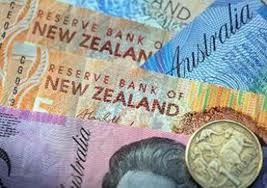
 LONDON: The New Zealand dollar was the main mover on developed currency markets overnight, falling more than half a cent after its central bank warned it could intervene against a currency boosted by rises in official interest rates.
The Reserve Bank of New Zealand has led its peers this year in raising interest rates, driving a 13 percent rally for the kiwi against the US dollar since last August.
The US dollar's failure so far to make good on predictions of a surge this year - it languished close to six-month lows against a basket of major currencies on Wednesday - have helped extend that rise.
New Zealand's central bank governor Graeme Wheeler, who intervened at slightly weaker levels for the kiwi a year ago, said the bank could sell the currency if it stayed strong in the face of worse fundamentals such as a further fall in export prices.
He also said further currency strength would be a factor in future moves on interest rates although several strategists in London cast doubt on whether that would prevent the bank from hiking official rates further.
"I would be reluctant to go too far with the story markets have bought into overnight," said Adam Cole, global head of currency strategy with RBC Capital Markets in London.
"On intervention it is a warning but I don't read it as a threat or a clear signal they will intervene."
Still, while Cole predicts the bank will raise rates twice more, he said there was relatively little room left for the kiwi to gain further.
The currency steadied somewhat in early European trade but was still down 0.5 percent on the day to trade at $0.8688, more than a cent below almost three-year highs of $0.8779 hit on Tuesday.
FED TESTIMONY
The dollar took a step lower when London returned from a holiday on Tuesday and investors are braced for the possibility that dovish comments from Federal Reserve Chair Janet Yellen could further undermine the greenback. The US central bank's new chief is widely expected to hammer home its dovish position at her congressional hearings on Wednesday and Thursday, even after last Friday's upbeat US payrolls report.
"She might be more confident about the US labor market, but i think there will be no major surprises in her speech," said Masashi Murata, senior currency strategist at Brown Brothers Harriman in Tokyo.
"We don't have any important US data tonight, so there is no good reason to accumulate long positions in the US dollar," Murata said.
Many analysts and traders view the Fed's communication since Yellen's arrival as somewhat garbled.
An initial nod towards a rise in interest rates in the first half of next year was quickly talked down by policymakers and there is little faith the Fed will follow its reining in of bond-buying with actual rate rises anytime soon.
That, along with flows of capital into euro zone capital markets, has left this year's calls for a stronger dollar looking exposed. Against the yen, the US currency fell another 0.2 percent to a three-week low of 101.43 yen.
The crisis in the Ukraine added to the traditional safe-haven appeal of the Japanese unit as Tokyo markets reopened after being closed on Monday and Tuesday for the Golden Week holiday.
A somewhat downbeat Markit/HSBC services Purchasing Managers' Index (PMI) for China also weighed on investors' appetite for risk.
Expansion in China's services industry slowed slightly in April, with employment growth slipping to a seven-month low.
The dollar index was last at 79.114, up slightly on the day but not far from the previous session's trough of 79.060.
Against the euro it was steady at $1.3924, within sight of two-month highs of $1.3952 hit on Tuesday.


























Comments
Comments are closed for this article.