



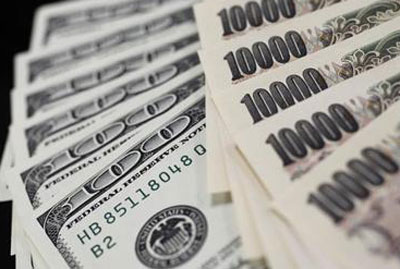
 NEW YORK: The euro rose to a six-week high against the dollar and a five-year peak versus the yen on Monday, helped by tighter money market conditions in the euro zone and strong trade numbers from China, which boosted investor tolerance for riskier currencies.
Europe's common currency remained resilient strong despite Friday's better-than-expected US non-farm payrolls report, tepid economic conditions in the euro zone, and constant reiteration by European monetary officials that interest rates would remain low for some time. The euro is within striking distance of its yearly highs.
China reported its trade numbers over the weekend. China's exports came in well above forecast in November, rising 12.7 percent from a year earlier, while imports rose 5.3 percent.
"The strong labor data out of the US and the robust trade balance numbers from China suggest that global growth may be better than the consensus view," said Boris Schlossberg, managing director of FX strategy at BK Asset Management in New York.
"Under that scenario, both the US and China could act as locomotives for global GDP expansion and help lift the euro zone out of its funk."
The euro rose as high as $1.3730 and was last at $1.3723, firmer on the day as short-term interest rates in the euro zone money market edged up with the chances of more easing by the European Central Bank looking slim for now.
The euro also climbed against the yen, rising to 141.60 , reaching a high not seen since October 2008. It was last trading at 141.64 yen, up 0.5 percent, ignoring a drop in euro zone sentiment and a fall in German industrial output.
Since Friday's US labour market report, investors have been selling the dollar and yen, according to CitiFX's flows report. The bank's clients have been buying the euro, with Citi expecting more demand from hedge funds.
The euro's rise pushed the dollar index 0.1 percent lower to 80.203, after earlier hitting a near six-week low of 80.169.
The dollar tracked lower US Treasury yields, which failed to get traction from the US payrolls number. US employers hired more workers than expected in November, driving the jobless rate to a five-year low of 7.0 percent.
But the jobs number was not robust enough to lead markets to price in an immediate withdrawal of monetary stimulus by the Federal Reserve. As a result, US Treasury yields fell, dragging the dollar down.
Still, Camilla Sutton, chief currency strategist at ScotiaBank in Toronto, said the overall US economic environment suggests that tapering is likely to happen in January.
"The Fed will work hard to push out expectations for higher rates as it tapers and there is a risk of a decision to lower the unemployment threshold," said Sutton.
"In this environment we would expect the US dollar to be broadly stronger."
A Reuters poll showed Wall Street firms expect the Fed to start reducing its massive bond-buying program no later than March, though only a handful of firms expect action as early as next week.
Speeches by Fed policymakers Jeffrey Lacker, Richard Fisher and James Bullard on Monday will be followed closely by traders keen to hear any hints on when tapering will begin.
Of those three, only Bullard is a voting member of the policy-setting Federal Open Market Committee this year. He recently said a strong payrolls number would raise the chance of tapering in December.
The dollar fell to a 1-1/2-month low against the safe-haven Swiss franc. The franc was also buoyed by growing signs that deflation in Switzerland was abating and the economy was growing. The dollar fell to 0.8905 franc, its lowest since Oct. 25, and was last flat at 0.8916.
Against the yen, the dollar held firm at 103.08 yen, up 0.2 percent, following Friday's 1.1 percent rally, not far from the six-month peak of 103.38 hit on Tuesday.
The yen continued to underperform on the Bank of Japan's ultra-loose monetary policy and the pick-up in risk appetite. -Reuters

























Comments
Comments are closed for this article.