



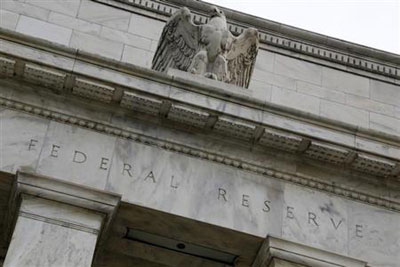
 SAN FRANCISCO: The US Federal Reserve will at some point reduce its massive bond-buying program, but the timing of that decision depends on how the economic recovery evolves, a top Fed policymaker said on Monday.
"Monetary policy in the United States is likely to remain highly accommodative for some time, as our economy fights to overcome the remaining headwinds from the global financial crisis," Fed Board Governor Jerome Powell said in remarks prepared for delivery to the San Francisco Fed's Asia Economic Policy Conference.
As the recovery continues, he said, the Fed will gradually reduce, and then end, its $85-billion-a-month bond-buying program.
"The timing of this moderation in the pace of purchases is necessarily uncertain, as it depends on the evolution of the economy," he said.
The Fed last month decided to keep its bond-buying program intact, saying it wanted to see more evidence of a strengthening economy before reducing monetary stimulus.
Powell also reiterated the Fed's commitment to communicating about its policy intentions as clearly as possible "in order to limit the odds of policy surprises."
In September, when the Fed unexpectedly did not trim its bond-buying program, stocks rose sharply.
Powell devoted most of his prepared remarks to debunking the idea that easy accommodative policy in the United States and other advanced economies has been primarily responsible for the massive capital inflows.
Currency appreciation and asset price rises that some emerging economies have blamed on policies implemented by the Fed and other major global central banks.
While accommodative monetary policies "likely contributed to some of these flow and price pressures," he said, and may also have contributed to the buildup of potential financial imbalances in certain emerging markets, "other factors appear to have been even more important."
Among those factors, he said, are expectations that some emerging economies will grow more slowly than before.
When the Fed begins to reduce bond buys, he said, "the overall macroeconomic effects need not be disruptive" to emerging economies, he said.
That's in large part because any tightening will "in all likelihood" occur only when the US recovery is more firmly established, so that any adverse effects to emerging economies should be offset by stronger demand for their exports.























Comments
Comments are closed for this article.