



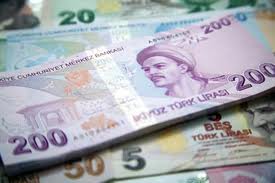
 ISTANBUL: The Turkish lira firmed on Friday, buoyed by the possibility that the central bank will take action to support the currency if data as expected shows that it is undervalued.
Equities fell despite a boost from Turkey's biggest biscuit maker, Ulker Biskuvi. Its shares were up more than 10 percent at 15.15 lira per share after parent company Yildiz Holding, which also owns Godiva Chocolatier, said the unit targeted sales of 4.5 billion lira in 2016.
On Friday, Yildiz Holding completed the sale of 20 percent of Ulker at 12.6 lira per share and analysts have revised their estimates upwards after the company gave a more detailed picture of the impact of Ulker's ongoing restructuring programme.
But banks dragged Istanbul's main share index down 0.2 percent at 76,121.05 points by 0756 GMT, underperforming emerging market peers which were broadly flat.
The central bank will release at 1130 GMT its real effective exchange rate index, which measures the lira's purchasing power against the currencies of Turkey's main trading partners, for September. It could encourage the bank to boost the lira.
"We expect the index to decline to 108.8, from 111.5 the previous month," said a note from Turkish Economy Bank, adding that any level below 111 would see the lira as undervalued.
It said the central bank was hoping for a level closer to 117, which would be in line with the rate of 1.92 lira targeted by central bank governor Erdem Basci for year-end.
The lira firmed to 2.0 against the dollar by 0804 GMT from 2.0045 late on Thursday. The 10-year benchmark bond yield rose to 8.95 percent from 8.92 percent.
The Turkish central bank reiterated last month it will not raise the policy rate, instead opting for a complex system of forex auctions and withholding one-week repos to support the lira.
"The central bank might take further actions to appreciate the lira at this month's MPC meeting which will be held on October 23," a note from Odeabank said.
The US Federal Reserve's bond-buying programme has fuelled capital inflows into countries such as Turkey, and fear of its withdrawal has hammered emerging markets in recent weeks.
Last month, emerging markets won more time when the Fed decided not to cut back stimulus and some analysts say the tapering may now be delayed until next year because of worries over the impact of the US government shutdown.
A large current account deficit, running at 7 percent of GDP, makes Turkey vulnerable to any tapering in the programme as the country relies on external financing due its huge trade shortfall.
On Friday the central bank opened a 5 billion lira ($2.5 billion) one-week repo auction and a 4 billion lira one-month repo auction.

























Comments
Comments are closed for this article.