



 TORONTO: Canada's growth will dip sharply in the second quarter to an annualized 2 percent from 4.2 percent in the first due largely to the Japanese earthquake and the effects of the strong Canadian dollar, the Bank of Canada said on Wednesday.
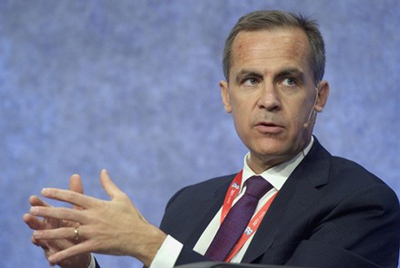
Following are comments from Bank of Canada Governor Mark Carney and Senior Deputy Governor Tiff Macklem speaking in Ottawa following the release of the central bank's quarterly Monetary Policy Report:
ON POSITIVE ASPECTS TO STRONG CURRENCY
"There certainly are countervailing aspects and positive aspects of having a strong currency, imports are obviously cheaper, those imports include not just consumer goods which are nice to have obviously to consume but importantly machinery and equipment that can help make our businesses more productive and ultimately more competitive for the U.S. markets, for third country markets, and for Canadians, for domestic products and services, and that is happening, we are seeing that that is one of the supporting factors for investment in Canada."
ON HELPING JAPAN
"From the perspective of the Bank of Canada, we have been in extremely close contact with our colleagues at the Bank of Japan at various levels we've been very supportive of the measures that they have taken, obviously we participated in the G7 initiative to stabilize the Japanese yen, which is an important initiative. One of the elements of discussion tomorrow at the G7 meeting hosted by the French in Washington will be the status of the Japanese economy, the effort for reconstruction, the timeline, what else can be done and we will be active participants obviously we will do what is necessary to help our Japanese colleagues."
ON FINANCIAL CONDITIONS
"The observation is, globally and in Canada, financial conditions remain extremely favorable, in U.S. markets particularly, there has been a broad based releveraging, there's a verity of indicators that have shown less risk aversion in the markets. It's relevant from a policy perspective because it has implications for financing conditions and for levels of activities. So we're focusing on the monetary policy implications of that."
ON RISKS TO THE GLOBAL ECONOMY
"One of the bigger risks in the global economy at present is the emergence of more material overheating pressures in a number of major emerging market economies including the one you mentioned.
This is contributing to the strength of the commodity prices and there is some prospect of this situation persisting given the scale of moves of reduction in monetary stimulus that has been taken thus far in major emerging market economies. So yes, this is a major issue not just for those economies, but for the global economy, because the major emerging market economies are a much larger share of the global economy."
"We're in a dynamic where it is unrealistic to expect that G3 monetary policy is going to lead the global cycle at a time when emerging market economies are providing anywhere from two thirds to three quarters of global growth."
ON FUTURE POLICY STANCE
"It all depends whether the market has the right assumptions to begin with and so I'm not going to lead the market anymore in terms of where policy is going to be in the future, the market knows where policy is right now and that's at 1 percent which is appropriate given the material excess supply in Canada, the headwinds the economy is experiencing and the need and our mandate to achieve the 2 percent inflation target over the medium term."
ON POTENTIAL GROWTH IN MID-2012
"It's important to recognize that our getting back to potential in the middle of 2012 is in part a product of the stance of monetary policy, so we adjust monetary policy in order to achieve potential growth and we wouldn't necessarily get to that point on a different path or policy so we set policy appropriately yesterday and giving our reasons today."
ON THE CANADIAN DOLLAR
"We have to take all factors into account and certainly one of the most important factors at the moment are the strong headwinds the Canadian economy is experiencing now and will in the future from the persistent strength in the Canadian dollar in the report this is not just a factor that is in the base case projection but it's also an additional risk to the outlook to growth and inflation in Canada."




















Comments
Comments are closed for this article.