



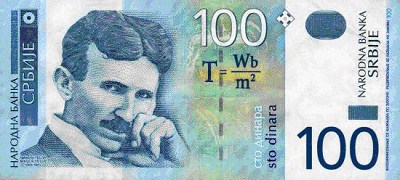
 BELGRADE: The Serbian dinar fell against the euro on Monday in a thin market where investors are watching for the central bank's response to political pressure to cut interest rates.
The dinar started gradually losing ground against the euro last week, following months of relative stability helped by the central bank taking its benchmark interest rate to 11.75 percent, the highest in the region.
"The demand since mid-last week was low, both from the corporate and portfolio sides, and interest in selling euros has also been weak," said a dealer with a Belgrade-based bank.
Around midday on Monday the dinar traded at between 112.5 and 112.2 per euro, compared with an average of 111.5 early last week.
"Investors are also waiting to see whether the central bank will cut its key rate," the dealer said.
The Serbian central bank meets to review rates on Thursday, less than a week after Finance Minister Mladjan Dinkic said he would ask policymakers for a cut to aid exporters and ease borrowing costs.
"The government wants to ease the burden of its own debt, mainly its internal (dinar) debt," Belgrade economics lecturer Djordje Djukic said.
Djukic said that every major transaction could now move a shallow Serbian currency market in either direction. "But the central bank can neutralise that," he said.
Last month the central bank purchased 5 million euros ($6.5 million) to halt sharp gains in the dinar.
Serbia's foreign currency reserves increased to 11.7 billion euro ($15 billion) in February from 10.5 billion euros a month earlier, the central bank said on Monday.
The main inflows came from sales of euro maturities worth of 1.16 billion euros, 61 million euro from mandatory reserves of commercial banks and 12.7 million euro from borrowing as Belgrade seeks to plug its budget gap, projected at about 3.6 percent of gross domestic product (GDP) this year.
The country's debt reached 60 percent of GDP last year, when the economy shrank by an estimated 2 percent, and is seen rising to 65 percent this year.
The main foreign currency outflows were a 100.2 million euro repayment to the International Monetary Fund, 55.2 million euros for matured euro-denominated bonds and another 21.6 million euro in debt payments to other international lenders, the bank said.
While other eastern European central banks have been cutting rates to boost weak economies, the Serbian central bank has raised rates five months running to tame inflation which in January stood at 12.8 percent, way outside its target band of 4 percent, give or take 1.5 percentage points.

























Comments
Comments are closed for this article.