



 SINGAPORE: Fears of capital outflows hit the Indonesian rupiah on Thursday with one-month forwards at weakest in more than three years, while its Asian peers gained after stronger-than-expected China's trade data.
The rupiah spot's indicative prices slid 0.5 percent to 9,700 per dollar on exchange pages, but its real prices were softer with 9,850-9,870 traded, dealers said.
One-month dollar/rupiah rose 0.6 percent to 9,930, its highest since September 2009.
That came before the central bank is expected to keep its benchmark rate unchanged at a record low of 5.75 percent later in the day, a Reuters poll showed.
Most economists in the survey also saw Bank Indonesia holding the deposit facility rate, or FASBI, at its current level of 4 percent this time, although they expect gradual increase.
"Should it fail to hike the FASBI rate again, as it did in August by 25 bps to 4.25 percent, it will send a negative signal to the currency market and add to negative downside volatility," said Sacha Tihanyi, senior currency strategist for Scotiabank, in a research note.
Five-year bond yields rose to 4.713 percent and three-year yields rose to 4.756 percent, as foreign investors sold government debt.
A government bond sale on Jan. 15 is unlikely to attract huge inflows, unless Indonesia act to reduce concerns over inflation and its current account deficit, dealers and analysts said.
"On valuation, the rupiah looks very cheap, but I don't expect a near term recovery," said Yuna Park, a currency and bond analyst at Dongbu Securities in Seoul.
"It is possible for foreigners to sell Indonesian bonds further, given worries about inflation, especially due to the government's plan to cut power subsidies. Its current account is unlikely to improve significantly," Park added.
Persistent dollar demand from importers has also helped render the rupiah the worst performing emerging Asian currency since the new year began.
Other emerging Asian currencies gained with the Philippine peso hitting a near five-year high and the South Korean won at 17-month peak.
Chain's exports grew 14.1 percent in December from a year earlier to hit a seven-month peak, easily beating market expectations of a 4 percent increase.
WON
The won firmed as far as 1,060.3 per dollar, its strongest since August 2011.
Offshore funds and domestic exporters bought the South Korean currency, while the foreign exchange authorities were spotted slowing down its appreciation, dealers said.
"I do not expect the won to strengthen past 1,060 as the authorities will keep intervening," said a foreign bank dealer in Seoul.
Investors are keeping an eye on the central bank's monetary policy meeting on Friday when the Bank of Korea is expected to hold interest rates steady.
PHILIPPINE PESO
The Philippine peso hit 40.730 per dollar, its strongest since March 2008, according to Thomson Reuters data.
Philippine's export growth in November touched a 5.5 percent, its slowest in three months, but investors focused more on China's stronger-than-expected trade data.
"It is more on improving global risk sentiment as China came out with great trade data, which goes to show that China is definitely rebounding," said a foreign bank dealer in Manila.
The dealer revised his forecast for the peso's January peak to 40.60 from 40.70 with the China's data.
But the Philippine currency failed to strengthen furhter now as the central bank was spotted intervening, dealers said.
Fixing-linked dollar demand also limited the peso's gains, they added.
RINGGIT
The ringgit gained as investors cleared long positions in the greenback.
The Malaysian currency found more support from data showing the country's industrial production growth in November exceeded market forecasts.
SINGAPORE DOLLAR
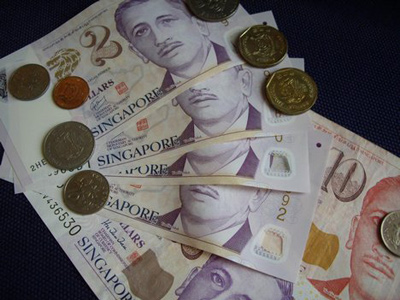
The Singapore dollar barely changed against the dollar as it faced a chart resistance around 1.2260 to the greenback.
But investors chased the city-state's currency to the euro. The Singapore dollar firmedd 0.2 percent to 1.6000 against the euro.


























Comments
Comments are closed for this article.