

Pakistan’s quiet jobs crisis
Pakistan's economic stabilization has obscured a deepening labor market crisis, characterized by skill mismatches, weak job creation, and a surplus of experienced professionals, affecting all worker levels.
- Unemployability of graduates due to skill mismatches.
- Mid-career professionals opting for remote foreign work.
- Surplus of senior talent amid corporate restructuring.
- Policy reforms to address the labor market crisis.

Pakistan’s economic stabilization has come largely through contractionary policy: tighter spending, higher interest rates, compressed imports, and a shrinking current account deficit. By conventional measures, this counts as progress. Yet it has also obscured a deeper and more dangerous problem: a labour market crisis that now runs through every layer of the workforce, from fresh graduates to mid-career professionals to senior executives.
The official unemployment rate has risen to 7.1 percent, up from 6.3 percent a year earlier. Most economists suspect the real number is higher. But even that debate understates the problem. Pakistan is not merely producing too few jobs. It is producing the wrong workers for the jobs that exist, and too few firms capable of absorbing the workers it produces.
Start with education. Public spending remains far below what is required for a country with Pakistan’s demographic profile. Good private schooling exists, but only for a narrow elite. For the majority, the system does not produce literacy, numeracy, discipline, communication skills, or technical competence at any meaningful scale. Universities continue to release graduates into the market, but too many arrive without the baseline skills employers require. The result is not just unemployment. It is un-employability.
That, however, is only half the story. The other half is demand. Even a better-trained workforce would struggle in an economy where private investment is weak, new firms are not being created at scale, and existing businesses are expanding cautiously. Pakistan has a human capital problem, but it also has a job-creation problem. The two now feed on each other.
Pakistan’s industrial base has thinned. Manufacturing is no longer creating employment at the pace it once did, and several sectors remain below the momentum they had before the post-2022 squeeze. Industry has historically been one of the country’s main absorbers of young workers; it has largely stopped playing that role. The financial sector, more dynamic before the 2008 crisis, has stagnated and added few meaningful new positions. Telecom, once among Pakistan’s fastest-growing sectors, has matured. Multinationals are leaner. Across industries, consolidation has narrowed the space for middle- and senior-management roles.
Employers complain that universities are not producing usable graduates. In many cases, they are right. Entry-level roles exist, especially in export-oriented services such as IT, but firms cannot afford to train underprepared workers for global competition. At the same time, young graduates argue, also correctly, that there are too few good jobs to absorb them. The market is stuck in a bad equilibrium: firms say they cannot find talent, workers say they cannot find jobs, and both are telling part of the truth.
Artificial intelligence is likely to make this worse before it makes it better. The first jobs to be squeezed will not be the most sophisticated ones. They will be the routine, low-skill, entry-level tasks through which young workers normally learn discipline, execution, and judgment. If those stepping-stone roles disappear, Pakistan’s already weak school-to-work transition will weaken further.
Mid-career professionals face a different bind. Formal domestic employers struggle to retain talent against two pressures: overseas employment, particularly in the Gulf, and remote work for foreign firms. The Gulf option is now narrowing, but remote work has created a powerful arbitrage. A Pakistani professional working remotely for a foreign client can often face an effective tax burden far below that of a comparable salaried employee in the domestic formal sector. Add flexibility, foreign-currency income, no commute, and freedom from office politics, and the choice is not difficult.
This is not merely a lifestyle shift. It is a labour-market distortion. Pakistan effectively penalizes formal domestic employment while lightly taxing the export of labour services. That may support foreign exchange inflows, but it also weakens the domestic corporate talent pool. The state cannot keep taxing formal salaried workers heavily while pretending not to notice that comparable workers are moving into lightly taxed offshore arrangements.
At the top end, the squeeze is different but equally structural. Senior talent is not scarce. It is increasingly surplus. The expansion years of banking, telecom, FMCG, and multinational growth produced a generation of capable managers with another ten or fifteen working years left. But new institutions are not being created fast enough to absorb them, and existing institutions are cutting exactly the layers in which they sit.
Boards and executive suites remain dominated by an older generation that rarely exits on time. Below them, companies are flattening hierarchies, merging functions, trimming cost, and replacing senior professionals with cheaper junior substitutes. A few years ago, experienced professionals with strong credentials had little difficulty finding work. Today, many sit idle, consult informally, trade on the side, or accept roles far below their competence. This is wasted human capital, and it is becoming a serious economic loss.
The problem may deepen further. As Gulf job prospects soften and some workers return home, Pakistan’s pool of unemployed and underemployed middle-aged professionals will grow. This is not the unemployment story policymakers are used to discussing. It is not just young people waiting for first jobs. It is also experienced workers being pushed out of formal productivity while still having years of useful work left.
None of this is irreversible, but it requires treating labour-market failure as seriously as Pakistan now treats fiscal failure. The tax anomaly between domestic formal employment and remote offshore work needs correction. Education reform must focus less on enrollment and more on usable skills. Investment policy must be judged by jobs created, firms formed, and productive capacity added, not merely by headline inflows. And Pakistan’s surplus of experienced professionals should be treated as an asset, not debris from corporate cost-cutting. Properly deployed in training, mentoring, governance, and enterprise-building roles, they can help offset years of underinvestment in human capital.
Stabilization was necessary. But stabilization is not a growth model. An economy cannot stabilize its way to prosperity. At some point, it must create firms, absorb workers, reward skills, and give people a credible path into productive work. Without that, Pakistan’s macro recovery will remain what it too often has been: a pause between crises, not an exit from them.
Copyright Business Recorder, 2026
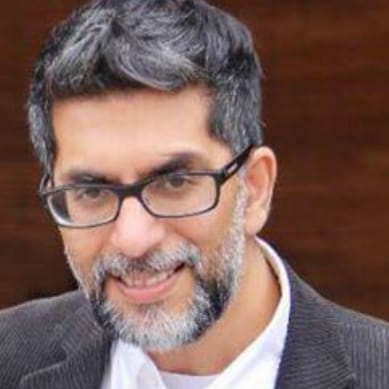
Ali Khizar is the Director of Research at Business Recorder. His Twitter handle is @AliKhizar