


Pompeo warns allies Huawei presence complicates partnership with US
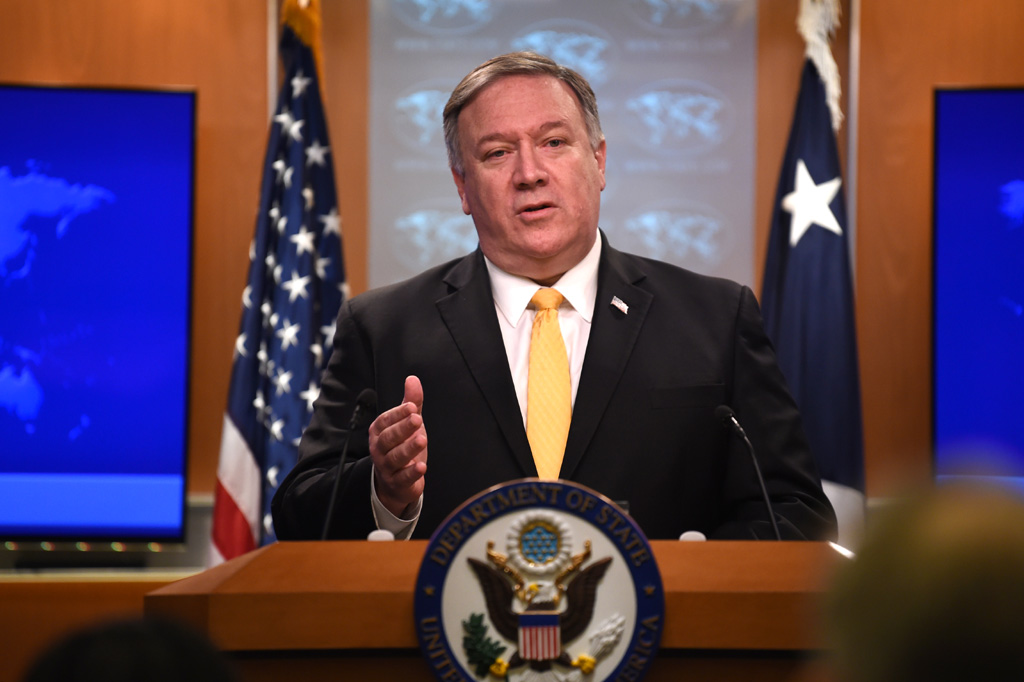
BUDAPEST: Secretary of State Mike Pompeo warned U.S. allies on Monday against deploying equipment from Chinese telecoms gear manufacturer Huawei on their soil, saying it would make it more difficult for Washington to "partner alongside them".
The United States and its Western allies believe Huawei Technologies' apparatus could be used for espionage, and see its expansion into central Europe as a way to gain a foothold in the EU market.
"We want to make sure we identify (to) them the opportunities and the risks of using that equipment," Pompeo told reporters during a visit to the Hungarian capital, Budapest.
Hungary is the first stop in Pompeo's trip to central Europe that also includes Slovakia and Poland, part of an effort to make up for a lack of U.S. engagement in the region that opened the door to more Chinese and Russian influence, administration officials say.
Washington is concerned in particular about the expansion of China's Huawei, the world's biggest maker of telecoms equipment, in Hungary and Poland.
Huawei denies engaging in intelligence work for any government. It says its technologies serve 70 percent of Hungarians and that it cooperates with most telecoms providers in Hungary, including state-owned enterprises.
"We have seen this all around the world, it also makes it more difficult for America to be present," Pompeo said. "If that equipment is co-located where we have important American systems, it makes it more difficult for us to partner alongside them."
Pompeo announced plans for a defence cooperation agreement with Hungary, one of the most enthusiastic European governments about Chinese investment. But he said he had discussed "the dangers of allowing China to gain a bridgehead in Hungary" in talks with Foreign Minister Peter Szijjarto.
Budapest's nationalist government, like Poland's largely isolated politically in the European Union, hopes to buy mid-range air defence capabilities from the United States.
U.S. INTERESTS
In Poland, where Pompeo is travelling to on Tuesday, the government is considering banning Huawei from participating in the development of 5G capabilities after arresting a Chinese employee of Huawei and a former Polish security official on spying allegations last month. Both men have denied wrongdoing.
It is also lobbying Washington for an increased military presence on its soil. Slovakia, which Pompeo visits before Poland, is looking to buy F-16 fighter jets.
Pompeo's tour includes a conference on the Middle East, hosted by Poland, where Washington hopes to build a coalition against Iran.
He is also expected to voice concerns about energy ties with Moscow, and urge Hungary not to support the TurkStream pipeline, part of the Kremlin's plans to bypass Ukraine, the main transit route for Russian gas to Europe.
Hungary gets most of its gas from Russia and its main domestic source of electricity is the Paks nuclear power plant where Russia's Rosatom is involved in a 12.5 billion-euro ($14 billion) expansion. It is also one of the EU states that benefit most from Chinese investment.
Hungary's Szijjarto brushed off U.S. concerns, saying Budapest was fullfilling its obligations to western allies as a member of the NATO military alliance.
"When it comes to cooperation with Russia or cooperation with the People's Republic of China that does not harm us being reliable as a NATO ally," he told a joint news conference with the U.S. counterpart.
Pompeo discussed international concerns over the rule of law in Hungary, where Prime Minister Viktor Orban is pressuring courts, media and non-governmental groups, during meetings in Budapest.
"So many of the concerns that are voiced are things that have happened in the absence of America being engaged," he told reporters.





















Comments
Comments are closed for this article.