


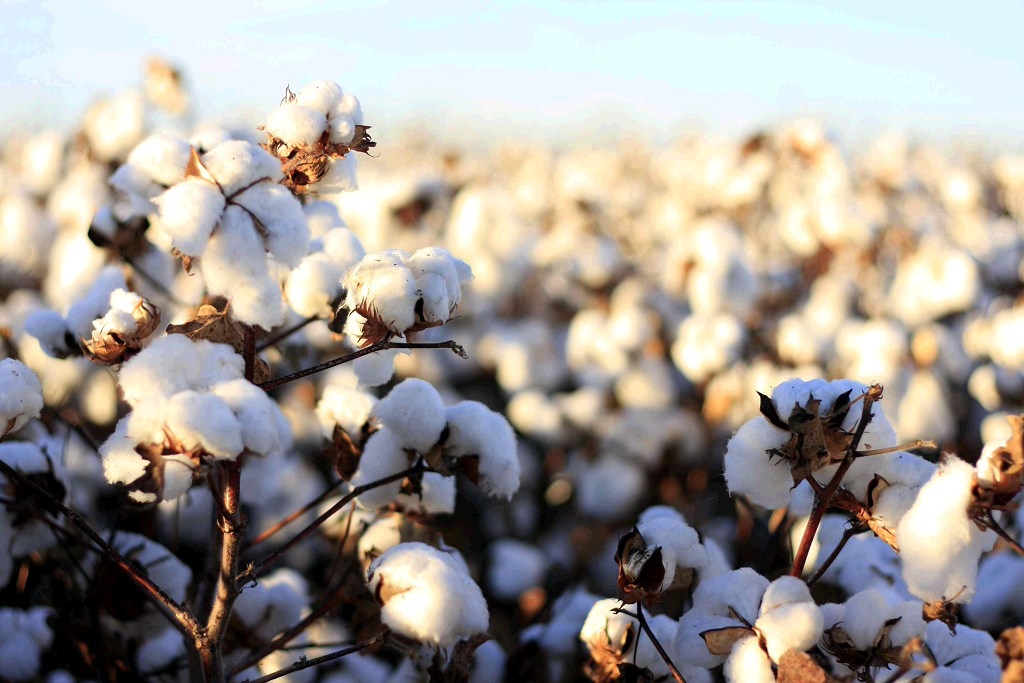
 CAIRO: Egyptian cotton production is on course to rebound with help from a devalued currency and bigger cultivation area, recovering from a slide in exports of the world-famous crop since 2011 that was caused by a drop in quality.
Cotton exports are expected to reach about 52,000 tonnes in the 2017/2018 season that ends in August, up nearly 37 percent from the previous year, Nabil al-Santaricy, head of the Alexandria Cotton Exporters Association, told Reuters.
"Next year we expect to yield approximately 120,000 tonnes overall, so we expect exports to rise by approximately 40-45 percent if we export around 75,000 tonnes," he said.
Output fell drastically in 2011, when political upheaval meant regulations to maintain quality were not enforced.
But demand for the Egyptian product, known locally as "white gold", has picked up as rules to ensure quality have been strictly imposed again since 2016.
Egypt is the world's second largest exporter of long-staple cotton, used mainly to make luxury linens, behind the United States, said Ahmed Elbosaty, chairman of Modern Nile Cotton, Egypt's largest cotton trading company.
"This time we are coming back with a volume the market is used to and was in desperate need for ... Now the quality is back and the quantity is going up," he said.
The Agriculture Ministry has boosted the cultivation area in 2018/2019 to lift exports from Egypt, where sunny skies and superior seed produce a cotton with unusually long fibres used to make light and durable fabrics with a sheen and soft touch.
Egypt planted 336,000 feddans (141,120 hectares) of long-staple cotton in 2018, up from 220,000 feddans (92,400 hectares) in 2017, the ministry spokesman said this week.
Cotton cultivation could expand further as the authorities push farmers to avoid water intensive crops, such as rice, to prevent shortages as Ethiopia prepares to start filling a huge dam on the Nile, considered Egypt's lifeline.
Egyptian cotton has received a further boost with the 2016 devaluation of the pound, which lost roughly half its value against the dollar, making exports more competitive globally.
There has also been renewed interest in pure Egyptian cotton following a 2016 scandal in which Indian textile manufacturer Welspun India falsely passed off some of its cheap sheets as premium Egyptian cotton products, driving off some US buyers.
The company said at the time it was addressing the issue and blamed it on a "complex supply chain"






















Comments
Comments are closed for this article.