


Malaysia calls for stronger economic cooperation with Pakistan
Malaysia is actively seeking stronger economic cooperation with Pakistan, highlighting significant potential in trade, tourism, education, and the halal industry to foster mutually beneficial partnerships.
- Key sectors for enhanced Malaysia-Pakistan economic cooperation.
- Malaysia's established halal ecosystem and growing tourism potential.
- Strategic partnership and educational exchanges between the two nations.
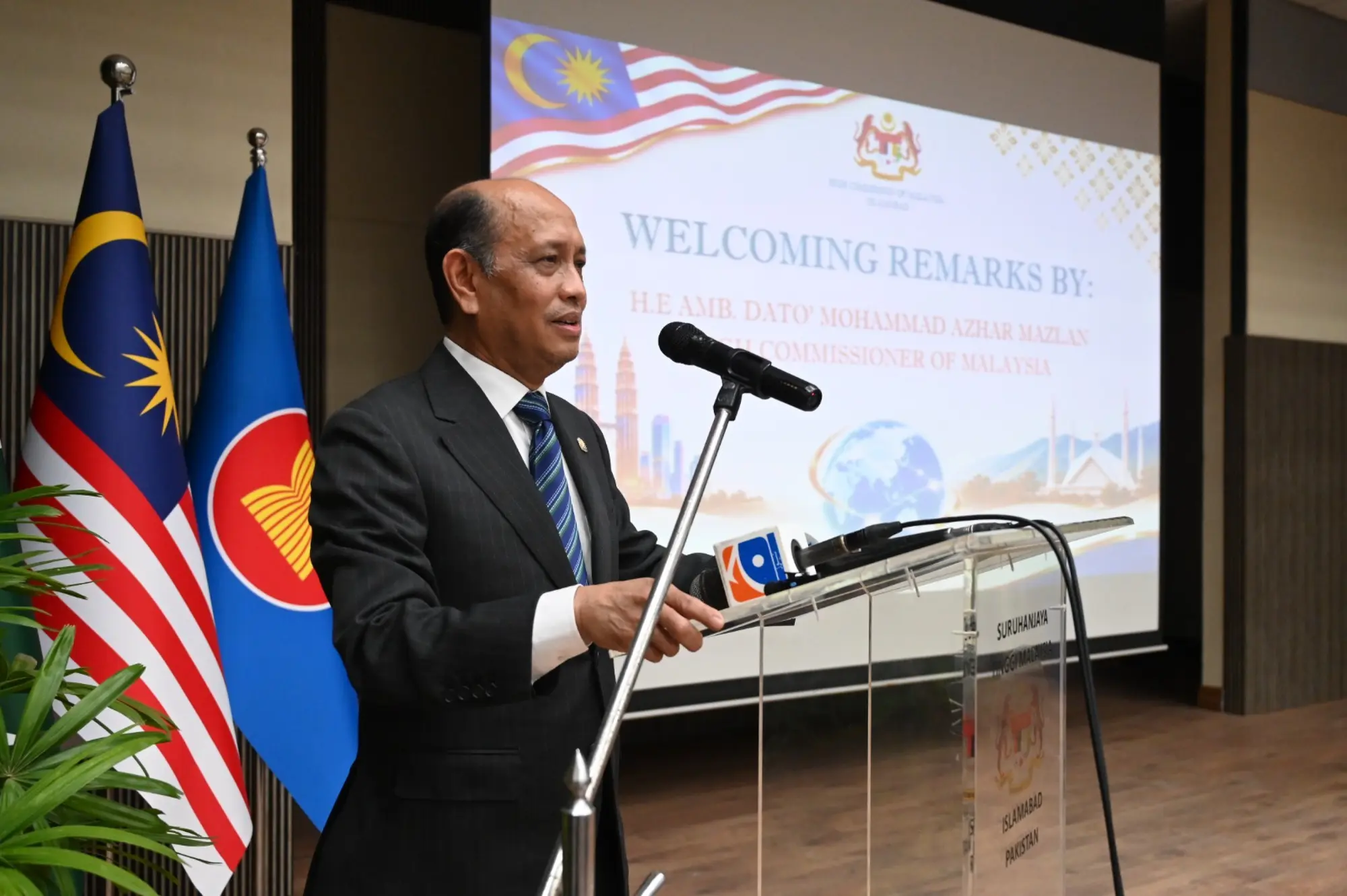
Malaysia has called for stronger economic cooperation with Pakistan, identifying trade, tourism, education and the halal industry as key areas offering significant potential for mutually beneficial partnerships between the two countries.
Malaysian High Commissioner to Pakistan Dato’ Mohammad Azhar Mazlan highlighted these opportunities while addressing an Appreciation Hi-Tea hosted by the High Commission of Malaysia in Islamabad on Thursday to acknowledge the support and cooperation of its Pakistani partners and stakeholders.
The event was attended by members of the diplomatic corps, Pakistani government officials, business leaders, think tanks and friends of Malaysia.
The High Commissioner said Pakistan and Malaysia enjoyed longstanding friendly relations, recalling that Pakistan was among the first countries to recognise Malaysia’s independence in August 1957. Bilateral relations were elevated to a Strategic Partnership in 2019, providing a framework for expanding cooperation across various sectors.
He noted that approximately 100,000 Pakistanis living in Malaysia were contributing to the country’s development, while around 5,000 Pakistani students were pursuing higher education there, placing Pakistan among the leading countries of origin for international students.
Encouraging greater educational exchanges, he said Malaysia offered Pakistani students a welcoming environment, with cultural similarities and shared values providing an added advantage.
Identifying the halal industry as another promising area, Azhar said Malaysia’s established halal ecosystem, expertise in food technology and experience in international halal product development could complement Pakistan’s strengths in agriculture and food production.
He expressed confidence that closer cooperation in these areas would generate tangible economic benefits for both countries.
Highlighting regional economic opportunities, the High Commissioner said the Association of Southeast Asian Nations (ASEAN), following the inclusion of Timor-Leste as its 11th member, represented a combined economy of approximately $4 trillion, while Pakistan had a population of around 250 million.
He said these figures reflected considerable potential for stronger economic engagement between ASEAN and Pakistan, adding that the ASEAN Committee in Islamabad was actively engaging with Pakistani authorities and other stakeholders.
He also referred to the anticipated maiden visit of the ASEAN Secretary-General to Pakistan later this month, describing regional engagement as an important avenue for expanding cooperation.
Promoting Malaysia’s tourism potential, Azhar said the country’s Visit Malaysia campaign had been extended through 2027. Malaysia received approximately 42 million international visitors in 2025 and was targeting 47 million arrivals in 2026.
He encouraged Pakistani travellers to explore Malaysia’s tourism attractions, cultural heritage and hospitality, noting growing interest among Pakistanis in visiting the country.
The High Commissioner also recalled his participation as chief guest at an event organised by the Islamabad Chamber of Commerce and Industry in Kuala Lumpur, describing it as an example of growing business-to-business connections between the two countries.
Emphasising the importance of peace and dialogue, Azhar said Malaysia’s foreign policy remained guided by the principles of peaceful coexistence, negotiation and the peaceful resolution of disputes.
He urged representatives of different countries, institutions and communities to promote understanding and cooperation despite differences in perspectives and backgrounds.
He also expressed gratitude to the government and people of Pakistan for their hospitality and support, particularly acknowledging the cooperation extended by the Ministries of Foreign Affairs, Commerce and Interior, as well as provincial authorities.
Referring to recent diplomatic engagements, he highlighted a visit by ASEAN Heads of Mission to Sindh, which included meetings with the provincial governor and chief minister, interactions with Karachi’s business community and engagements with university students.
He stressed the importance of engaging younger generations in discussions on economic prosperity, regional security and peace.
Concluding his remarks, the High Commissioner called for continued engagement and open communication, saying that differences should not prevent countries and communities from working together.
He extended his best wishes for peace, progress and prosperity to Pakistan, Malaysia and all countries represented at the gathering.



















Comments