


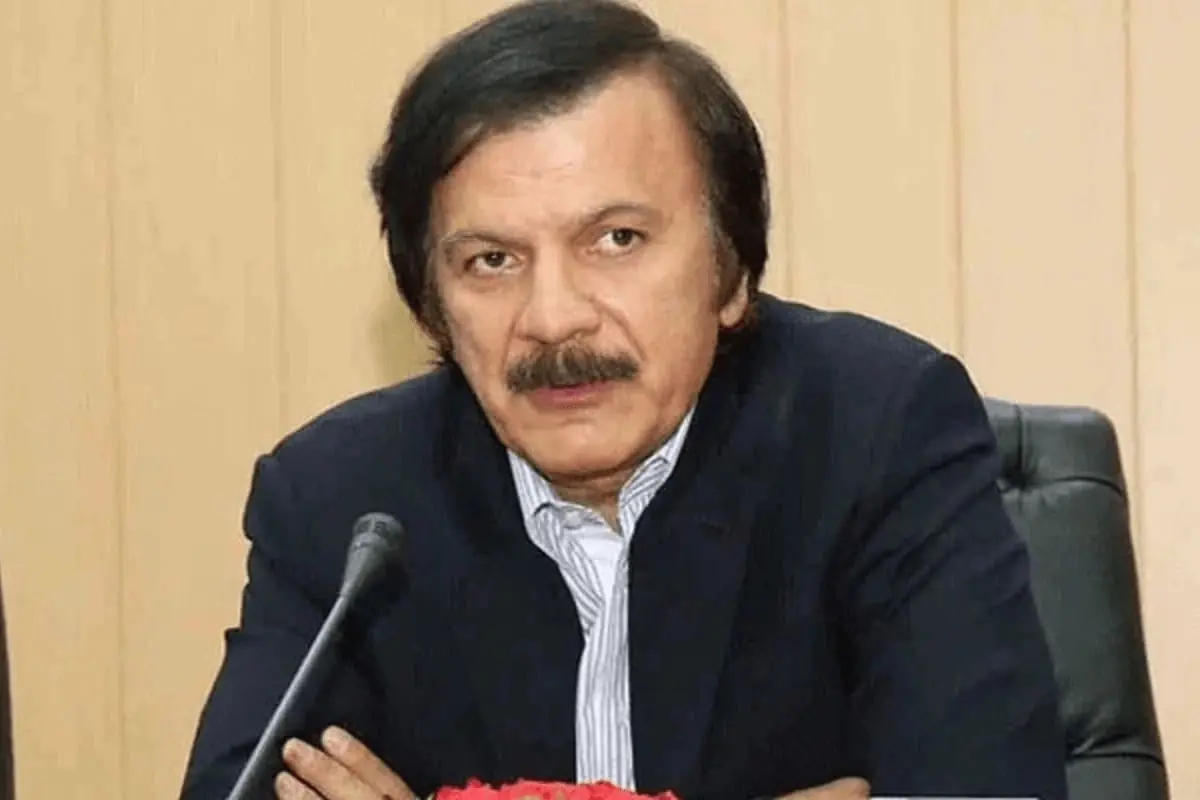
ISLAMABAD: Adviser to the Prime Minister on Industries and Production, Haroon Akhtar Khan, highlighted the salient features of the Autos and Auto Parts Manufacturing Policy, 2026–2031, saying that it represents a major shift in Pakistan’s automotive sector, moving away from import-dependent assembly towards export-oriented manufacturing, greater localisation and internationally competitive domestic production.
The Adviser further said that the policy is expected to generate cumulative foreign exchange savings of approximately USD17.7 billion during 2026–2031, compared with the foreign exchange required to import equivalent automobiles in completely built-up (CBU) condition.
He said that the policy reflects the government’s vision of an export-led, self-reliant and competitive economy, with a strong emphasis on empowering local manufacturers, strengthening domestic auto parts production, creating employment opportunities and integrating Pakistani industry into global automotive supply chains.
READ ALSO: Govt should avoid further delays and stop fiddling with auto policy
The Adviser said that the new policy introduces binding localisation requirements to ensure progressive growth in domestic value addition. He said that these binding requirements would ensure that the expansion of the automotive market translates into greater domestic industrial activity, investment, employment and technological development. Non-compliance with applicable minimum domestic value addition requirements will attract an additional three percentage points of customs duty on relevant non-localised CKD imports in the subsequent financial year, subject to the prescribed legal process.
Highlighting the importance of the domestic vendor industry, Khan said that Pakistan has approximately 2,200 auto parts manufacturers and thatcapacity, technological advancement and integration into international supply chains are essential for the sector’s long-term competitiveness.
He said that a dedicated Vendor Upgradation and Technology Transfer Programme (VUTTP), with an allocation of Rs 2.1 billion, will be implemented through the Engineering Development Board (EDB) and Small and Medium Enterprises Development Authority (SMEDA).Theprogramme will facilitate technological upgradation, access to common manufacturing facilities, skills development, international quality certification and export readiness for domestic vendors.
The policy also targets investment in at least five anchor auto parts manufacturing firms during its implementation period to support the development of domestic manufacturing clusters.He said that empowering domestic manufacturers and strengthening local vendor networks would be central to the government’s strategy for building a competitive automotive industry.
The Adviser said that export promotion was one of the defining features of the new policy, which establishes cumulative export targets of approximately USD $6 billion during 2026–2031. Of this amount, approximately USD3.29 billion, representing 55 percent, is targeted from auto parts manufacturers, while automobile manufacturers are expected to contribute approximately USD2.72 billion, or 45 percent.
He said that this distribution reflects the government’s strategic emphasis on developing the auto parts industry and transforming domestic suppliers into internationally competitive manufacturers.To encourage exporters, the policy introduces a Drawback of Local Taxes and Levies (DLTL) scheme, providing eligible exporters with 5 per cent support on net Free on Board (FOB) export value, along with an additional 10 per cent incentive on qualifying incremental exports.
Furthermore, manufacturers will be required to secure export opportunities within the global supply chains of their international principals.The Adviser said that these measures would encourage manufacturers to move beyond dependence on the domestic market and develop a sustainable export-oriented business model.
Khan said that the government was rationalising customs duties progressively over five years while ensuring that import concessions were directly linked to domestic manufacturing, localisation and export performance.He explained that the concessional 5 percent customs duty on imported battery electric vehicles (BEVs) valued up to USD15,000 during the initial two years is conditional upon the establishment of domestic assembly or manufacturing facilities.
Companies seeking this concession will be required to submit a surety bond and an irrevocable bank guarantee covering the customs-duty differential. They must also commence commercial production of the imported BEV variant by September 30, 2028.
He said that increased domestic value addition, local manufacturing and export growth would help reduce pressure on the country’s external account while strengthening industrial self-reliance.
The policy also projects that increased adoption of new energy vehicles will help avoid imports of approximately 1.823 million tonnes of oil during the policy period, contributing to reduced petroleum import dependence and improved energy security.
Khan said that the policy also provides for contract manufacturing arrangements to make better use of Pakistan’s existing industrial capacity, which currently has estimated idle capacity ranging from 41 to 80 percent.He said that utilising available capacity would improve production efficiency, encourage investment, create employment opportunities and strengthen the overall industrial ecosystem.
Haroon Akhtar Khan said that the Autos and Auto Parts Manufacturing Policy 2026–2031 was fundamentally a manufacturing-led and export-oriented framework, designed to strengthen Pakistan’s domestic industrial base rather than perpetuate dependence on imported vehicles and components.
He reiterated that, under the Prime Minister’s vision, the government was committed to empowering local manufacturers, promoting technological advancement, developing domestic vendors, attracting investment and positioning Pakistan as a competitive participant in global automotive supply chains.He said that the ultimate objective was to transform the automotive sector into a driver of export-led economic growth, foreign exchange generation, industrial development and sustainable employment.
Copyright Business Recorder, 2026



















Comments