


How can carbon credits add up to 20% to revenues of green projects in Pakistan?
Carbon credits offer Pakistan's low-carbon projects 10-20% additional revenue, but the country lags in market development due to awareness gaps and regulatory hurdles, despite vast potential.
- How carbon credits boost revenues for low-carbon investments.
- Diverse projects qualifying for carbon credit generation.
- Pakistan's challenges in developing its carbon market.
- Impact of international carbon taxes like EU's CBAM.
- Strategies to accelerate Pakistan's carbon market growth.
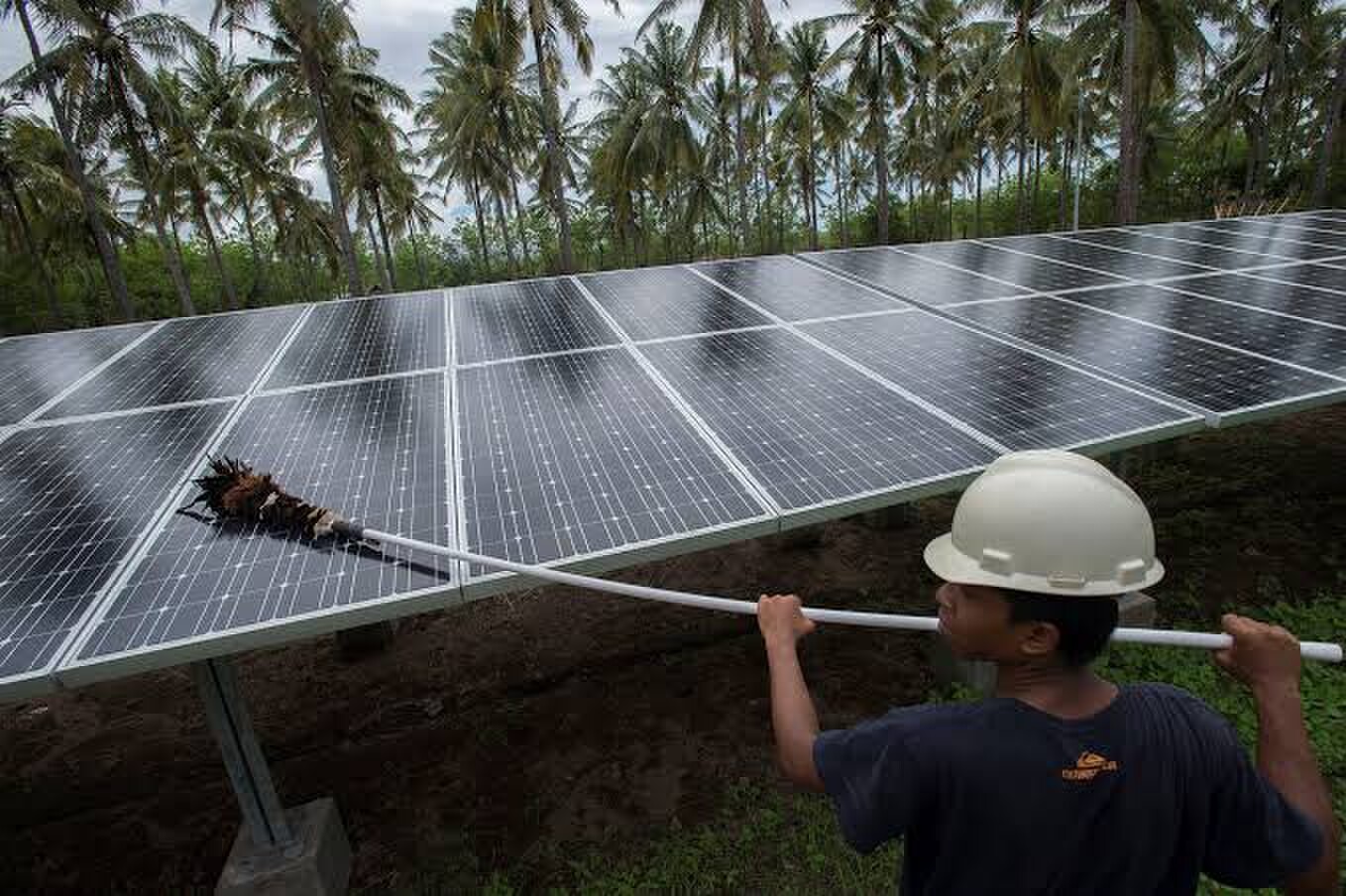
Carbon credits could generate additional revenues equivalent to 10% to 20% of project earnings for qualifying low-carbon investments in Pakistan, offering ventures an additional source of income from renewable energy, electric vehicles, battery storage and agriculture, the chief executive of climate finance firm Resources Future said.
Carbon credits, also known as carbon offsets, are tradable certificates representing the reduction or removal of one tonne of carbon dioxide equivalent (CO2e) from the atmosphere. They allow businesses and other entities to compensate for their greenhouse gas emissions by supporting projects that reduce or remove emissions elsewhere, including afforestation, mangrove restoration and renewable energy initiatives.
Such credits are issued following certification and verification under recognised standards, with international organisations such as Verra and Gold Standard playing a key role in assessing projects and ensuring the credibility of emissions reductions.
Pakistan is developing its carbon market as part of efforts to meet its climate commitments, attract green investment and transition towards a low-carbon economy. The country’s carbon market became operational in early 2025 following the approval of federal guidelines under Article 6 of the Paris Agreement, which provides a framework for international cooperation on emissions reduction.
“Anything which is a low-carbon project can essentially get you carbon credits,” said Khurram Lalani, director and chief executive of Resources Future, in an interview with Business Recorder.
“Think about carbon credits as a commodity, like gold, silver or copper. Carbon credits are also a commodity.”
Lalani said carbon credits could provide an additional monetisation stream for businesses already investing in environmentally friendly projects, helping them recover operating and maintenance costs while improving overall project economics.
“If you are investing anyway, you can consider this as the cherry on top. This is not the whole cake, but a cherry on top.”
He estimated that carbon credits could contribute an additional 10% to 15% in revenues for qualifying projects, with the potential to reach 20% in some cases.
“If you have a Rs10 billion project, you are not going to earn Rs10 billion on Rs10 billion. But what it does is that it will give you enough potential to substantiate your topline with 10 to 15% of revenues, in general,” he said.
“Your OPEX, your operations, your O&M costs, at least recover from these things.”
Lalani said the opportunity extended beyond conventional renewable energy investments to electric vehicles, battery energy storage systems (BESS), biodiesel manufacturing, forestry and agriculture.
“We have our own agroforestry project which is around mango restoration,” he said.
Solar and wind projects, for instance, could generate carbon credits by displacing electricity produced through diesel, furnace oil and natural gas, while electric vehicles (EV) could qualify by replacing petrol-powered transport.
“Think about your EVs, electric vehicles. They displace petrol. That’s a low-carbon project; you can earn carbon credits,” Lalani said.
“Anything which displaces or sequesters carbon can be converted into a project that can earn carbon credits.”
He said Resources Future was working with project developers involved in battery energy storage systems and electric vehicle projects, including businesses importing electric buses and manufacturing electric motorcycles.
The firm has also supported a large biodiesel manufacturing facility under construction in Pakistan, which has applied for carbon credits, he said.
“We are helping them out. The idea is that there can be two revenue streams for example, if you sell biodiesel, the project sponsors of biodiesel can also monetise with carbon credits. Hence, carbon credits essentially gives you another monetisation rail on which you can do monetisation,” he said.
Despite the potential, Pakistan has been slower than regional competitors in developing carbon credit projects and attracting private investment, he said.
“Pakistan has not been very active when it comes to carbon credit projects, but I think there are reasons for that as well.”
Comparing Pakistan with India, China and Bangladesh, Lalani said businesses in those countries had developed a better understanding of carbon credits as a monetisation opportunity.
“In Pakistan, generally, that capacity does not exist, where our industrialists will be able to understand exactly what carbon credits are.”
He attributed the gap partly to limited awareness and technical expertise among local businesses, as well as a reluctance to invest in unfamiliar opportunities.
“In Pakistan, the risk-taking ability is not very prominent, whereas foreign businesses are generally more keen to invest in something new because they understand that there is risk, but there are also returns.
“In Pakistan, we have been very much focused on the existing business opportunities, and we don’t really consider moving in a new direction, where there is a little more cost incurred. But the Pakistani market is opening up and is going to flourish also,” he said.
Another obstacle has been the cost of developing carbon credit projects, which requires technical documentation, independent verification and registration with international carbon credit registries.
Lalani said a typical carbon credit project could cost around $100,000 to develop.
“If you hire an outside consultant from Europe, you would essentially incur, just in the consulting fees, around $200,000 to $250,000,” he said.
“What we have done is that we have been able to bring that cost down to less than $100,000.”
He said businesses should consider carbon credit development expenses as part of the overall investment cost of low-carbon projects rather than treating them as a separate commercial venture.
“If you are investing in a project worth Rs10 billion or a project worth Rs5 billion, if you add $100,000 to it to make a carbon credit project, the marginal cost is not that much, but the marginal revenue is quite big.”
“Hence, it should be a natural proposition. What we have seen in India, what we have seen in China, the industrialists there, whatever low carbon project they design, they automatically go for carbon credits,” he said.
Carbon credits generated through Pakistani projects are generally sold to global buyers, as the market remains largely international, Lalani said.
He added that domestic banks had yet to develop dedicated financing products based on carbon credits, with the local banking sector still at an early stage of understanding the market.
“Banks do not take a view on carbon credits. I have not come across any such product,” he said.
Talking about the evolving international climate rules, Lalani cited the example of the European Union, saying that a very broad-based change was coming into the region under CBAM [Carbon Border Adjustment Mechanism].
“It means that in Pakistan, any products with high carbon intensity, when they are exported to European countries. Europe will impose a carbon tax because of the carbon intensity of your products. So this will have a huge impact on Pakistani textile companies,” he said.
The CBAM is a carbon pricing policy that places a fair price on carbon emitted during the production of carbon-intensive goods imported into the European Union.
“The way to go about CBAM is… Either the textile companies will pay a carbon tax in Europe, or they should have offsets here. They should be the owners of carbon credits. So that they can show that they have mitigated their carbon emissions,” said Lalani.
He said Pakistan needed stronger private-sector capacity and a more developed regulatory framework to attract international investors, who could choose to finance projects in competing markets such as India, Indonesia, China and Malaysia.
“Somehow we have not been able to operationalise the policy. The policy framework is there, but the rules are not there, and the associated guidelines are not there,” he said.
“The government needs to speed up, expedite that process. Make sure the rules are out there, so it gives enough clarity to everyone involved.”
He also called for greater capacity building among industrialists, financial institutions and investors, alongside the operationalisation of a climate change fund at the federal level to channel funding towards low-carbon projects.
“Pakistan’s potential is limitless. The only thing is that we need to really come up with a framework that can essentially help the private sector take the next step and also go for carbon credits as a monetisation opportunity,” Lalani said.
“The mobilisation that has happened in India, the mobilisation that has happened in China, the mobilisation that has happened in Bangladesh - is Pakistan comes nowhere near.”
“We have to take a long-term view on this. Think of it as a monetisation opportunity. And try and create good high-integrity projects for carbon markets,” Lalani concluded.




















Comments